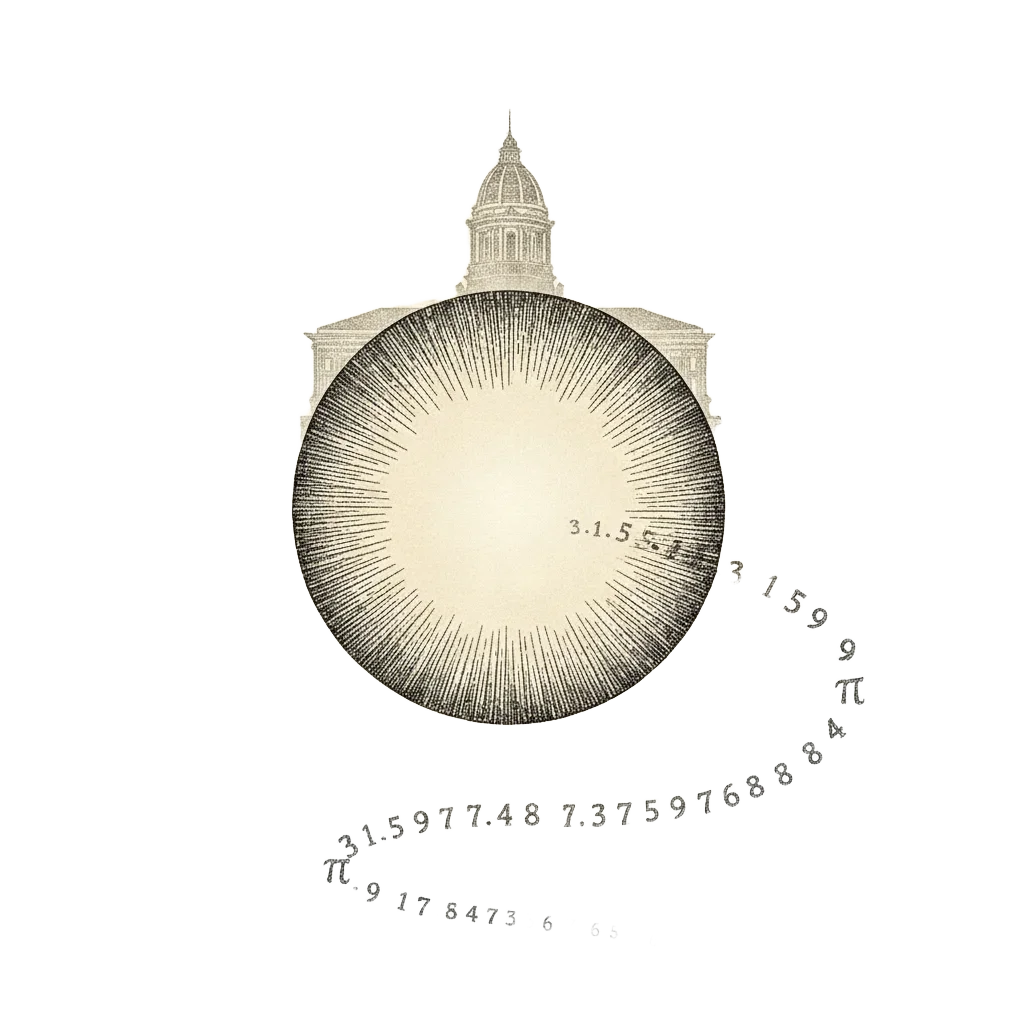
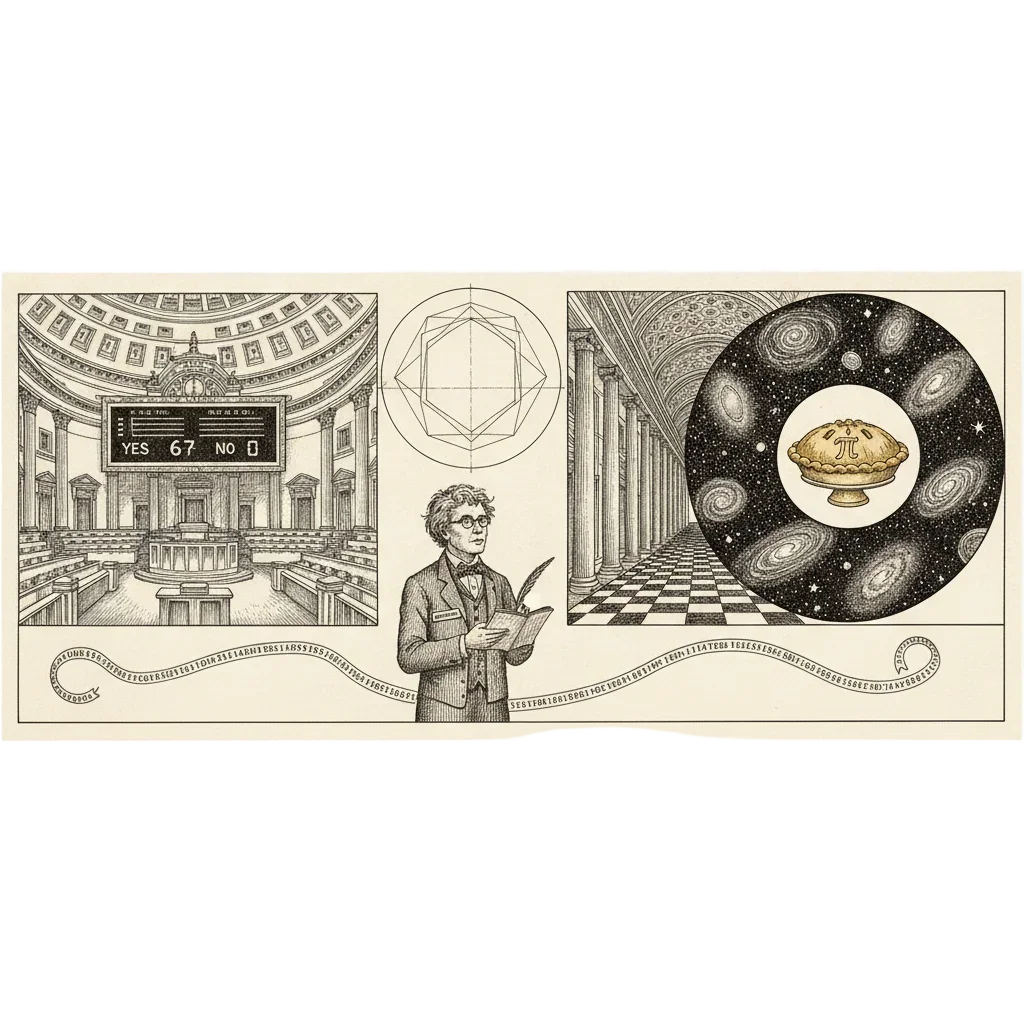
In February 1897, the lawmakers of Indiana voted on a new piece of mathematics. Sixty-seven voted yes. Nobody voted no. The bill was one step away from changing the most famous number in the world - π - by law. It was saved by a professor who just happened to be in the building.
Indiana State House, February 1897.
I.
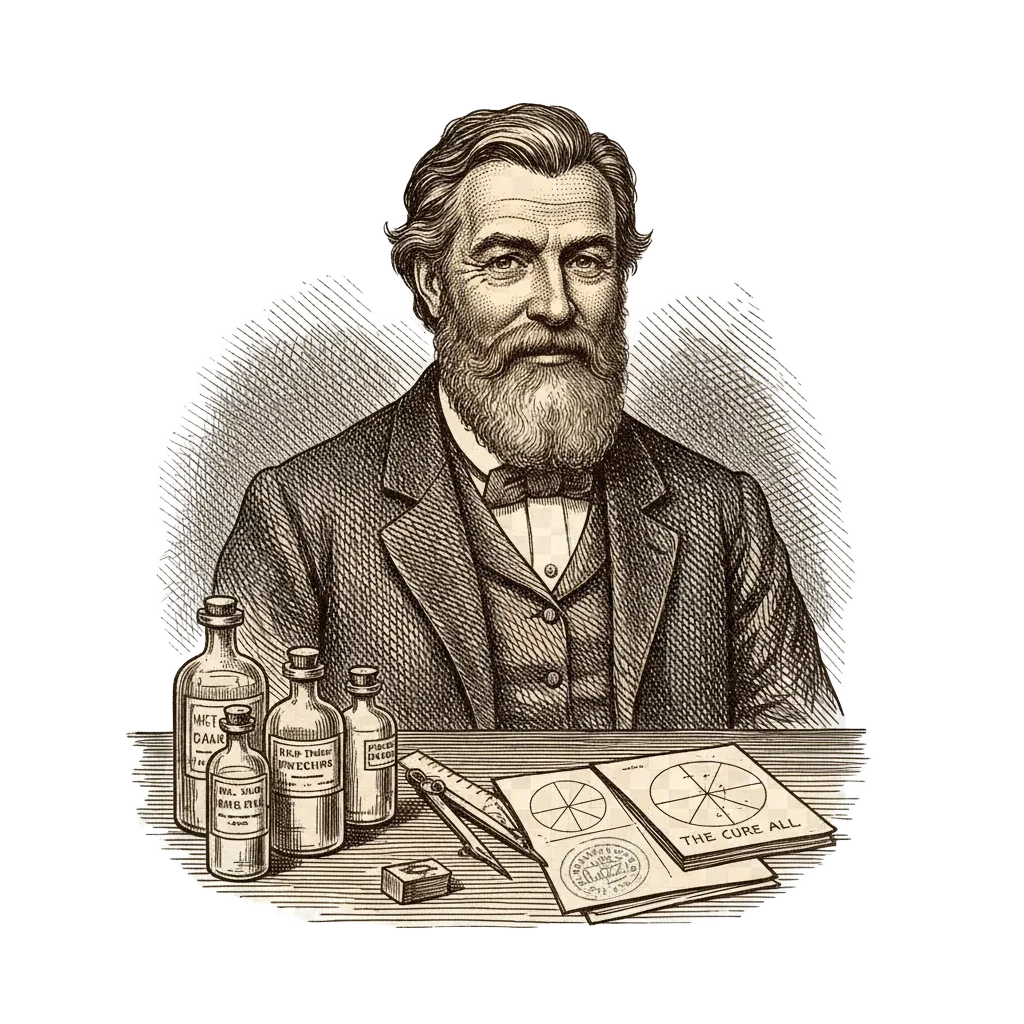
The story starts with Dr. Edward J. Goodwin, a country doctor from Posey County in southern Indiana with a passion for mathematics. Goodwin believed he had solved one of the oldest puzzles in history: squaring the circle - using only a ruler and compass to draw a square with exactly the same area as a given circle. Mathematicians had tried and failed for more than two thousand years.
Goodwin was sure he had done it. He had even managed to get his ideas printed in the American Mathematical Monthly in 1894 - published, the journal noted, "by request of the author".
He had copyrighted his "discovery". And he had a generous offer for his home state. If Indiana made his method official, its schools could use it free of charge. Everyone else would have to pay him royalties.
So in January 1897, his local representative, Taylor I. Record, introduced it to the Indiana House as House Bill 246. Its official title was wonderfully bold: "A bill for an act introducing a new mathematical truth."
Dr. Edward J. Goodwin, Posey County, Indiana.
II.
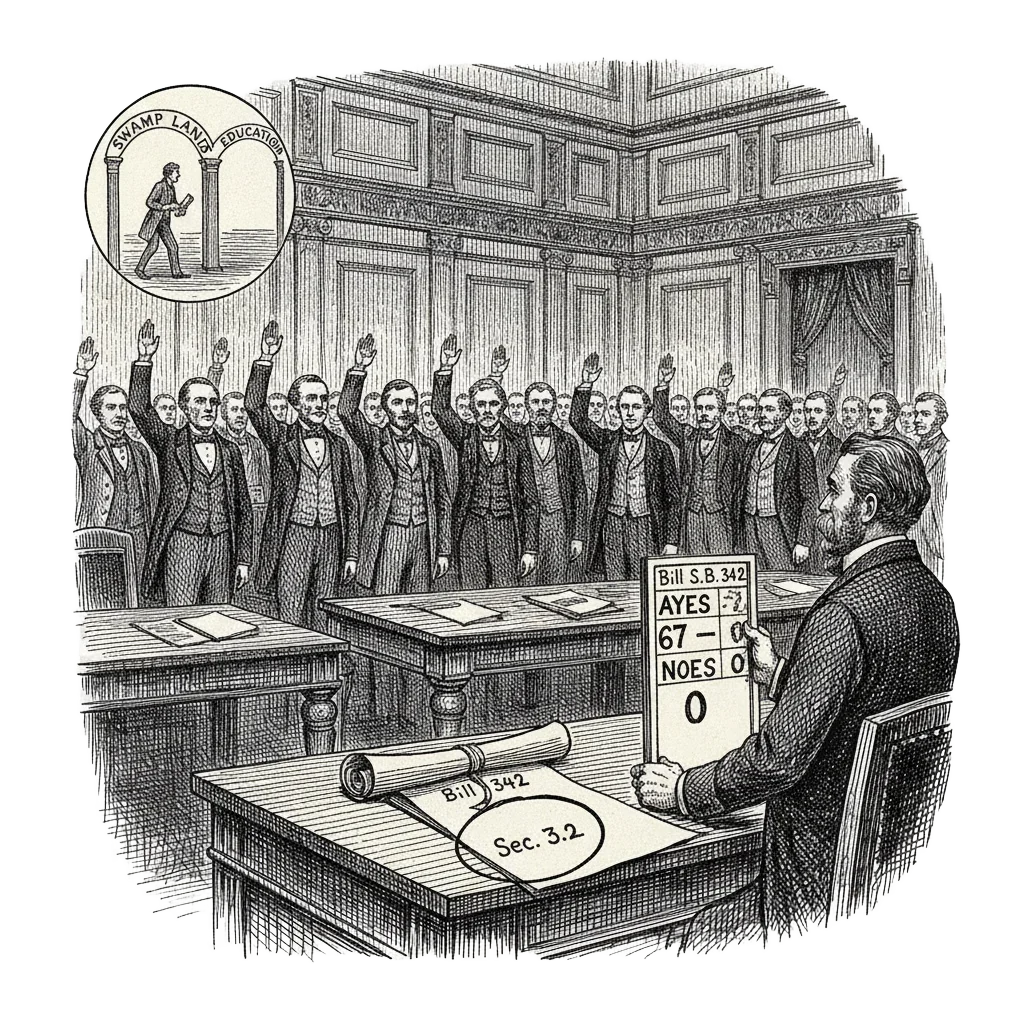
Nobody in the House seemed to understand the bill. It was full of tangled geometry. At first it was sent to the Committee on Canals - also known as the Committee on Swamp Lands. Then it was moved to the Committee on Education, which recommended it.
On 5 February 1897, the Indiana House of Representatives passed it: 67 votes to 0. The Indianapolis Journal called it "the strangest bill that has ever passed an Indiana Assembly".
Hidden in its muddled wording was a startling claim. The bill's rules for circles only worked if π was not 3.14159… but, most famously, 3.2.
That might not sound like much. But draw a wheel exactly 1 metre across. Its real rim is about 3.14 metres long. Goodwin's law would have said 3.20 metres - almost 6 centimetres too long, on every wheel, in every schoolbook in the state.
"The strangest bill that has ever passed an Indiana Assembly."
Margin note
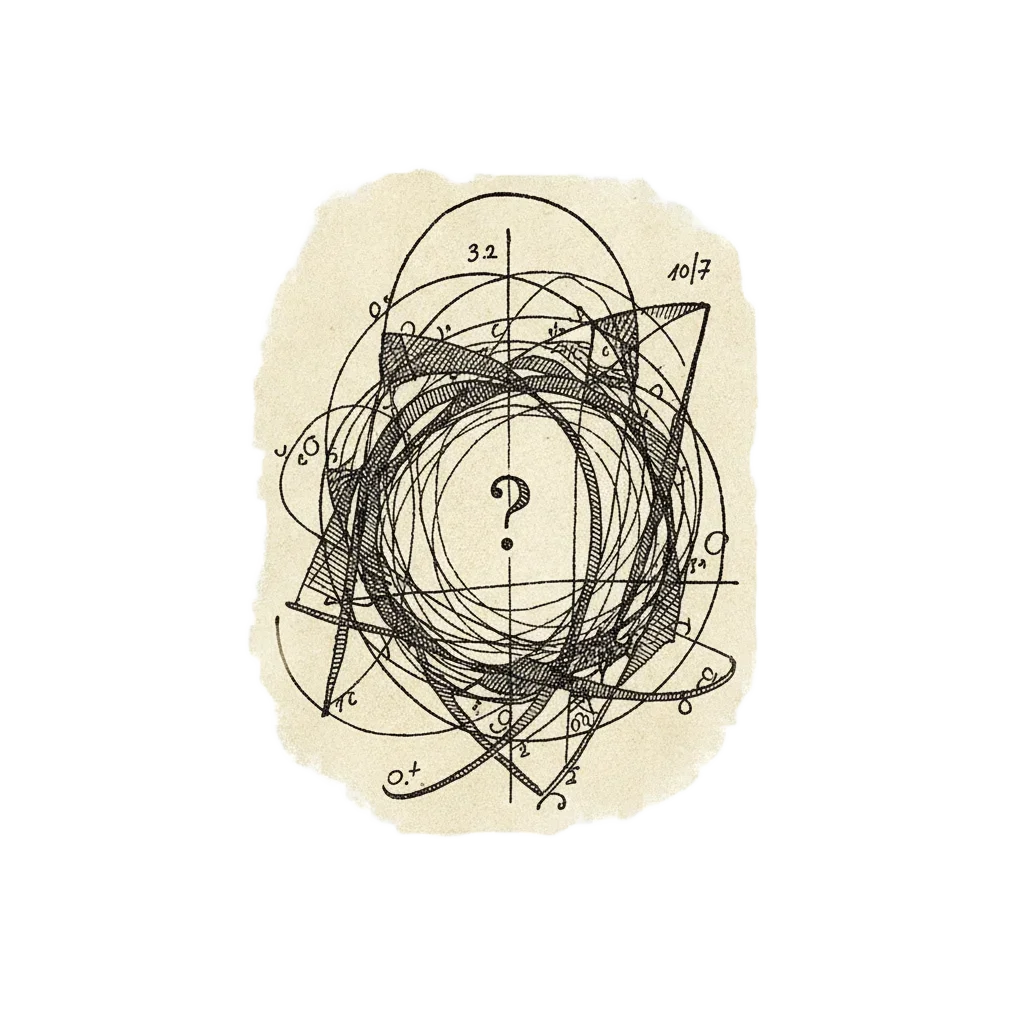
More than one wrong answer.
The bill's wording was so confused that, read carefully, it implied several different values for π - and a wrong value for the square root of 2 as well (10/7, about 1.429, instead of 1.414…). 3.2 is simply the one everyone remembers.
III.
By pure chance, Professor Clarence A. Waldo, head of mathematics at Purdue University, was at the State House that very week - not for π, but to ask the legislators for money for the Indiana Academy of Science.
He heard the lawmakers discussing mathematics. Curious, he looked into it.
Years later, Waldo recalled that a member showed him the bill that had just passed and offered to introduce him to the learned doctor who wrote it. Waldo "declined the courtesy with thanks remarking that he was acquainted with as many crazy people as he cared to know."
Instead, he went to work on the senators, explaining what was wrong with the bill.
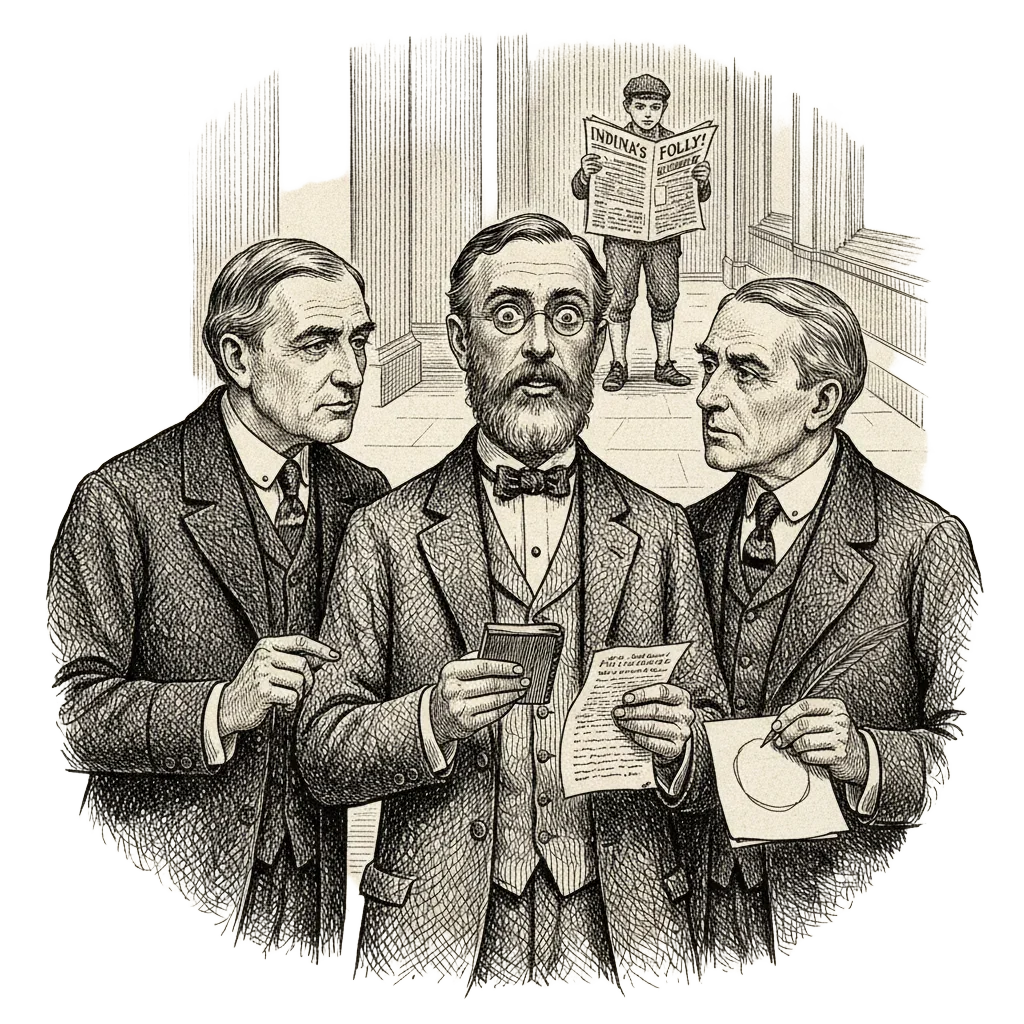
Meanwhile, newspapers in Chicago and the East had found the story, and were laughing at Indiana. The bill reached the Senate - where it was sent, for reasons no one has ever fully explained, to the Committee on Temperance, which recommended passing it.
But on 12 February 1897, the full Senate had had enough. One senator said that the newspapers were already making fun of the legislature. The bill was postponed indefinitely - and never came back.
π had survived an election.
Professor Clarence A. Waldo, Purdue University. The right man in the right corridor.
IV.
So what exactly was Indiana trying to change?
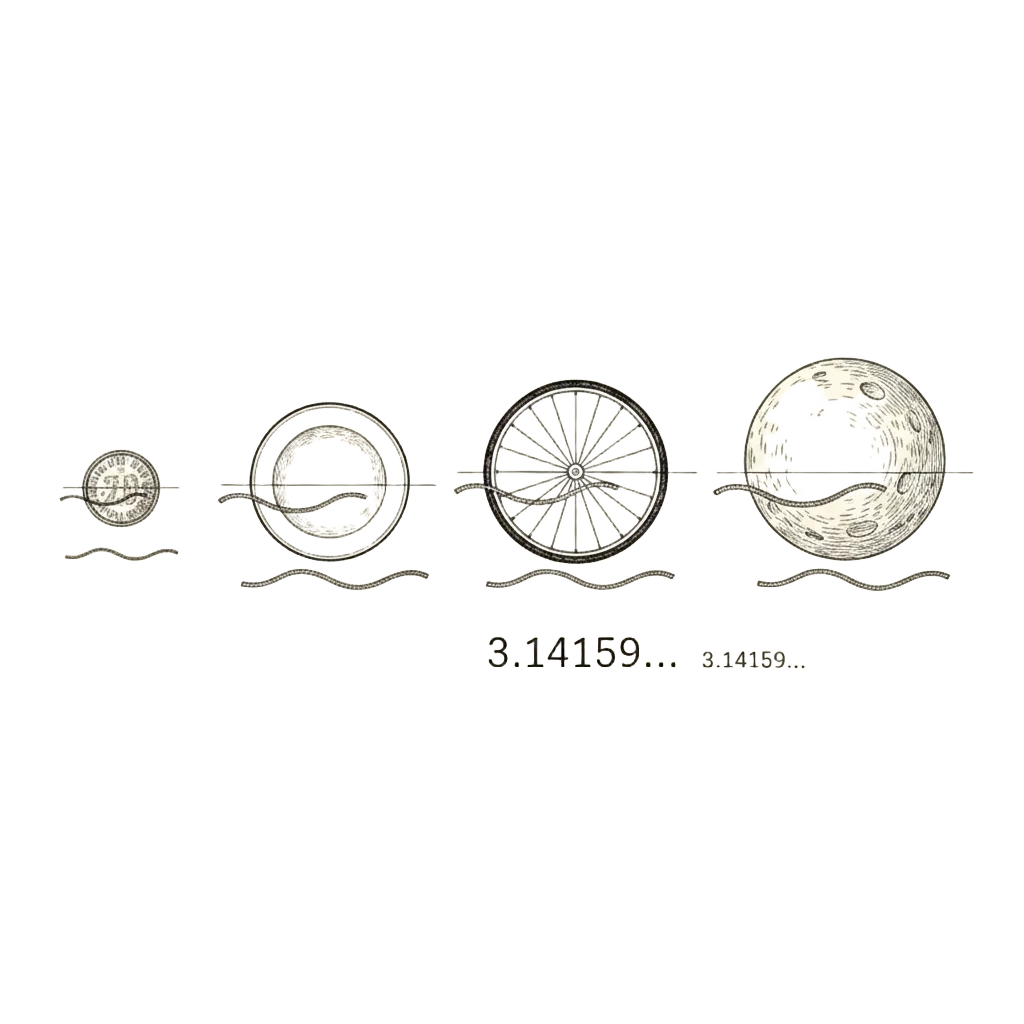
Take any circle - a coin, a plate, a bicycle wheel, the Moon. Measure the distance around it. Then measure the distance across it. Divide the first by the second.
You will always get the same answer, no matter how big or small the circle:
That number is π.
It is the same for a cookie and for a planet. That is what makes it so powerful - and why it is impossible to vote on. Indiana could change its laws. It could not change its circles.
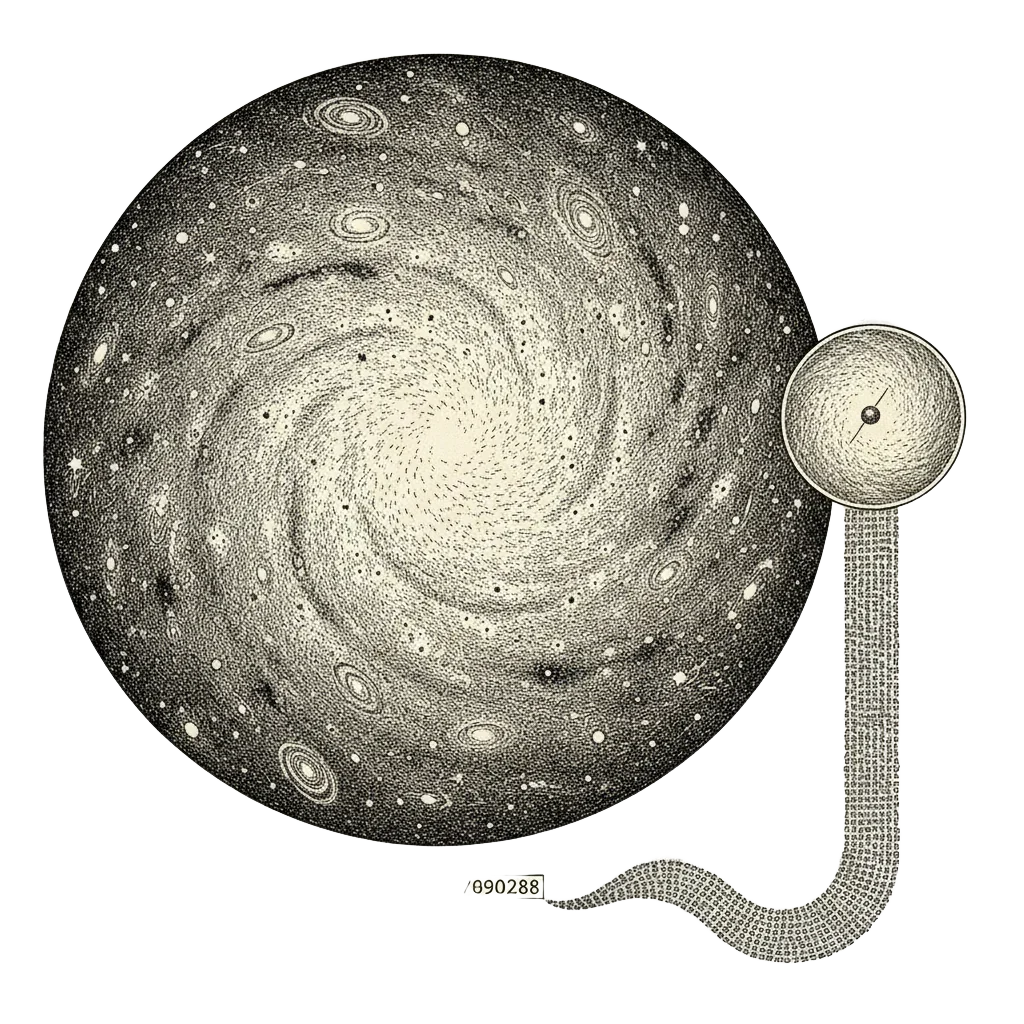
And there is something stranger still. π's digits never end and never fall into a repeating pattern. No fraction, however clever, can capture it exactly. Mathematicians proved this in the 1760s.
You can never write π down completely. You can only get closer.
Around ÷ across. Every circle. Always the same answer.
V.
Long before calculators, people still needed π - to build wheels, domes, and water tanks. The Babylonians and Egyptians used rough values a little over 3. But around 250 BC, the Greek mathematician Archimedes of Syracuse found a brilliant way to pin it down.
He could not measure a curve precisely. But he could measure straight lines.
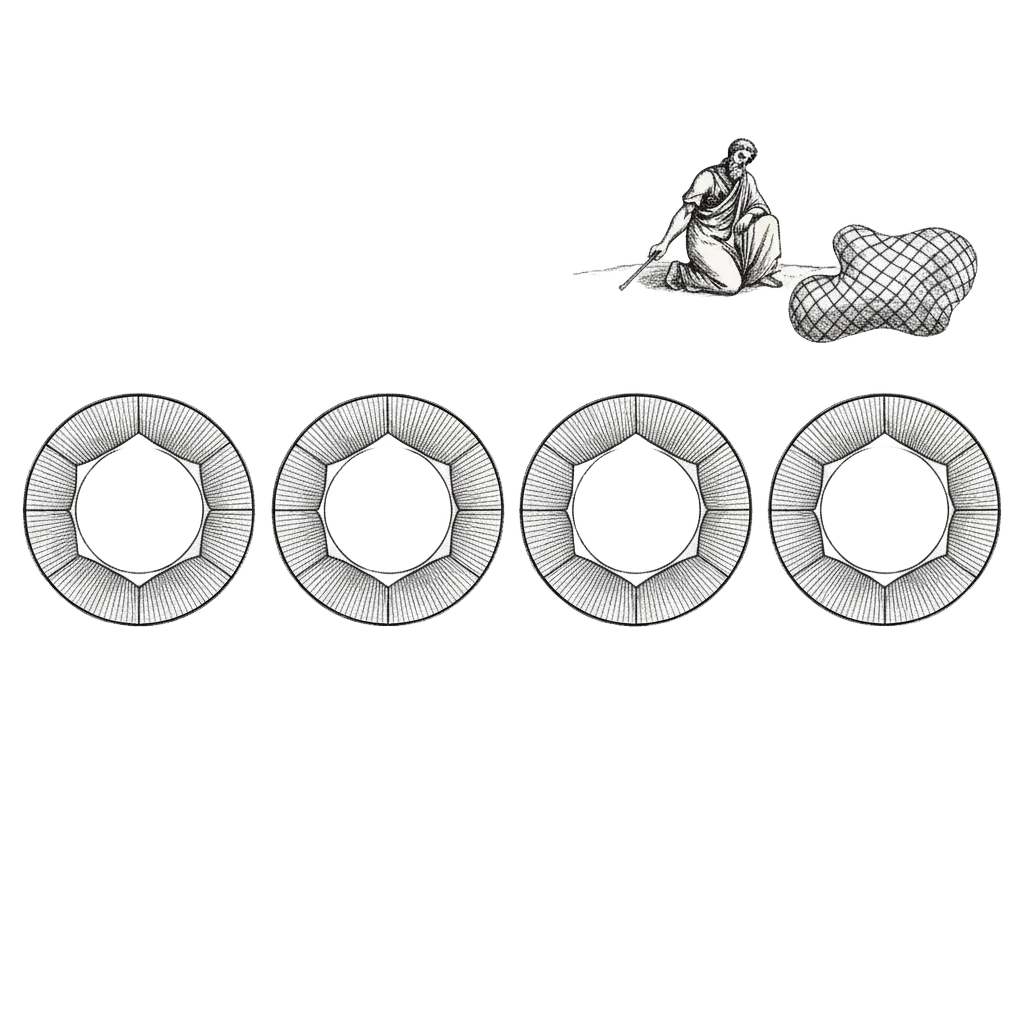
So he drew a six-sided shape inside a circle and another outside it. The circle's true length must lie between their two perimeters. Then he doubled the sides. 12. 24. 48. And finally 96 sides - polygons so close to a circle that the gap almost vanished.
With nothing but careful arithmetic, he proved that π lies between:
3 10⁄71
about 3.1408
- π lies between -
3 1⁄7
about 3.1429
That upper limit, 22/7, is still the value many schoolchildren learn today - more than two thousand years later.
Six sides. Then twelve. Then ninety-six. A net closing in.
VI.
Ever since, people have raced to find more digits.
In 1873, the English schoolmaster William Shanks spent years calculating π by hand to 707 decimal places. It was a heroic effort. It was also wrong from the 528th decimal place onwards - a mistake nobody noticed until 1944.
Then computers arrived, and the chase exploded.
In 1914, the Indian mathematician Srinivasa Ramanujan - the same Ramanujan who made the taxi number 1729 famous - published astonishing new formulas for π. Decades later, the brothers David and Gregory Chudnovsky built a lightning-fast formula in the same style. Almost every modern world record has been set using it.
At the time of writing, the record stands at 314 trillion digits, completed in November 2025 by a team at StorageReview, running a single server non-stop for about 110 days.
If you read those digits aloud at one per second, without sleeping, you would finish in about 10 million years.
Related exhibit
Ramanujan spotted something remarkable about this number from the back of a taxi - and the story of π cannot be told without mentioning him.
Read the 1729 exhibit →
Shanks by candlelight. Ramanujan's taxi. A server that ran for 110 days.
VII.
Here is the strangest part of the story.
All those trillions of digits are almost completely useless.
NASA's Jet Propulsion Laboratory, which steers spacecraft across the solar system, uses just 15 decimal places of π for its most precise navigation: 3.141592653589793.
NASA's own example: imagine a circle 40 billion miles (64 billion kilometres) across - many times wider than the orbit of Neptune, out in the dark where the Voyager 1 spacecraft now travels. With those 15 decimals, your answer for its circumference would be off by only about 1.5 centimetres.
And if you wanted to calculate the circumference of the entire observable universe - a circle 46 billion light-years in radius - accurate to the width of a single hydrogen atom?
You would need only about 37 decimal places.
Everything beyond that is not for measuring the world. It is for testing computers, for the thrill of the chase, and for the simple joy of knowing a little more.
Spacecraft navigation
15
decimal places
The observable universe
37
decimal places
The current world record
314 trillion
decimal places
"Enough for the universe" vs "the record". The gap is not small.
VIII.
π has become the only number in the world with its own party.
In 1988, Larry Shaw, a physicist at the Exploratorium science museum in San Francisco, noticed that the date March 14 - written 3/14 in the United States - looks like the start of π.
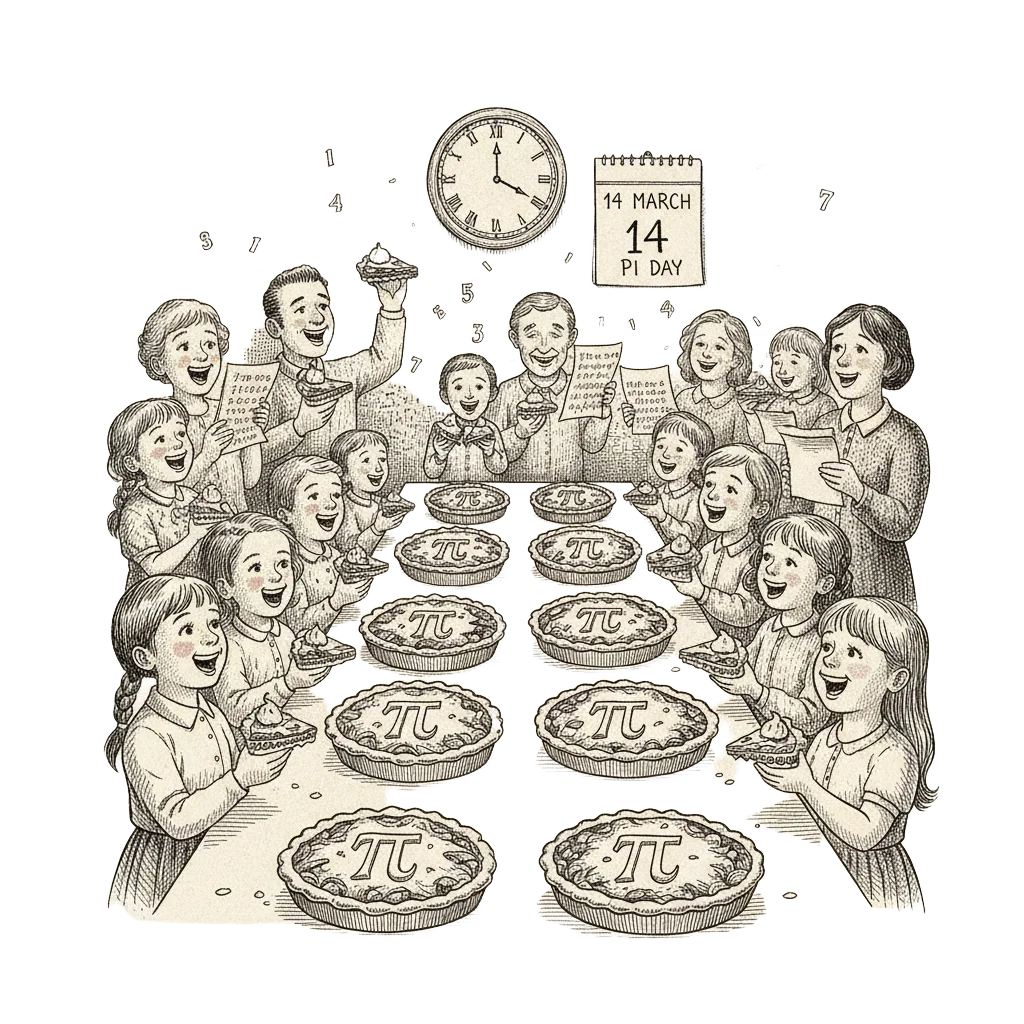
So on that day, at 1:59 (to continue the digits 3.14159), he and his wife set out fruit pies and tea for museum visitors. Pi Day was born.
It spread to classrooms around the world.
And in 2009, just over a century after Indiana tried to legislate π, the United States House of Representatives voted on π again - this time to pass a resolution supporting Pi Day.
In 2019, UNESCO went further, proclaiming 14 March the International Day of Mathematics. It was first celebrated in 2020.
The Exploratorium, San Francisco. Pi Day, every 14 March since 1988.
IX.
π is everywhere circles are: in wheels, orbits, waves, sound, light, and the maths of chance.
But it is also a story about people.
About a doctor who was sure he was right, and a legislature that nearly agreed with him. About Archimedes trapping a curve between straight lines. About a schoolmaster who spent years on a sum that went wrong, and a machine that hummed for 110 days to go further than anyone.
And about a professor who happened to walk down the right corridor, in the right week, and stopped a law against a number.
The lesson of Indiana is still worth remembering. You can make rules about almost anything. But some truths are not decided by a vote.
The exhibit label
It is the distance around any circle divided by the distance across it: 3.14159…
It is the same for every circle, from a coin to a galaxy. Its digits never end and never repeat.
Archimedes trapped it between 3 10⁄71 and 3 1⁄7 using 96-sided polygons, around 250 BC.
In 1897, the Indiana House voted 67 to 0 for a bill implying π was 3.2. Professor C. A. Waldo helped stop it in the Senate.
The record is 314 trillion digits (2025) - but about 37 decimal places are enough to measure the observable universe to within a hydrogen atom.
Pi Day, 14 March, began at San Francisco's Exploratorium in 1988 and is now the International Day of Mathematics.
Lawmakers can decide a great many things.
π is not one of them.
Powered by DollarPageClub