The taxi number that became famous
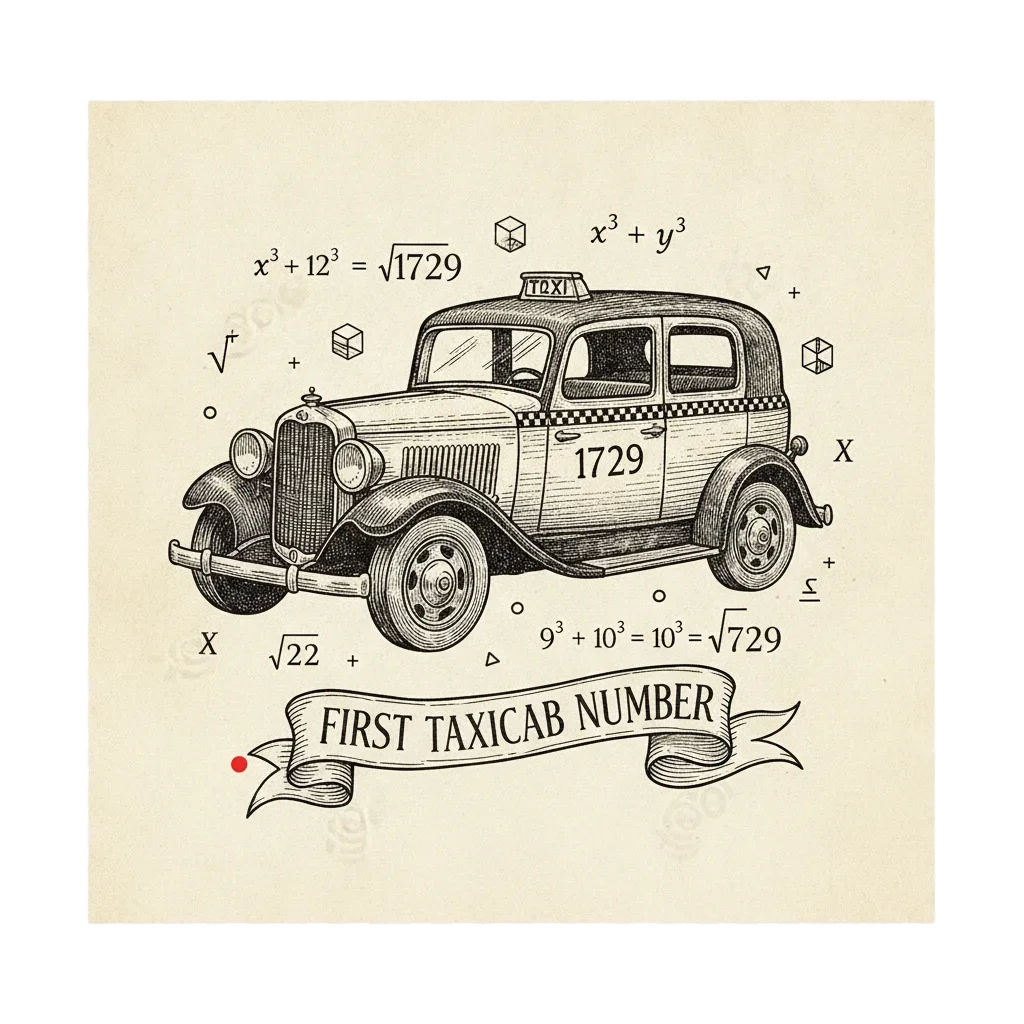
A number so ordinary that it appeared on a taxi.
A remark so casual it could have been forgotten.
And yet that little number, 1729, became one of the most famous numbers in mathematics.
It is remembered because of a hospital visit, two brilliant minds, and a moment of insight that turned a dull-looking number into legend.
Section I
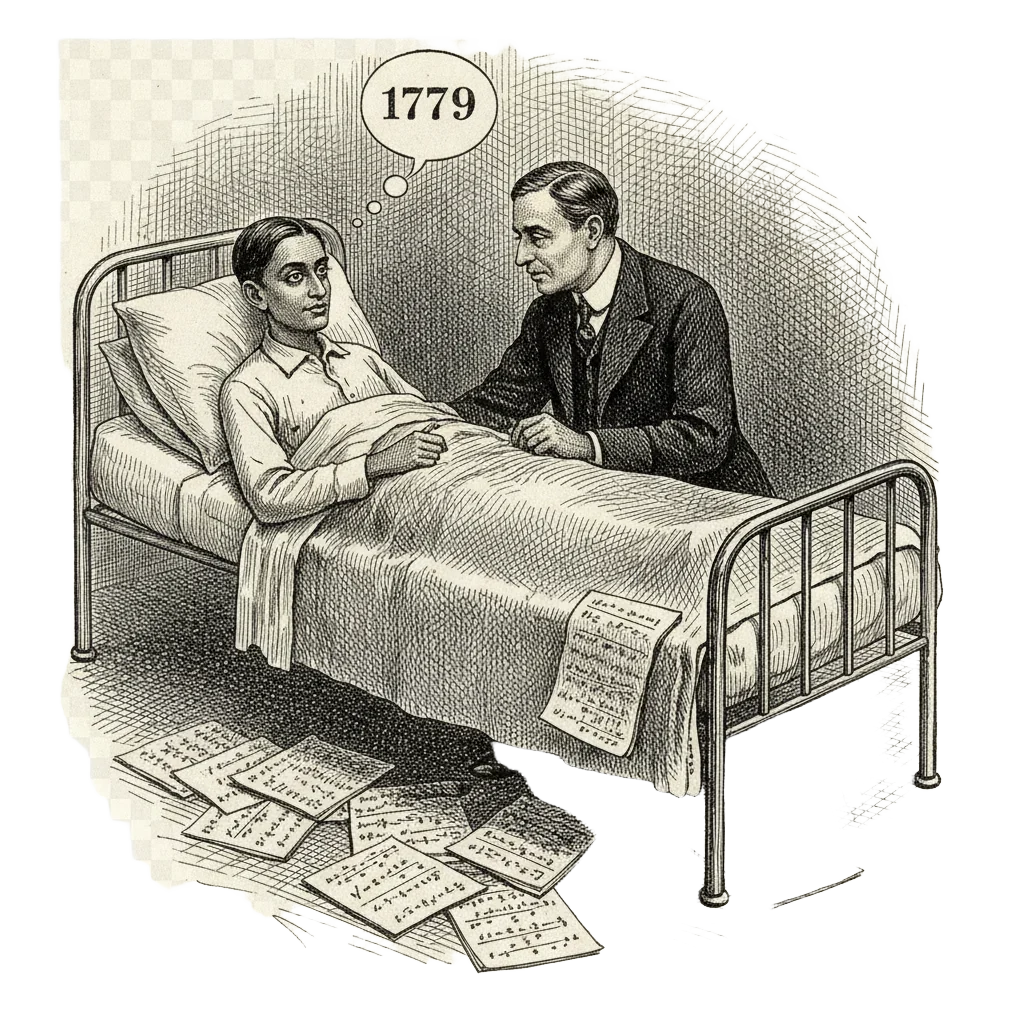
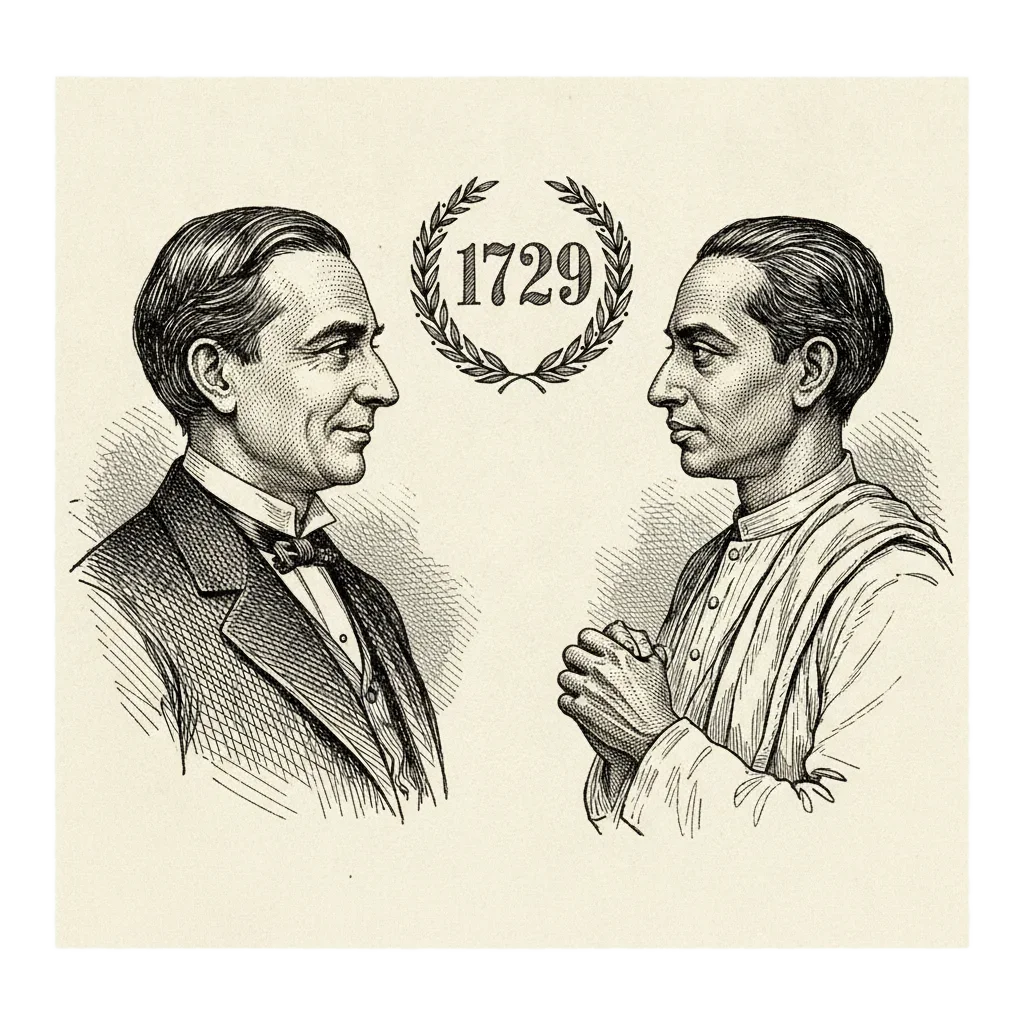
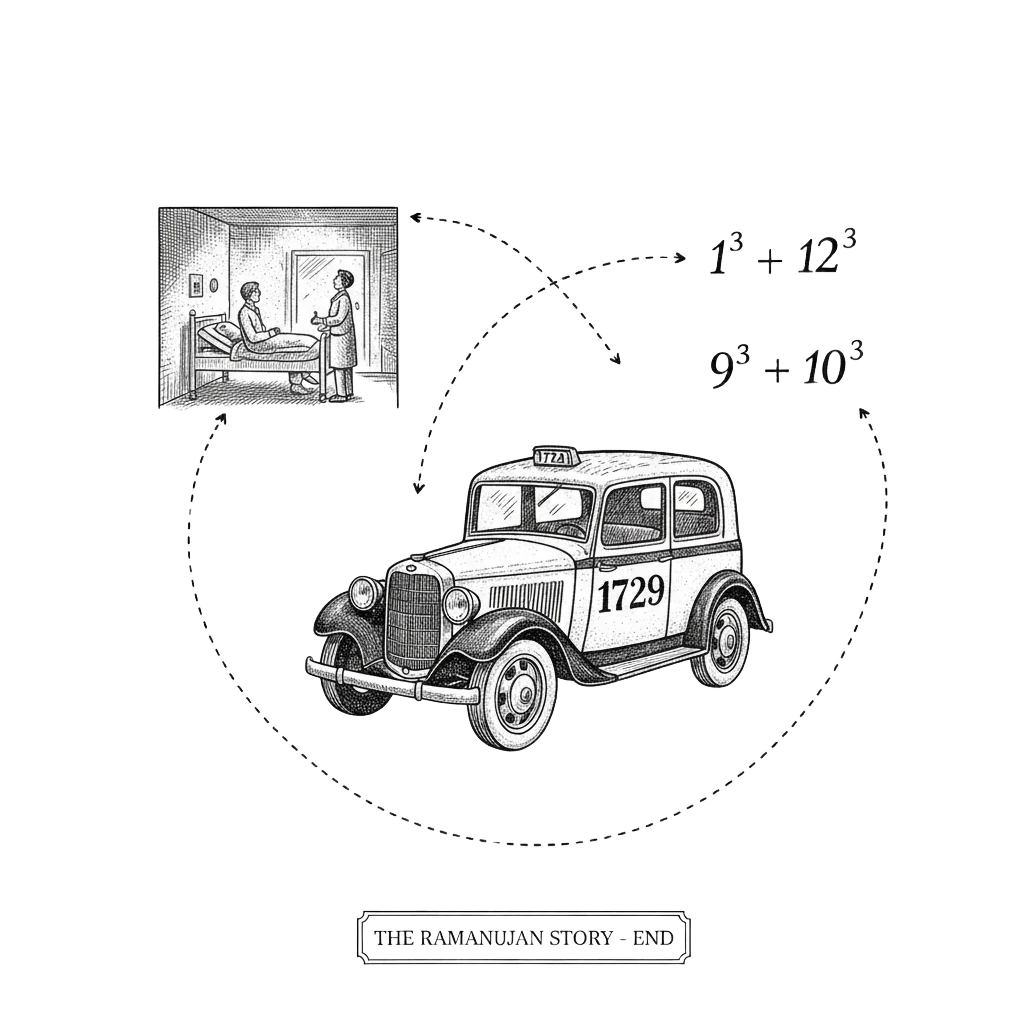
In 1919, the English mathematician G. H. Hardy went to visit his friend Srinivasa Ramanujan in a hospital near London. Ramanujan was seriously ill. But even in illness, his mind remained astonishingly alive.
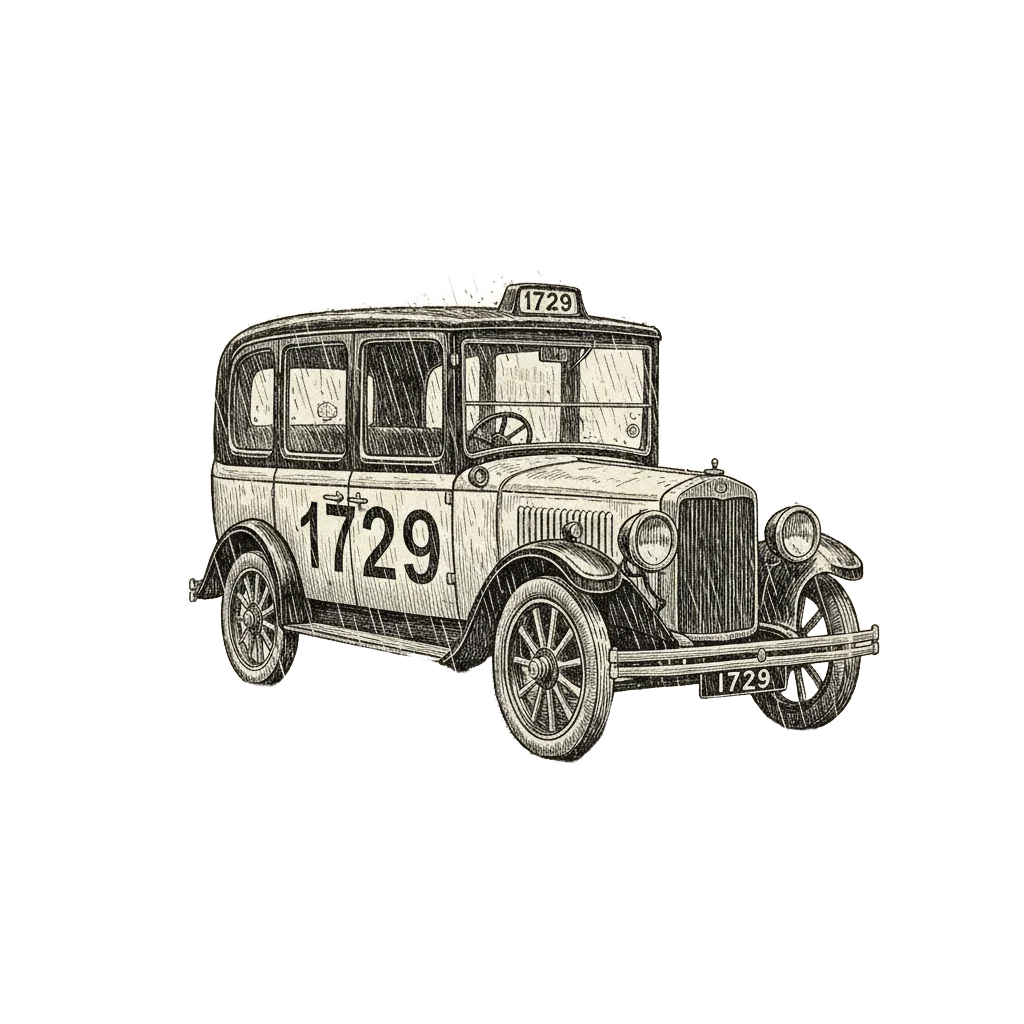
When Hardy arrived, he tried to make conversation. He mentioned the number of the taxi he had ridden in. It was 1729.
Hardy said it seemed like a rather dull number, not especially interesting.
Ramanujan immediately disagreed.
He told Hardy that 1729 was a very interesting number indeed. Because it was the smallest number that can be written as the sum of two cubes in two different ways.
"No, it is a very interesting number. It is the smallest number expressible as the sum of two cubes in two different ways.
Srinivasa Ramanujan
Section II
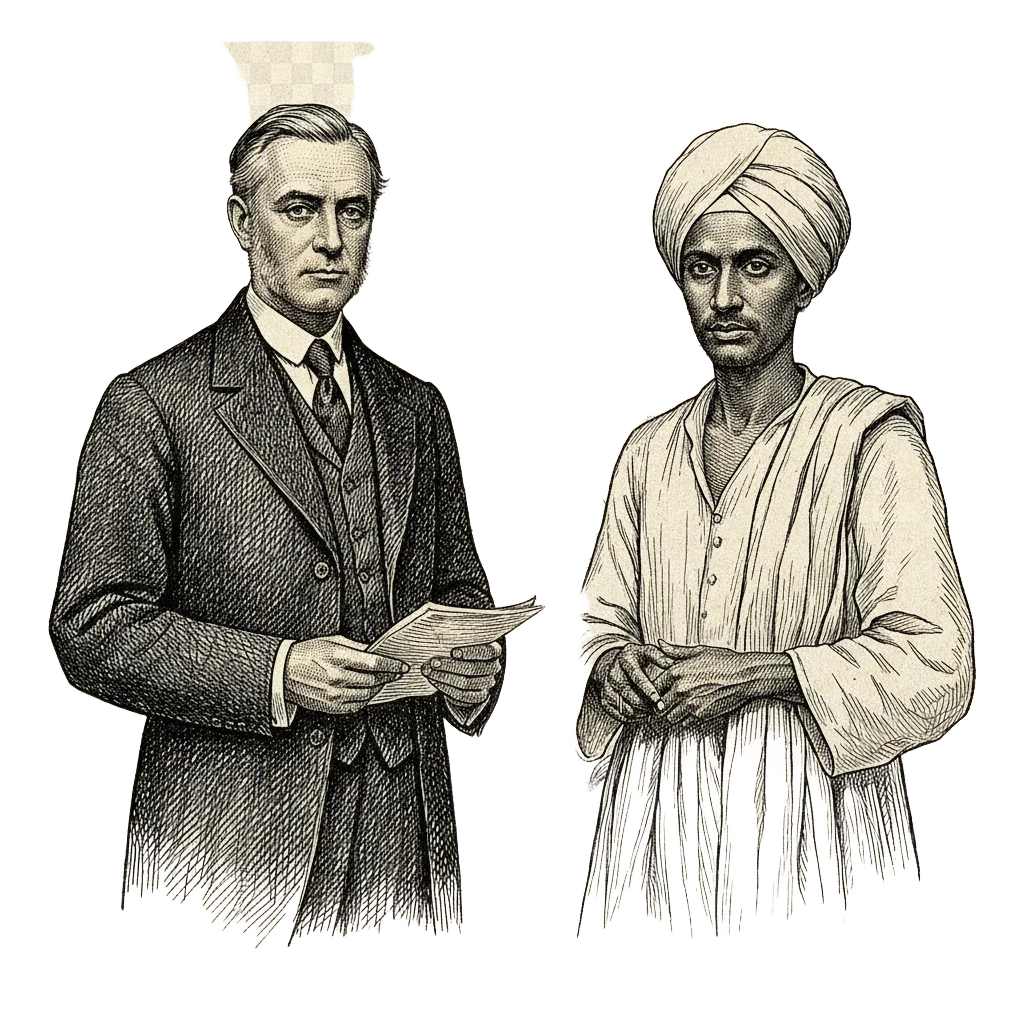
The story is famous not just because of the number, but because of the people involved.
G. H. Hardy was one of Britain's leading mathematicians. Logical, rigorous, and deeply respected.
Srinivasa Ramanujan was something else entirely: a self-taught mathematical genius from India whose ideas often seemed to appear from nowhere. He had an extraordinary instinct for numbers, patterns, and relationships that others could not see.
Hardy recognized Ramanujan's brilliance and helped bring him from India to England. Their friendship became one of the most remarkable collaborations in mathematical history.
So when Hardy dismissed 1729 as uninteresting, Ramanujan saw what Hardy had missed instantly. To Ramanujan, numbers were not lifeless symbols. They had character. Personality. Hidden structure. And 1729 had a secret.
Section III
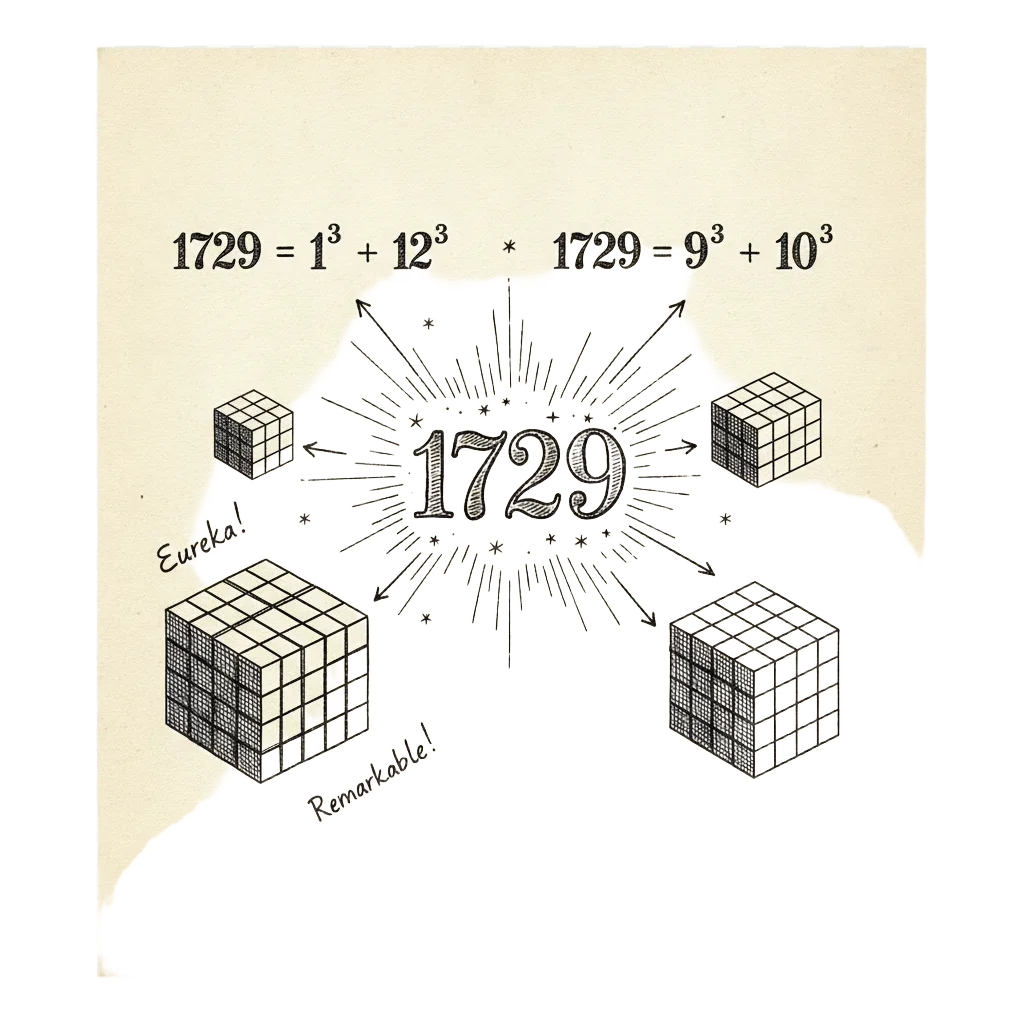
So what made 1729 special? Ramanujan explained that it can be written as the sum of two cube numbers in two different ways.
First way
1729
= 1³ + 12³
1³ = 1
12³ = 1728
1 + 1728 = 1729 ✓
Second way
1729
= 9³ + 10³
9³ = 729
10³ = 1000
729 + 1000 = 1729 ✓
Many numbers can be written as the sum of two cubes in one way. But 1729 is the smallest number that can be written this way in two different ways. That is why mathematicians remember it.
Section IV
At first glance, 1729 does not look special. It is not a round number. It is not especially large. It does not stand out in daily life.
That is exactly what makes the story so beautiful.
The number looks plain on the surface, just the kind of number that might appear on a taxi and be forgotten. But beneath that plain appearance lies a rare and elegant property.
This is one of the joys of mathematics: sometimes the most ordinary-looking things conceal the most unexpected patterns.
1729 is a reminder that interestingness is not always obvious. Sometimes it takes the right mind to see it.
The story also makes mathematics feel human: a conversation between friends, a number on a cab, a flash of recognition.
Section V
Because of this famous story, 1729 later became known as the first Taxicab Number.
In mathematics, the "Taxicab Number" idea refers to numbers that can be expressed as the sum of two positive cubes in multiple ways. The first and smallest such number is:
The formal name
Taxicab(2) = 1729
The name comes directly from Hardy's taxi ride to the hospital. So a fleeting comment about a cab ended up naming an entire mathematical idea.
That is a very Ramanujan kind of legacy: a simple observation opening a doorway into something much bigger.
Section VI
More than a century later, people still retell the story of 1729. Not just because it is a neat mathematical fact. But because it reveals something about genius.
Hardy saw an ordinary taxi number. Ramanujan saw a hidden jewel.
That moment captures the way great minds can notice structure where others see only randomness. It also makes mathematics feel human.
This is not just a story about cubes and equations. It is a story about friendship, conversation, perception, and the strange beauty hiding in numbers.
That is why 1729 has endured.
Section VII
Here is why 1729 matters:
It appeared as the number on a taxi taken by G. H. Hardy.
Hardy mentioned it while visiting Srinivasa Ramanujan in hospital.
Hardy thought it seemed dull. Ramanujan immediately recognized it as special.
It is the smallest number expressible as the sum of two cubes in two different ways.
Those two ways are:
1729 = 1³ + 12³
1729 = 9³ + 10³
That tiny conversation turned 1729 into one of the most famous numbers in the world.
Some numbers are famous because they count things.
1729 is famous because it told a story.
No syllabus. No signup. Just exhibits. The cabinet has many more drawers. Pull one open and see what's inside.
Inspired by
Oddly Specific Numbers · Suggestion Jar
You've spotted something curious. We'd love to hear about it. Drop it in the jar.
Powered by DollarPageClub