Largest Known Prime
The biggest prime anyone has ever found
Take the number 2. Double it. Double it again.
Keep doubling - 136,279,841 times in all - and then subtract one.
The number you get is more than 41 million digits long. Nobody has ever written it out by hand. Nobody ever will.
But we know one thing about it for certain: it cannot be divided evenly by anything except 1 and itself.
It is the largest prime number ever found - and the story of how it was caught is part treasure hunt, part lottery, and part gold rush.
The Hunt
In October 2023, a researcher in San Jose, California, named Luke Durant set out to break a record that had stood for almost five years.
Durant was not a professional mathematician. He had spent years working at the chip company NVIDIA, helping design GPUs - the graphics chips that draw video games and now power artificial intelligence.
He had an idea: what if those chips, which are brilliant at doing huge amounts of arithmetic at once, were pointed at the oldest hunt in mathematics?
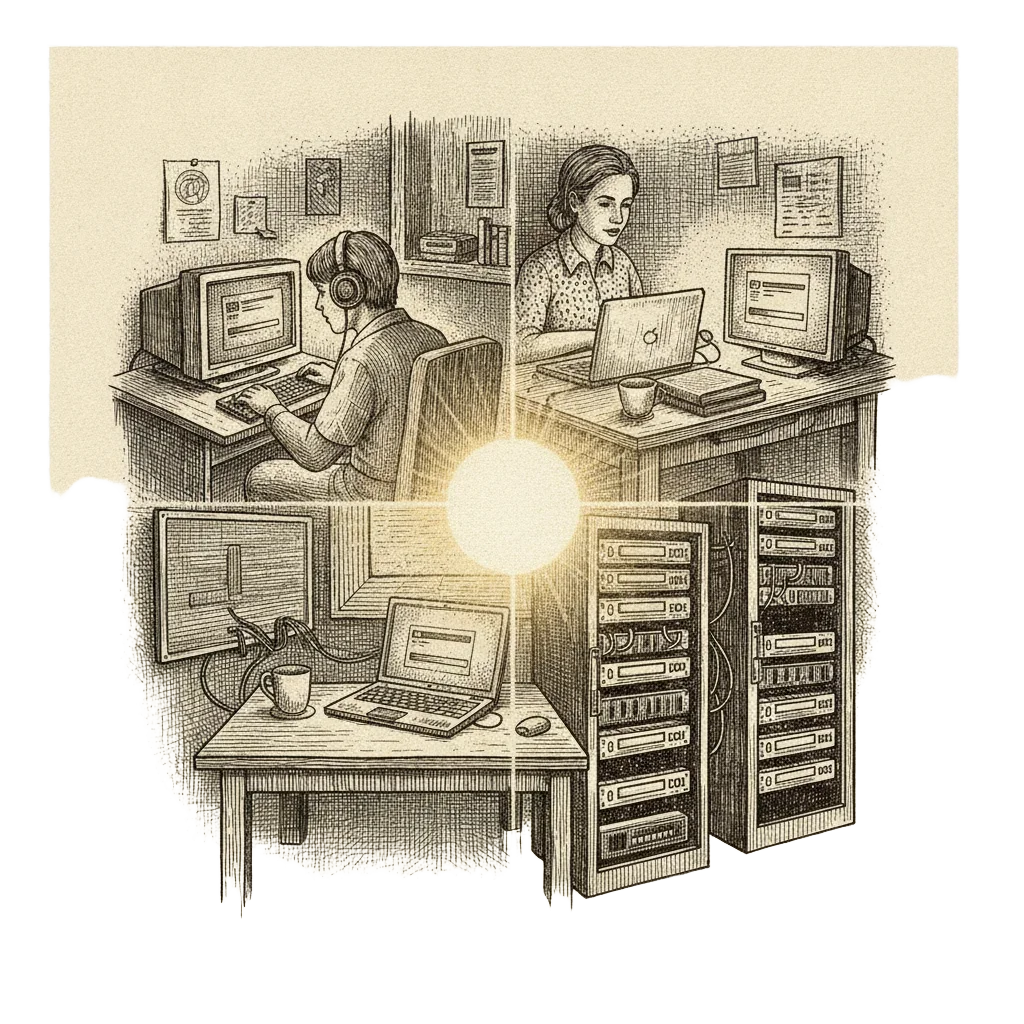
So he built one of the strangest computers ever assembled. Not in one room, but rented in the cloud: thousands of server GPUs in 24 data-centre regions across 17 countries, all working on the same search.
He knew the odds. "As much as I was putting into the project," he later told NPR, "it was extremely unlikely that I came out with a result."
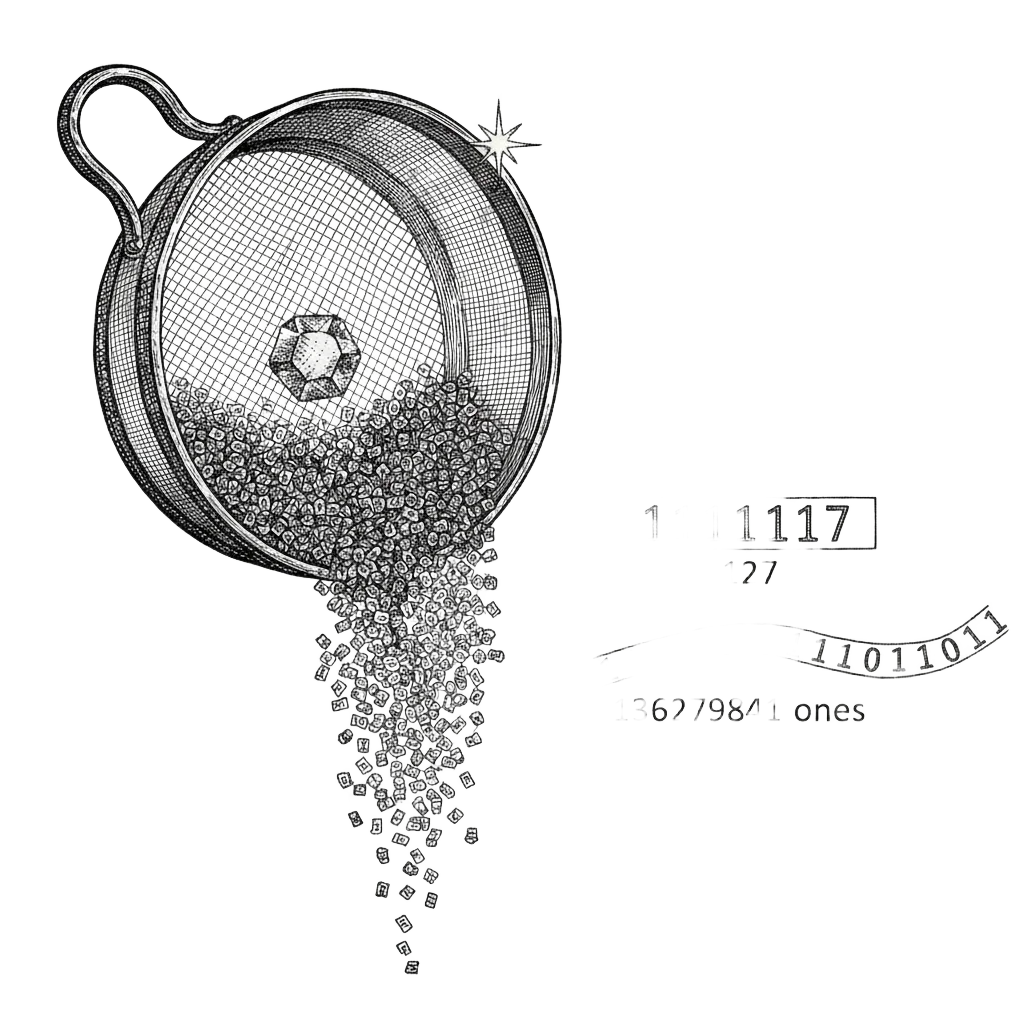
He described the search like this: "It's kind of a sifting of grains of sand through some filter and eventually sift it long enough and try to find the small pebble that doesn't make it through the grates."
On 11 October 2024, a GPU in a data centre in Dublin, Ireland flagged a candidate. The next day, 12 October 2024, another GPU in San Antonio, Texas confirmed it.
The pebble had been found.

The price of a prime
Durant reportedly spent around $2 million of his own money, over about a year, renting the computing power. His official reward for the discovery was $3,000 - which he donated to the mathematics department of his old school, the Alabama School of Math and Science.
The Volunteers
Durant was not hunting alone. He was the latest volunteer in a club that anyone can join.
In January 1996, a programmer named George Woltman started the Great Internet Mersenne Prime Search, or GIMPS. The idea was simple and generous: write free software that anyone could run on their home computer, and let thousands of ordinary machines share the work of one enormous hunt.
Teachers, students, engineers and retirees signed up. Their computers ran the search quietly in the background, while their owners slept, worked, or watched TV.
It worked beautifully. Since 1996, GIMPS volunteers have found 18 new record-sized primes of this special kind.
In 2017, it was Jonathan Pace, an electrical engineer in Germantown, Tennessee, who had been searching for over 14 years before his computer struck lucky. In 2018, it was Patrick Laroche - the record that Durant would finally break six years later.
And in October 2024, it was Durant. His prime is more than 16 million digits longer than the one before it.
The prime that nobody noticed
In 2015, a computer in the research group of computer science professor Curtis Cooper at the University of Central Missouri found a new record prime on 17 September - and reported it. But no human saw the message. It sat unnoticed for nearly four months, until routine maintenance turned it up. The official discovery date became 7 January 2016, because in the rules of this hunt, a prime only counts as found on the day a person notices it.
What is a prime?
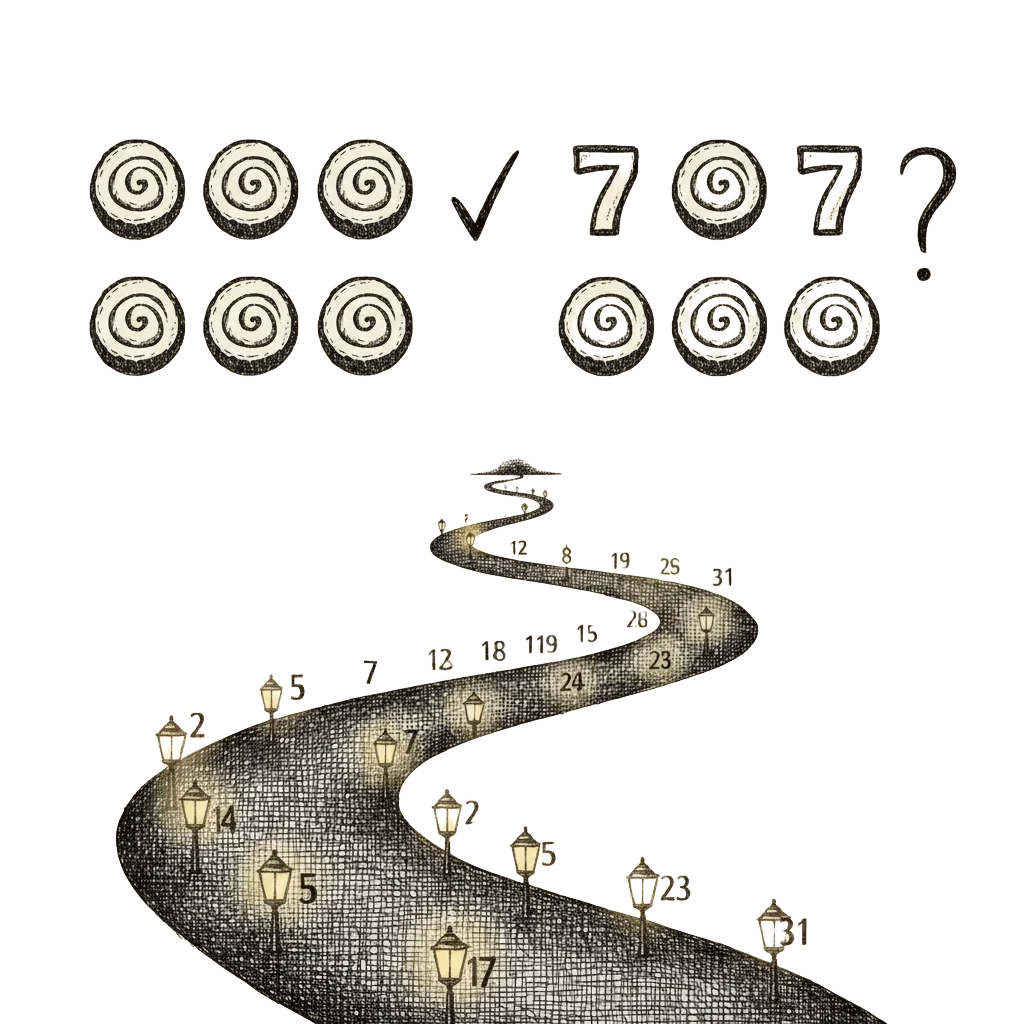
A prime number is a number that cannot be split into equal groups. 7 is prime: try arranging 7 sweets into equal rows and you always fail. 6 is not prime: 2 rows of 3.
Primes are the atoms of arithmetic. Every whole number is built by multiplying primes together.
About 2,300 years ago, the Greek mathematician Euclid proved that the primes never run out. However far you go, there is always another one.
So there is no "largest prime". There is only the largest prime anyone has found so far - a record that can always, in principle, be broken.
That is what makes this a hunt rather than a puzzle. The treasure is certainly out there. The only question is who finds the next piece first.
The Family
Almost every record-breaking prime of the last seventy years belongs to one special family.
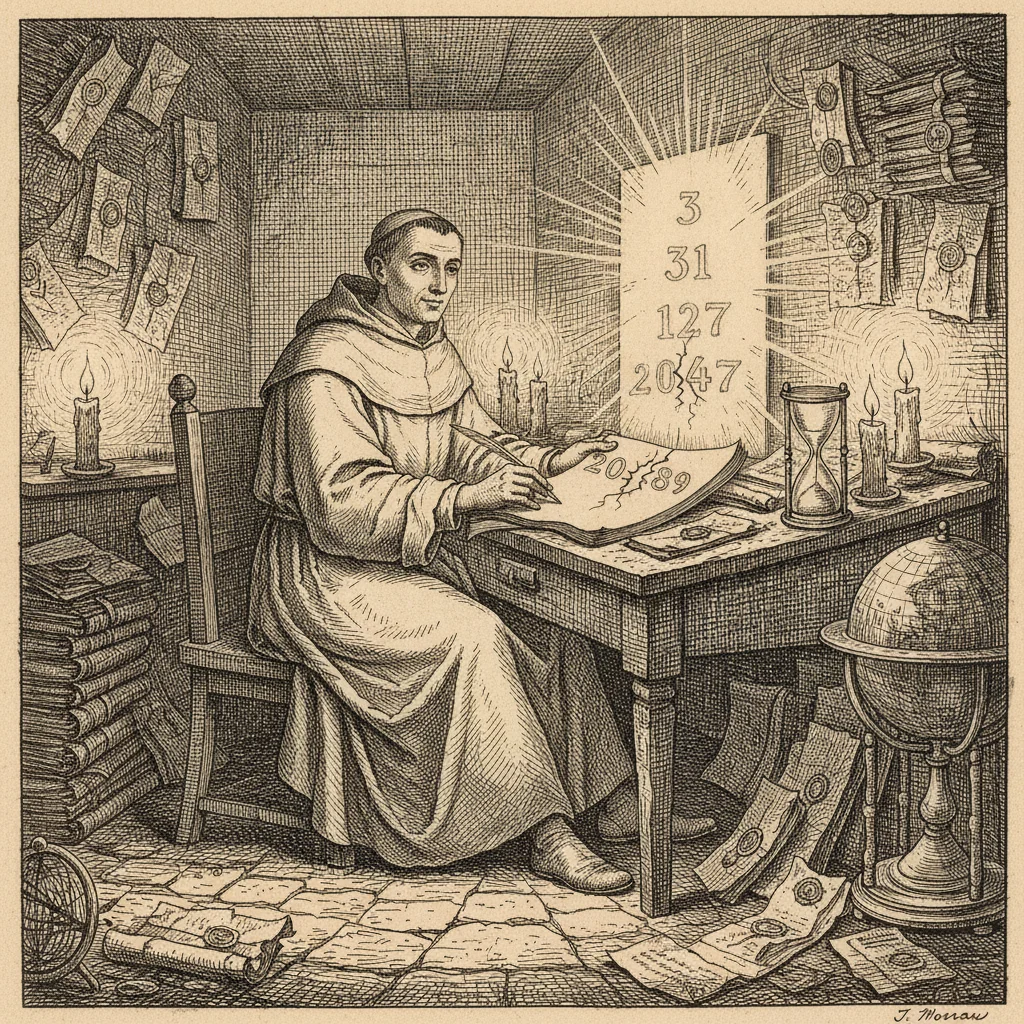
They are named after Marin Mersenne, a French friar who lived in Paris in the 1600s and loved nothing more than trading mathematical letters with the great thinkers of his day.
Mersenne was fascinated by numbers you get by doubling 2 over and over, then subtracting one:
Written the mathematician's way, these are numbers of the form 2p − 1.
But the trick does not always work. Eleven 2s make 2048, and 2048 − 1 = 2047 - which is 23 × 89. Not prime at all.
In 1644, Mersenne published a bold list, claiming to know exactly which of these numbers up to 2257 − 1 were prime. He was wrong in several places. And it took the world more than 250 years to find out.
1903
One of Mersenne's claims was that 267 − 1 is prime. It is a 21-digit number: 147,573,952,589,676,412,927. For two and a half centuries, nobody could check.
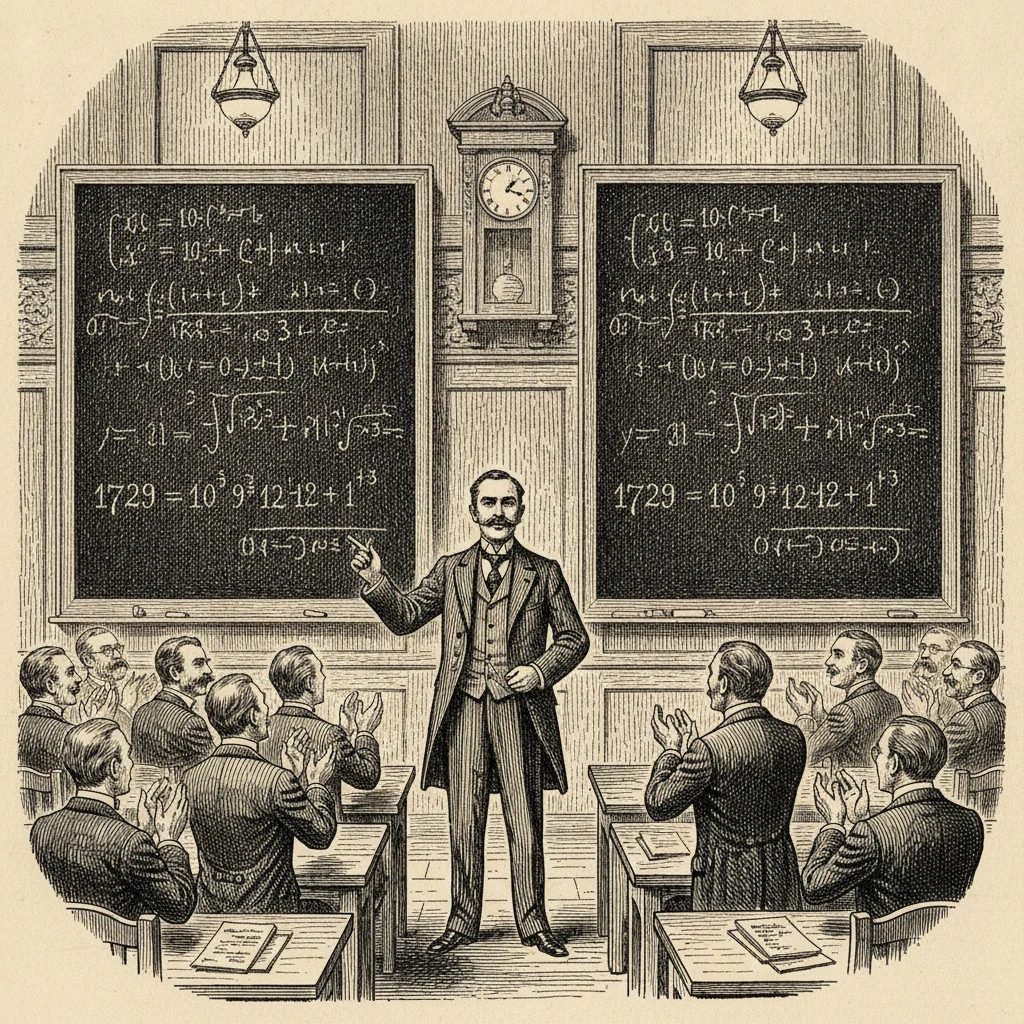
Then, on 31 October 1903, the American mathematician Frank Nelson Cole stood up at a meeting of the American Mathematical Society in New York.
As the story is usually told, he did not say a word.
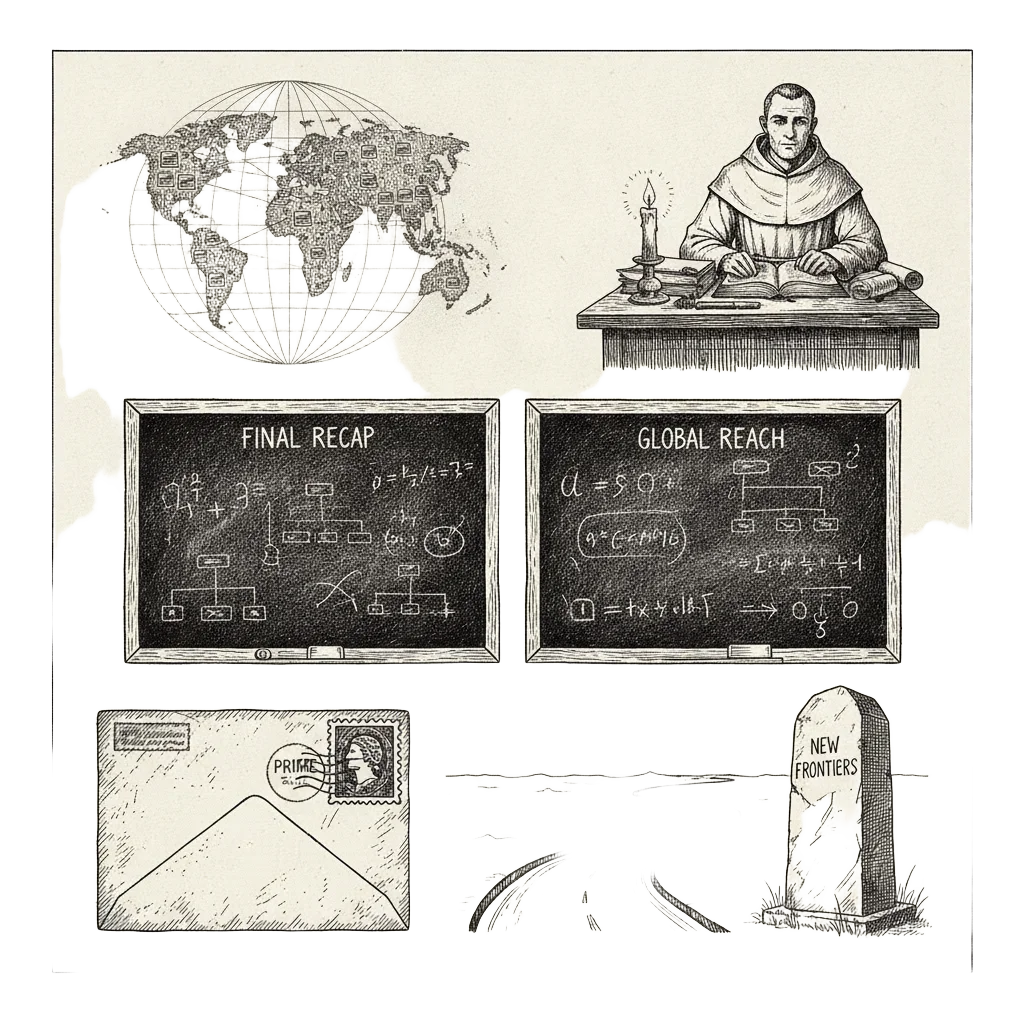
He walked to one blackboard and worked out 267 − 1 by hand. He walked to a second blackboard and multiplied two numbers together: 193,707,721 × 761,838,257,287. The two answers matched. Mersenne's "prime" split cleanly in two.
Cole sat down, still silent - and the audience applauded.
Asked later how long it had taken him to find those two factors, he is said to have answered: "three years of Sundays."
"three years of Sundays."
The Fast Test
If primes are everywhere, why does almost every record belong to Mersenne's family? Because for these numbers - and almost only these - mathematicians have a fast test.
For most giant numbers, checking whether they are prime would take impossibly long. But for numbers of the form 2p − 1, a clever test developed by Édouard Lucas in the 1870s and sharpened by Derrick Lehmer in the 1930s can give a yes-or-no answer in a practical amount of time - even for a number with tens of millions of digits.
That is also why the search is a lottery. Almost every candidate fails. You test a number for days, and the answer is almost always "no".
There is one more hidden beauty. In the binary code that computers use, 2p − 1 is simply a long row of 1s. The number 127, for example, is written 1111111.
Durant's prime, in a computer's own language, is 136,279,841 ones in a row.
A prime on the postage
In 1963, the mathematics department at the University of Illinois found a record Mersenne prime, 211,213 − 1, on its computer. They were so proud that they had the department's postage meter changed to stamp "211213 − 1 IS PRIME" on every letter they sent.
Scale
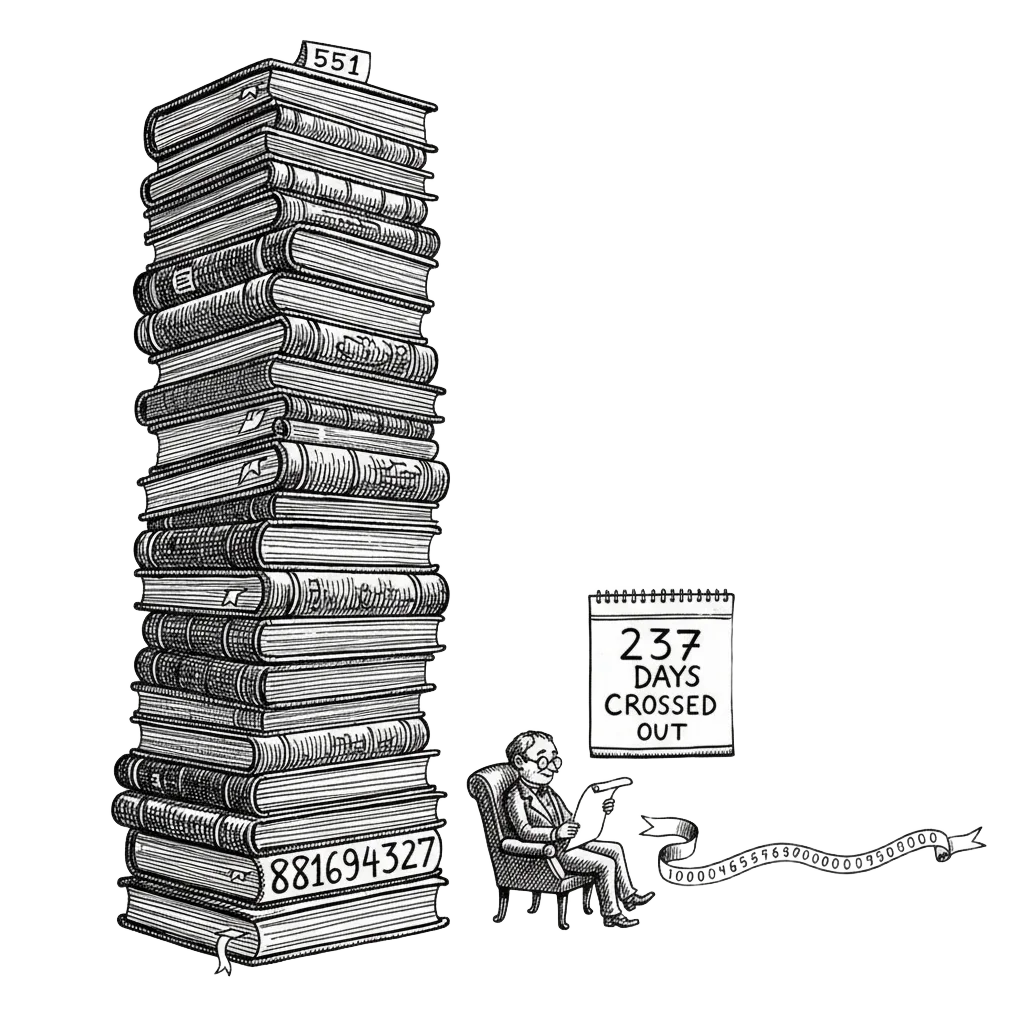
The number has exactly 41,024,320 digits. It begins 881694327… and ends …551.
Some ways to picture it:
days of reading aloud
At two digits every second, without stopping to eat or sleep, you would be reading for about 237 days.
pages to print it
At about 5,000 digits to a page, it would fill roughly 8,200 pages - a stack of thick books. Durant himself guessed 15,000 to 20,000 A4 pages, depending on how you lay it out.
digits in a billion
"I've grown up thinking a billion was sort of an unfathomable number," Durant said, "and that has 10 digits." This number has 41,024,320.
And yet this number is precise down to its very last digit. Change a single one of those 41 million digits and it would no longer be prime.
A secret link to 5050
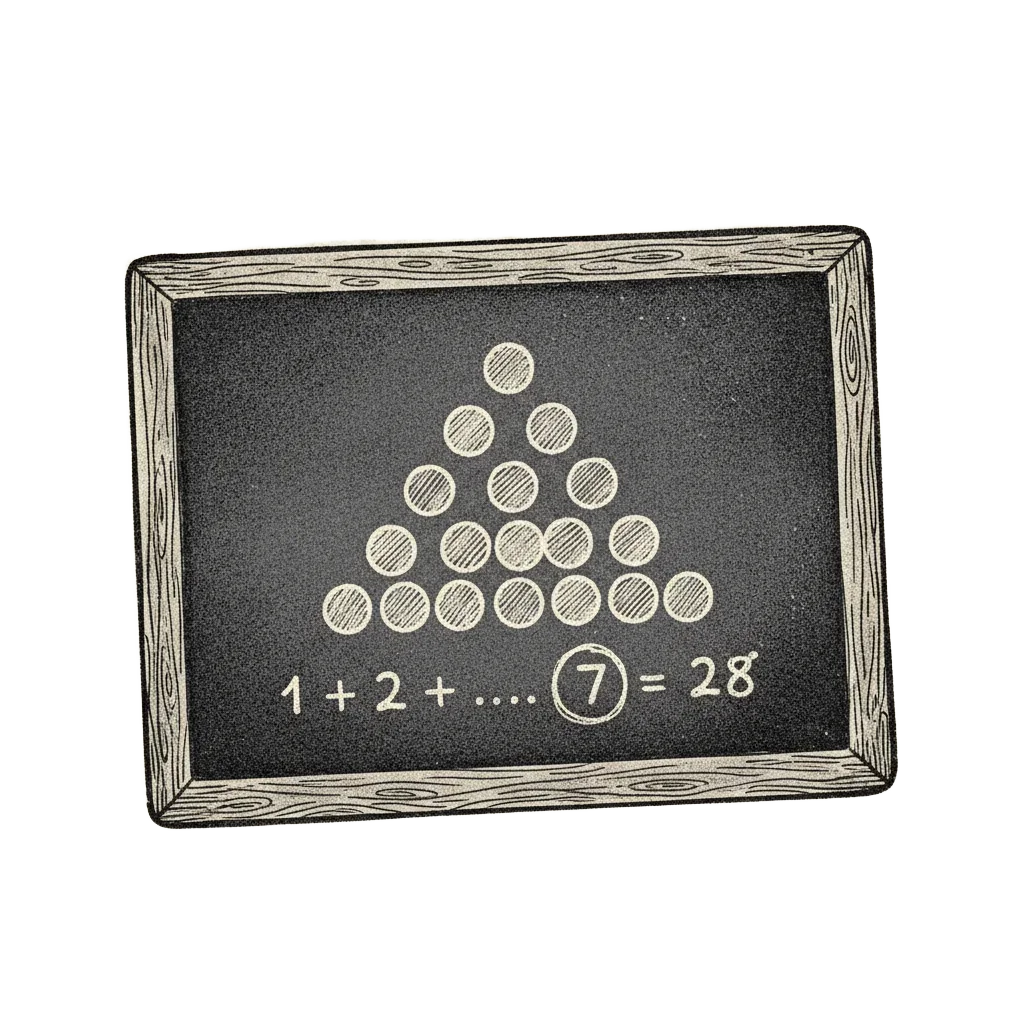
Every Mersenne prime has a partner called a perfect number - a number equal to the sum of its own divisors, like 28 = 1 + 2 + 4 + 7 + 14. And every one of those perfect numbers is a triangular number, just like 5050 on another page of this museum. Durant's prime quietly created a new perfect number too: the sum of every whole number from 1 all the way up to 2136,279,841 − 1.
Purpose
Prime numbers help keep online banking and messages secure. But this one is far too large for that job. When asked, Durant said he knew of no practical use for it.
So why do it?
Partly for the same reason people climb mountains. Partly because the hunt tests new computers and new ideas: GIMPS's software has been used to stress-test hardware for years. And Durant's prime was the first GIMPS discovery to be found using graphics chips rather than ordinary processors.
Durant put his own reason this way: "I wanted to show that, given the strength and capability of large systems that are generally available, even a single individual can start pulling those systems together to come out with surprising new results."
"even a single individual can start pulling those systems together to come out with surprising new results."
The prize still waiting
The hunt goes on. Somewhere out there is a prime with 100 million digits, and a $150,000 prize from the Electronic Frontier Foundation is still waiting for whoever finds it.
The Bigger Idea
Most records are about the limits of the human body: the fastest runner, the highest jump. This one is about the limits of our reach.
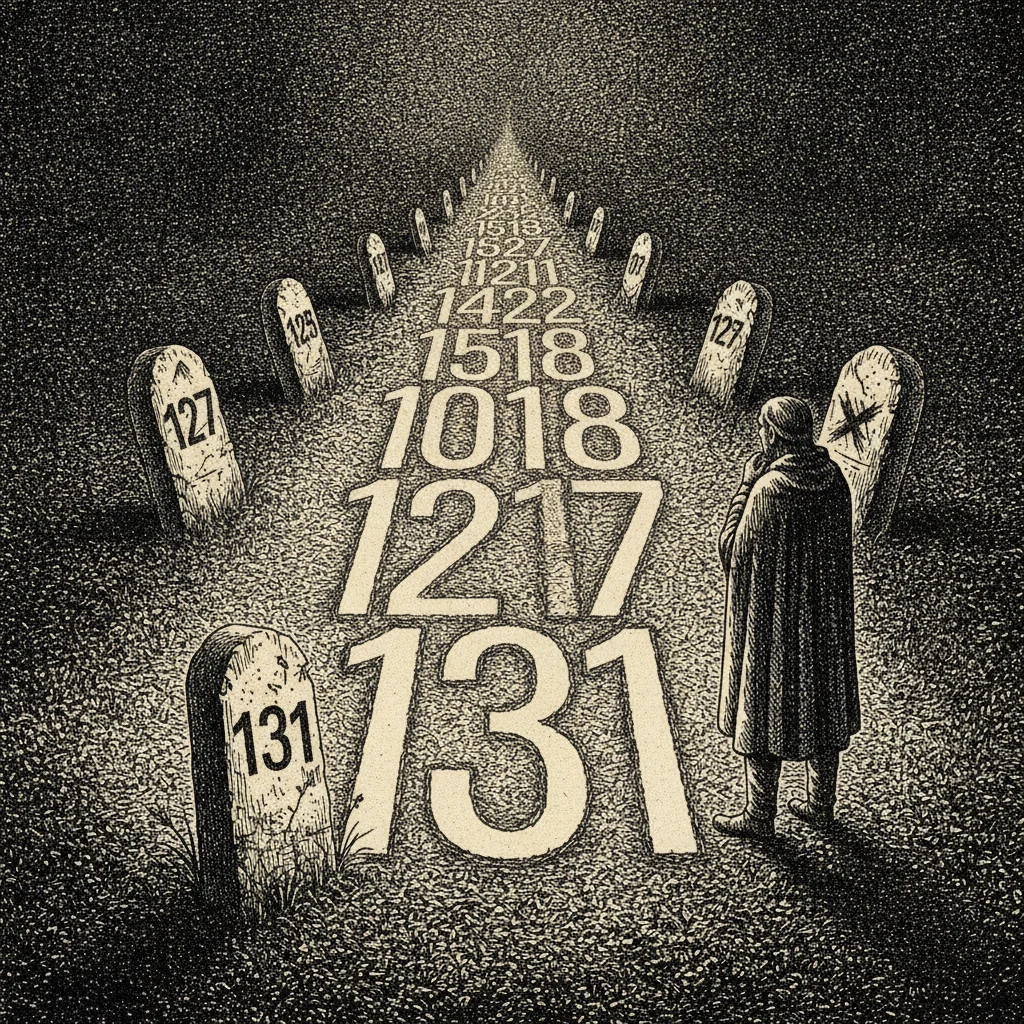
Euclid proved long ago that the primes go on forever. So every "largest known prime" is only a marker showing how far we have walked so far along an endless road.
In the 1600s, the frontier was a friar's handwritten list. In 1903, it was a man with chalk and three years of Sundays. Today, it is volunteers all over the world, and one engineer who borrowed a planet's worth of graphics chips.
The number 2136,279,841 − 1 will not hold the record forever. Nobody wants it to.
That is the point of a hunt that can never be finished.
At a glance
Here is why 2136,279,841 − 1 matters
It is the largest prime number ever found, with 41,024,320 digits.
It was found in October 2024 by Luke Durant, a former NVIDIA engineer, using thousands of cloud GPUs in 17 countries.
He joined the Great Internet Mersenne Prime Search (GIMPS), a volunteer project started by George Woltman in 1996.
It is a Mersenne prime: 2 multiplied by itself many times, minus one. Written as 2p − 1.
Mersenne primes win the records because there is a fast test for them - the Lucas-Lehmer test.
Euclid proved the primes never run out - so this record will one day fall.
A $150,000 prize still awaits the first prime with 100 million digits.
The primes never end, and neither does the hunt.
The largest known prime is not the biggest prime there is - only the farthest anyone has reached.
- The Oddly Specific Numbers Desk
Powered by DollarPageClub