Museum of Numbers

The Number Museum

−40

Where two thermometers finally agree

Americans say it is 68 degrees. Europeans say it is 20. They are both right, and they are talking about the same pleasant afternoon.

Two thermometers. Two sets of numbers. Two centuries of confusion.

But there is one temperature - just one - where the argument stops, and both scales read exactly the same.

It is bitterly, dangerously cold.

It is −40.
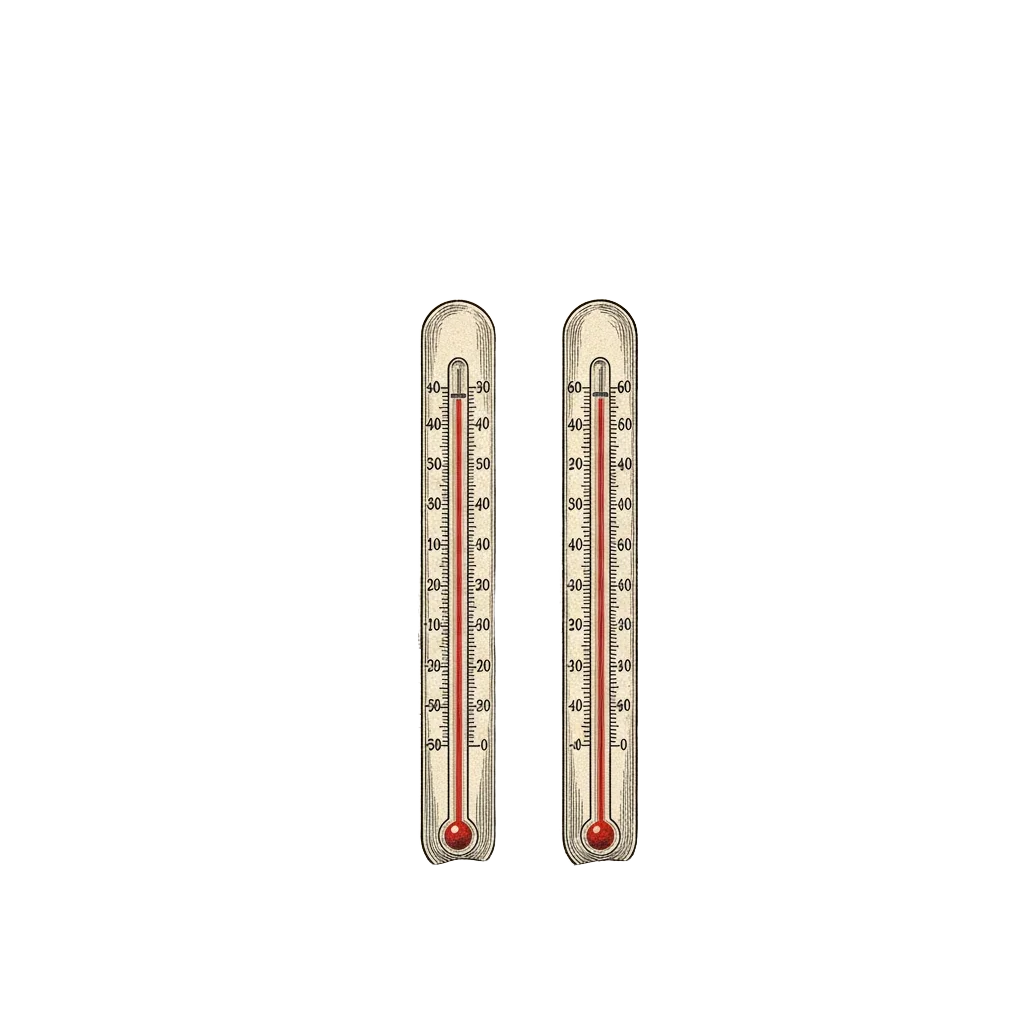
Frozen northern landscape at dawn with two thermometers in the snow, both reading −40, one marked °C and one marked °F

The instrument-maker from Danzig

Our story starts with a man who made things out of glass.

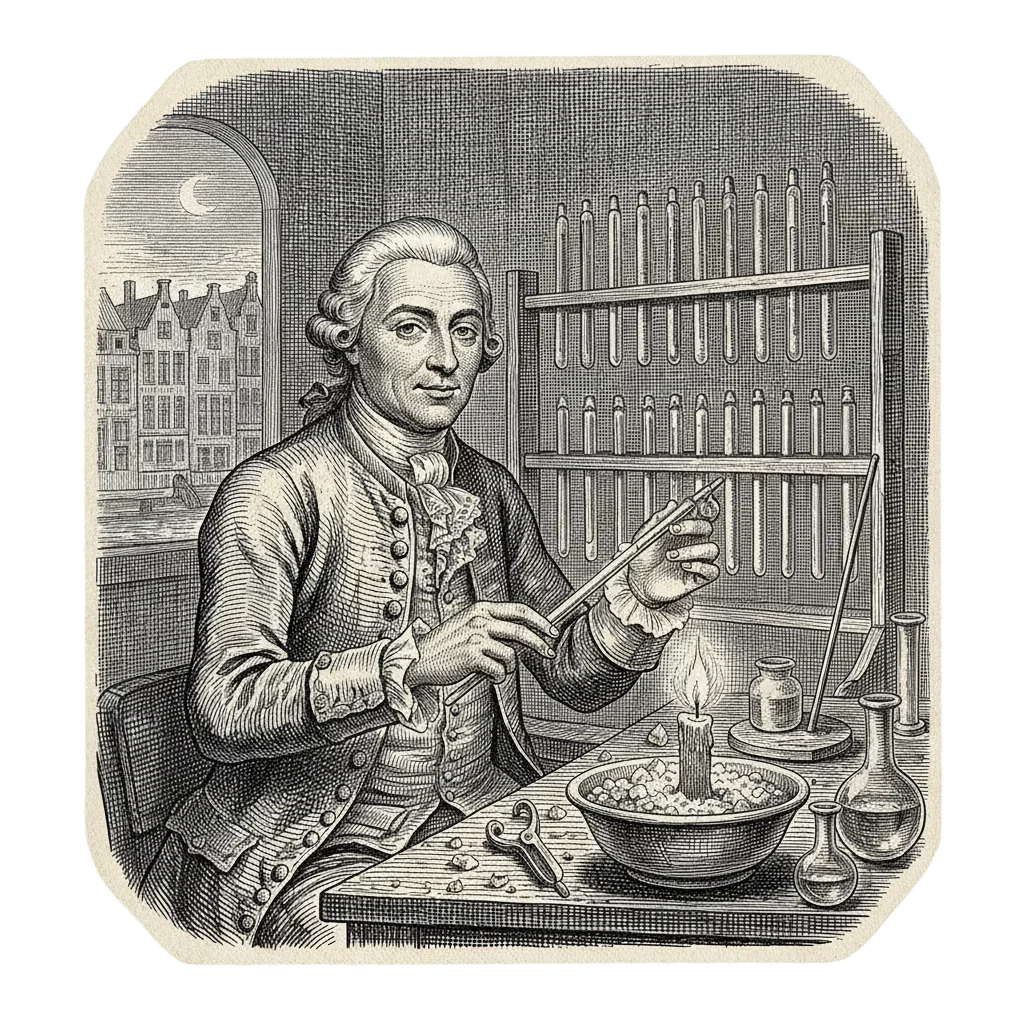
Daniel Gabriel Fahrenheit was born in 1686 in Danzig (today's Gdańsk, in Poland) and spent most of his working life in the Dutch Republic, building scientific instruments. Thermometers in his day were unreliable: two of them, side by side, might disagree. Fahrenheit set out to make ones that matched - and he became one of the first to build thermometers filled with mercury.

In 1724, he described his temperature scale. He chose his fixed points with care:

  • · 0 was the coldest mixture he could reliably make in the lab: ice, water and a kind of salt (ammonium chloride)
  • · 32 was where plain water froze
  • · 96 was roughly the temperature of a healthy human body

Later refinements shifted things slightly - which is why body temperature is usually given today as 98.6 °F, and water boils at 212 °F.

Fahrenheit in his 18th-century Dutch workshop sealing a glass thermometer tube over a candle flame, rows of thermometers drying on a rack, a bowl of ice and salt on the bench

Danzig, circa 1724. The ice and salt stayed cold enough to be useful.

The astronomer who turned it upside down

Eighteen years later, in the Swedish university town of Uppsala, an astronomer had a cleaner idea.

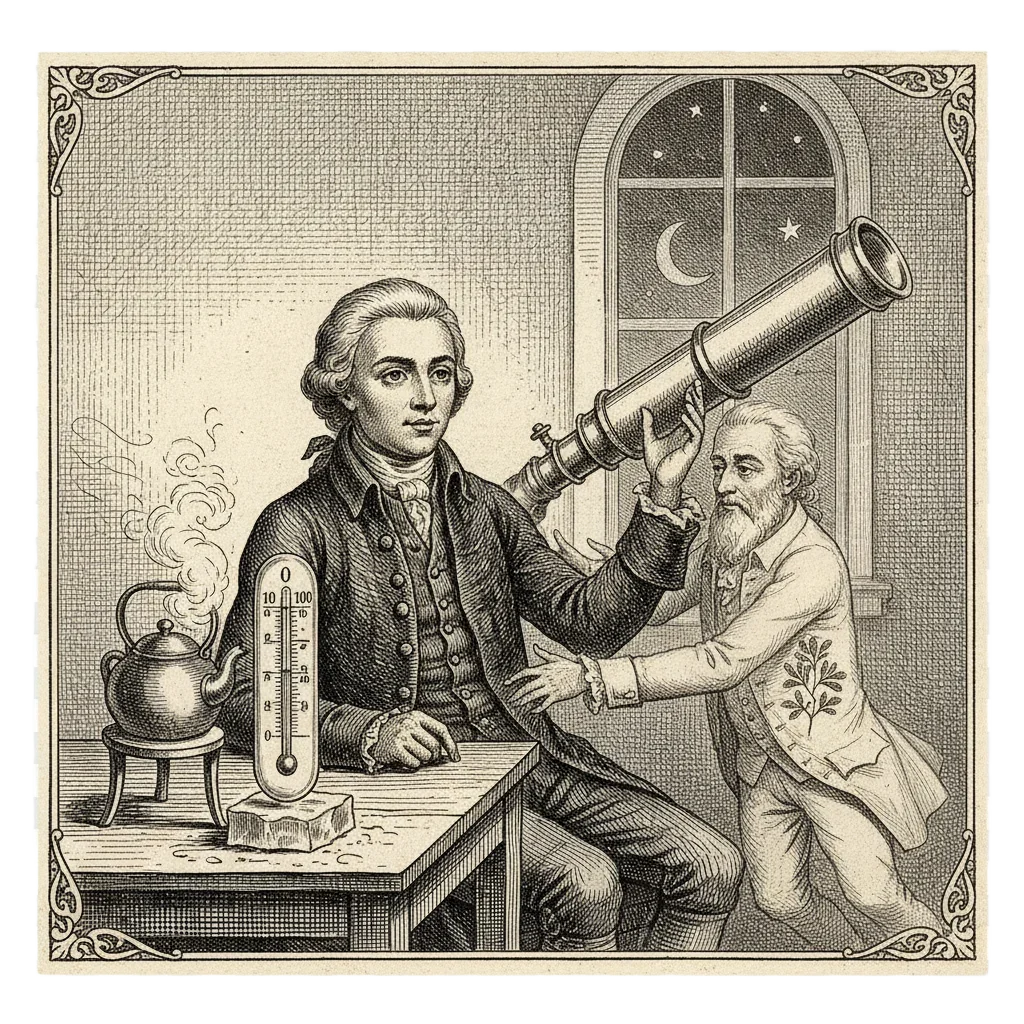
Anders Celsius wanted a scale built on just two natural landmarks: the freezing point and the boiling point of water, with 100 steps in between. He published it in 1742. But there was a twist that surprises almost everyone.

In Celsius's original scale, water boiled at 0 and froze at 100.

It was upside down. The colder it got, the higher the number went. Nobody knows for certain why he chose it that way.

Celsius died of tuberculosis in 1744, aged just 42. Within a year or so, his scale had been flipped the right way up - 0 for freezing, 100 for boiling. The flip is most often credited to the famous Swedish naturalist Carl Linnaeus, or to Celsius's own student Mårten Strömer.

For about two centuries, it was usually called "centigrade" - meaning "a hundred steps." Only in 1948 did the scale officially take Celsius's name.

Celsius at his desk in Uppsala observatory with an upside-down thermometer, and a ghostly figure of Linnaeus gently turning it the right way up

Uppsala, 1742. It took someone else to turn it around.

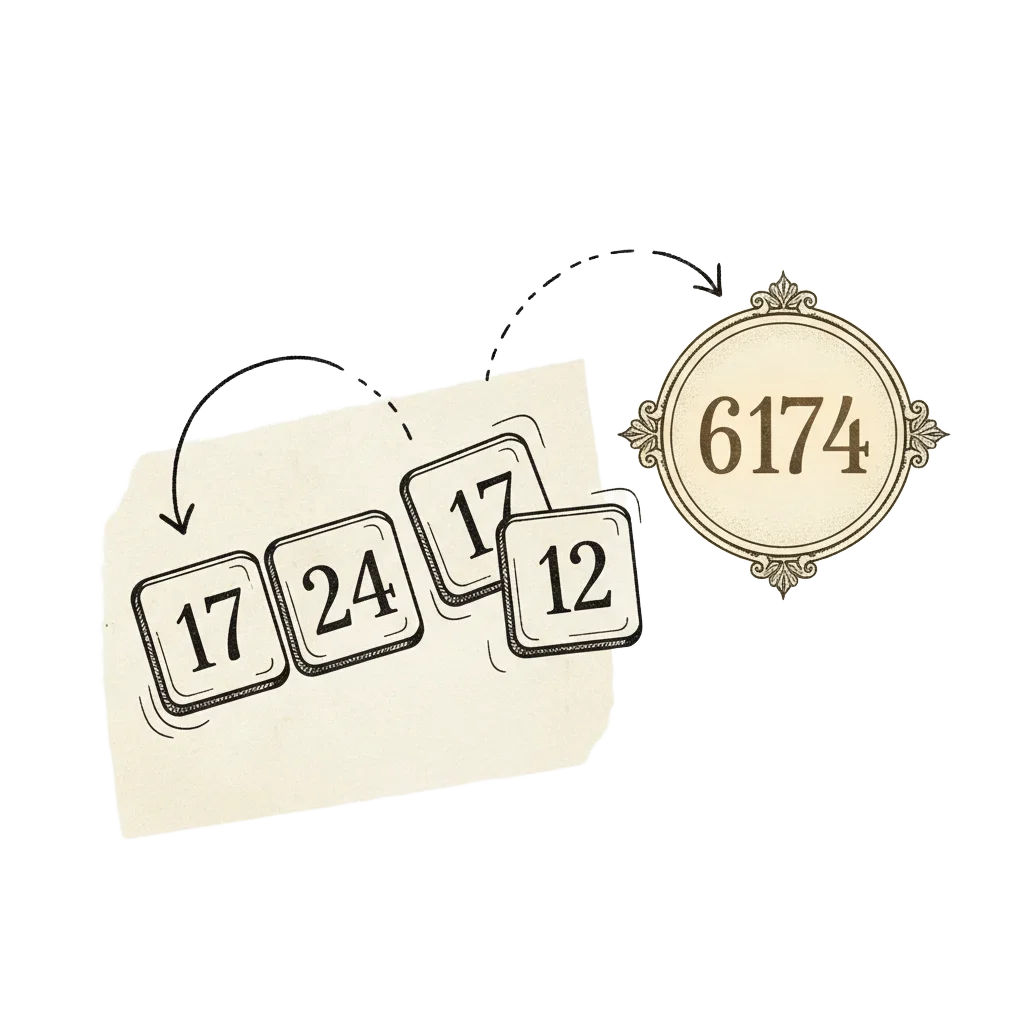
Four digit tiles 1, 7, 2, 4 shuffling between 1724 and 1742, with an arrow pointing to 6174

An accidental anagram

Fahrenheit's scale arrived in 1724. Celsius's in 1742. The two years use exactly the same four digits. And if you put either one through the famous "biggest digits minus smallest digits" trick from our 6174 page, you get there in a single step:

7421 − 1247 = 6174

Two ladders, different rungs

So now the world had two scales, and they disagree almost everywhere. Here is why.

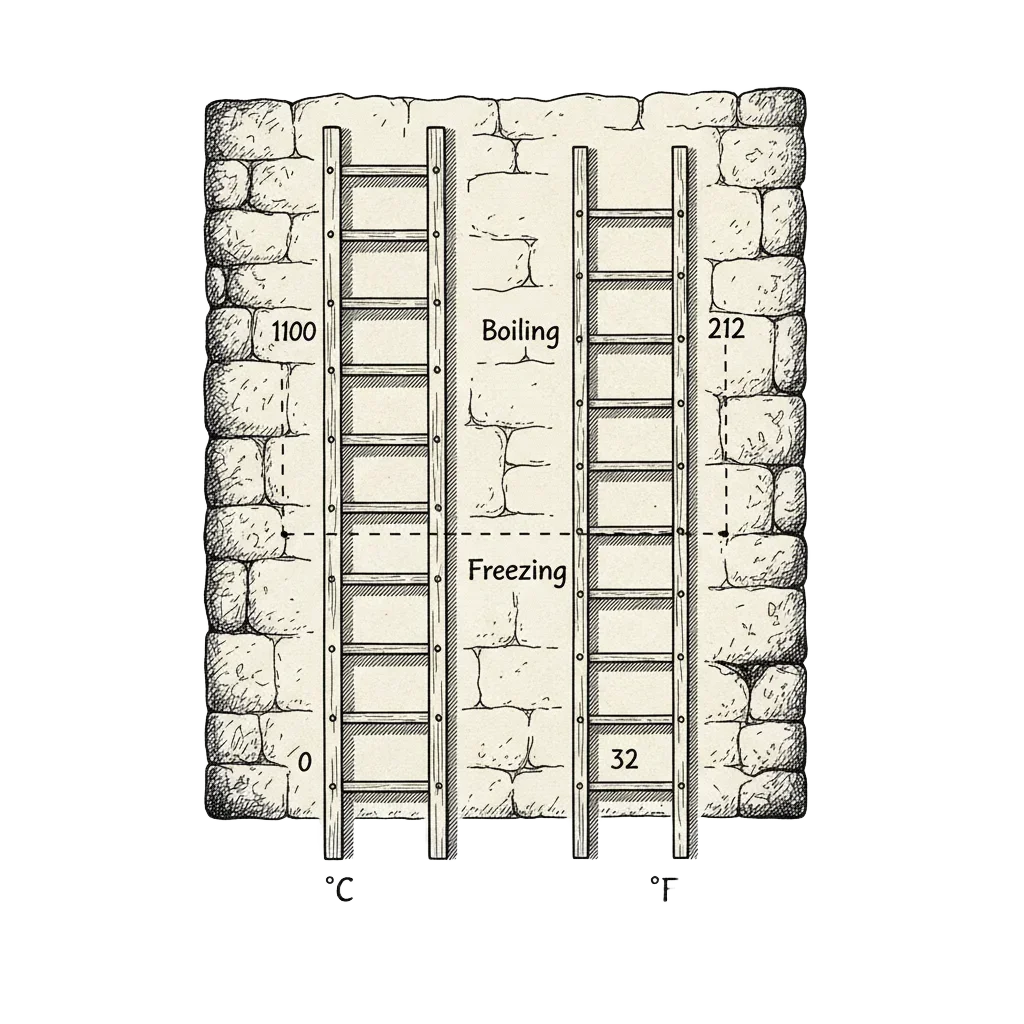
Between freezing and boiling, Celsius uses 100 steps. Fahrenheit uses 180 (from 32 up to 212). So every Celsius degree is a bigger step - worth 1.8 Fahrenheit degrees.

And they do not start in the same place, either. Where Celsius says 0, Fahrenheit already says 32.

It is like two ladders leaning against the same wall: one with widely spaced rungs, one with narrow ones, and their bottom rungs at different heights. On most of the wall, the rung numbers do not match.

But are there any heights where they do?

Two wooden ladders leaning against a tall wall, the left labeled °C with wide rungs at 0 and 100, the right labeled °F with narrow rungs at 32 and 212, with horizontal lines showing freezing and boiling

Same wall. Different rungs. One gap to close.

Enjoying this story?

NumberMuseum tells the stories behind remarkable numbers - the people, the accidents, and the surprises hiding inside them.

Get the next one delivered to your inbox. One new story a week, at most.

At most one email a week.

Following the ladders down

Let's walk down from freezing and watch the gap between the two numbers.

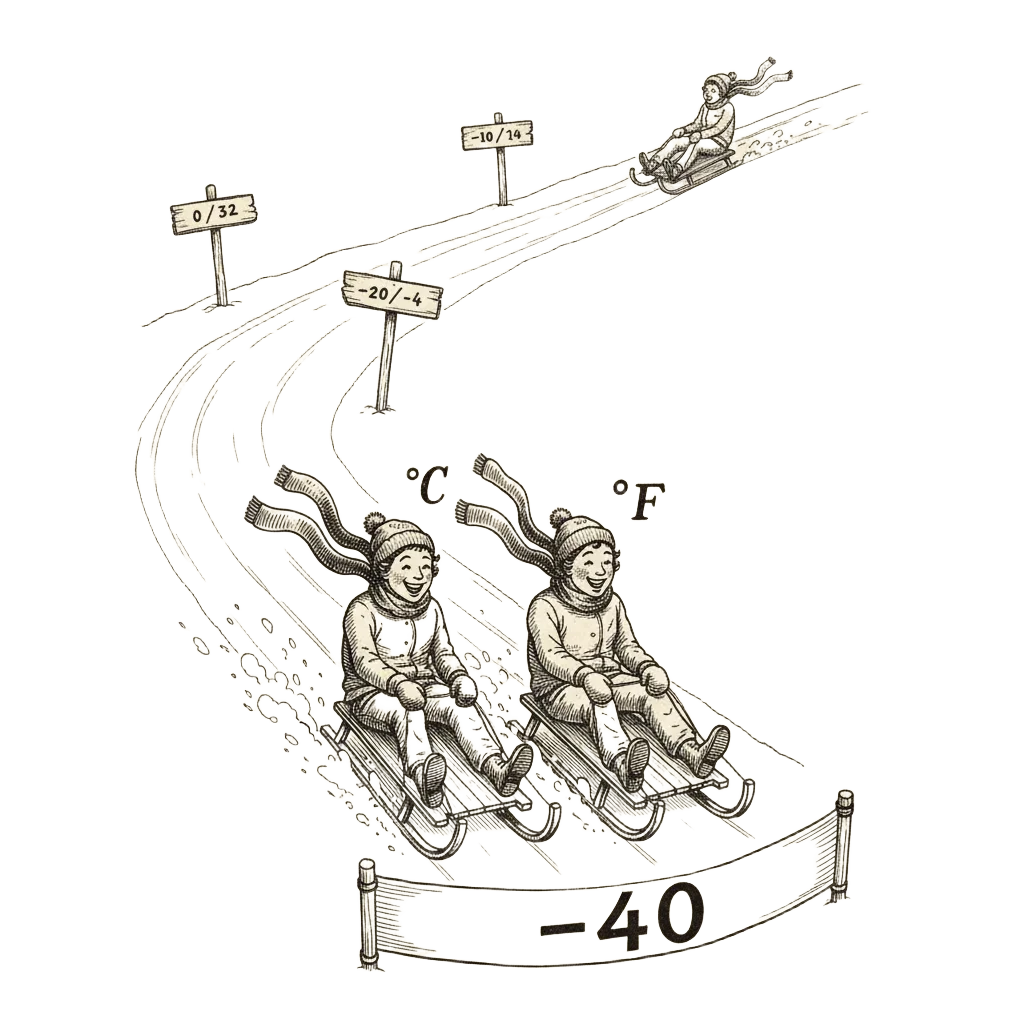
°C °F Gap
0 32 Fahrenheit is 32 ahead
−10 14 now just 24 ahead
−20 −4 16 ahead
−30 −22 only 8 ahead
−40 −40 the gap is gone

Every time Celsius drops 1 degree, Fahrenheit drops 1.8. So Fahrenheit closes the gap by 0.8 every degree. It starts 32 degrees ahead. And 32 ÷ 0.8 = 40.

Forty degrees below freezing, the two ladders finally meet on the same rung.

If you like algebra, here is the one line:

F = 1.8 × C + 32, and if F and C are the same number, that number has to be −40.

It is the only place they ever agree. Go colder, and they part ways again - with Fahrenheit now the lower number.

Two sledders labeled °C and °F racing down a snowy slope with signposts showing temperature pairs, both arriving side by side at a finish line marked −40

°F starts higher up the hill. Forty steps later, they are level.

Where −40 actually happens

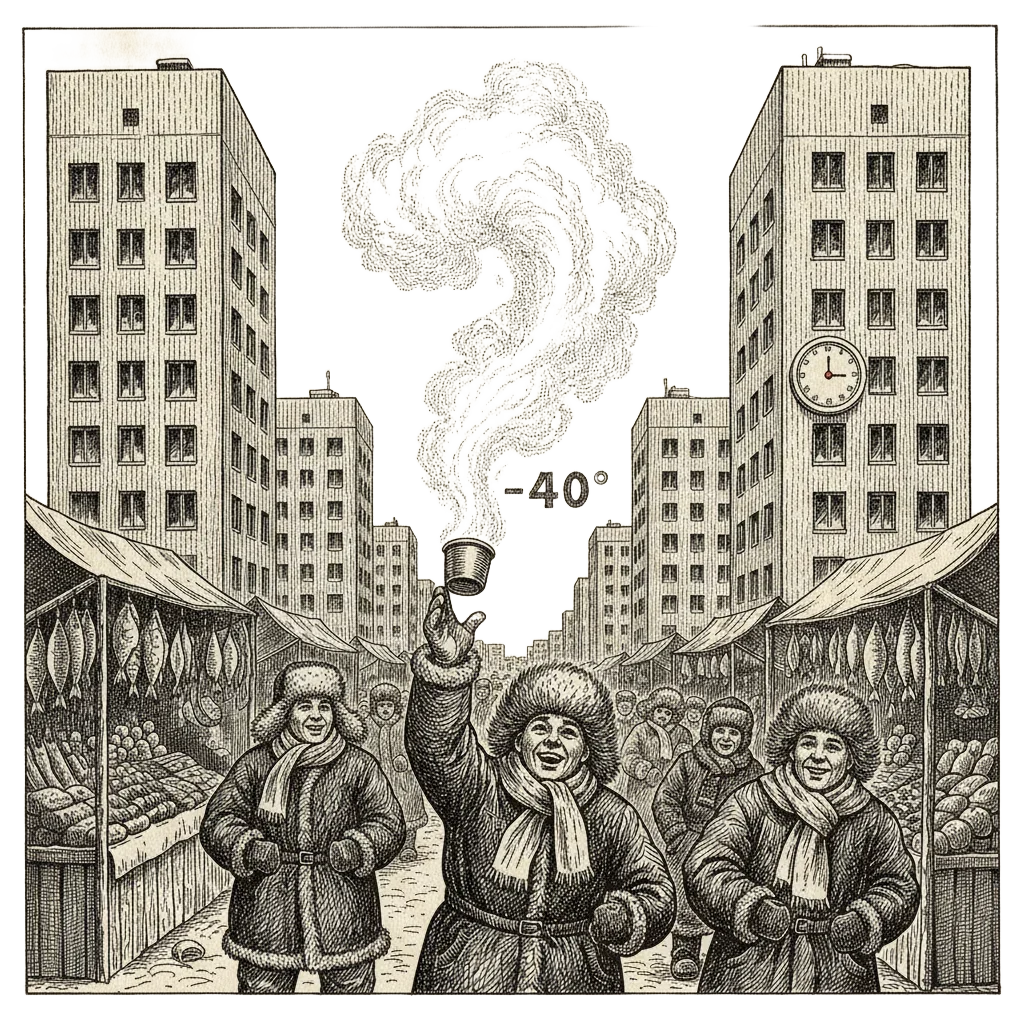
−40 is not just a number on paper. For some people, it is winter.

In Yakutsk, in eastern Siberia - often called the coldest major city on Earth - the average low in January is about −40. Hundreds of thousands of people live there.

At −40, exposed skin can freeze in minutes. Breath crackles. Car tyres stiffen. Boiling water thrown into the air can burst into a cloud of ice.

And in places like this, nobody needs to ask which scale the weather forecast is using.

A Siberian city street in deep winter, apartment blocks and market stalls, people in fur hats and scarves, a public thermometer reading −40°, a person tossing water that turns to ice mist

Yakutsk in January. The number on the sign is the same in any language.

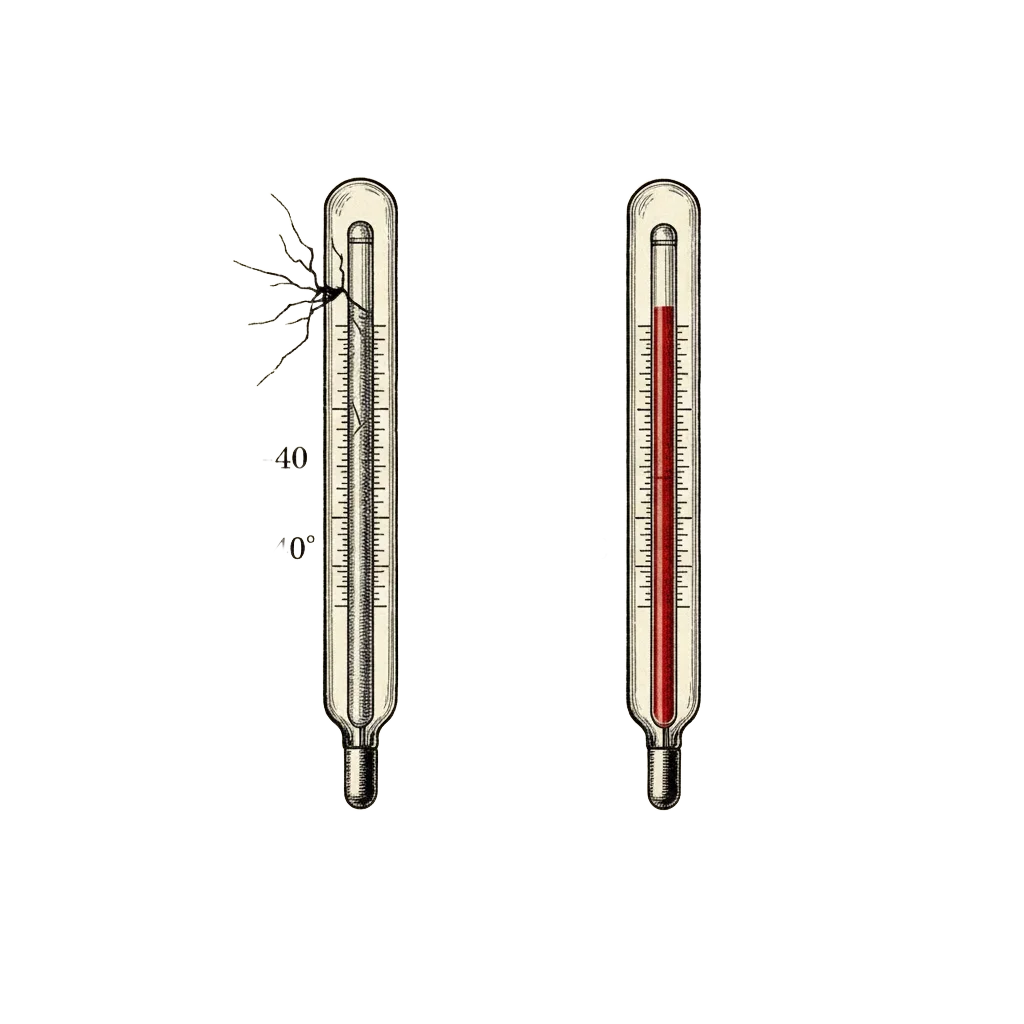
A mercury thermometer with its column frozen and cracked just above −40, next to a red alcohol thermometer happily reading −40

The thermometer that gives up first

Fahrenheit's famous mercury freezes solid at about −38.8 °C (about −37.9 °F) - just short of −40. So an old mercury thermometer cannot even show the one temperature where the two scales agree. In very cold places, thermometers filled with coloured alcohol are used instead.

Two systems, one truth

The world never fully settled the argument. Most countries use Celsius. The United States and a handful of others still use Fahrenheit for daily weather.

But −40 tells us something quietly important.

Scales are human inventions. Where zero sits, how big a degree is - those are choices made by people like Fahrenheit and Celsius, for their own good reasons.

The cold itself does not care. At −40, the air is exactly as cold whichever number you prefer.

And right there, where it is cold enough to freeze mercury, our two inventions briefly admit it.

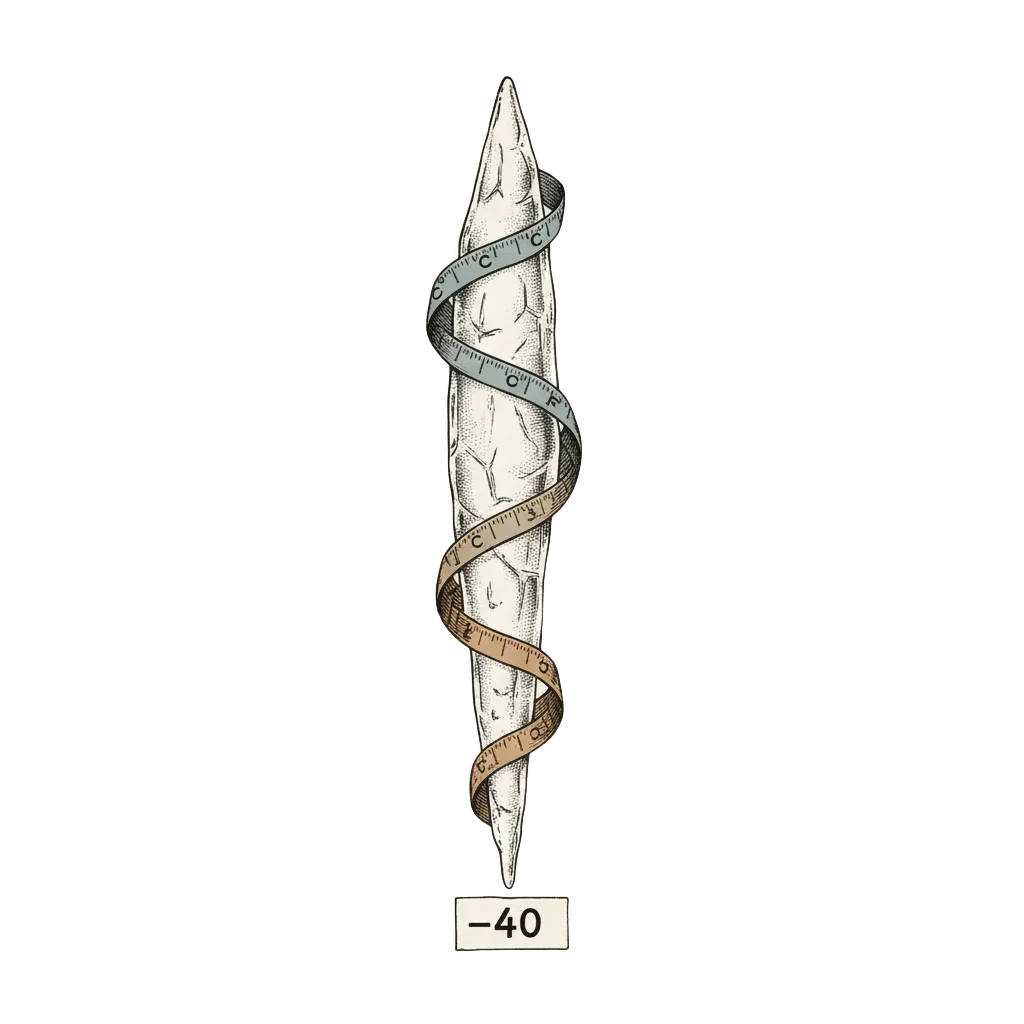
A single icicle in clear winter light with two measuring tapes, one marked °C and one °F, curling around it and meeting at the same −40 mark

The cold does not negotiate. The scales do.

Why we still remember it

−40 is one of those facts people love to share: at a party, in a classroom, in a winter weather report.

Partly because it sounds like a trick.

Partly because anyone can check it with a calculator in seconds.

And partly because it hides a tiny human drama: a Dutch instrument-maker with his salt and ice, a Swedish astronomer whose scale began upside down, and two centuries of people converting back and forth - except, just once, at the bottom of the thermometer.

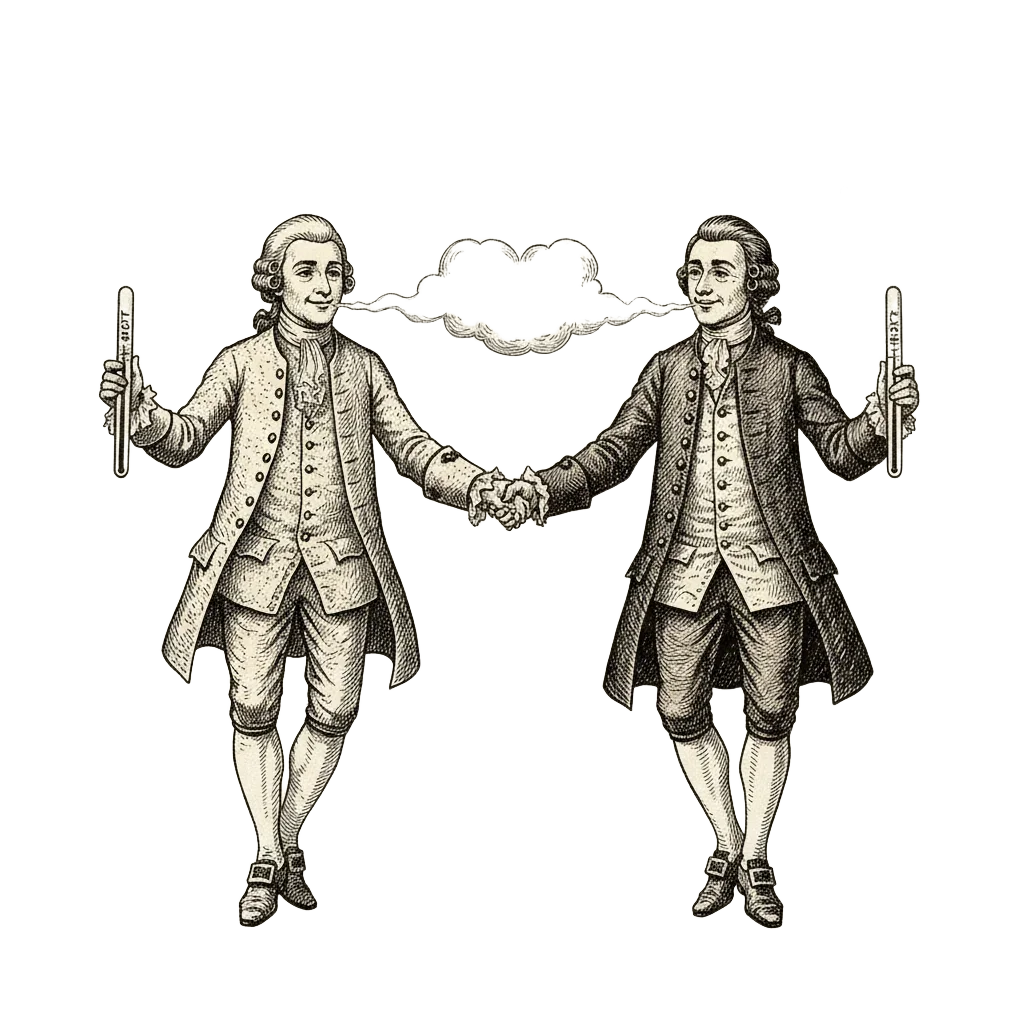
Fahrenheit and Celsius as friendly figures from different centuries, standing in the snow side by side, each holding a thermometer reading −40, shaking gloved hands, their breath forming one shared cloud

They never met. But they agreed on one thing in the end.

−40 in a nutshell

Here is why −40 matters:

  • · It is the only temperature where the Celsius and Fahrenheit scales show the same number.
  • · Fahrenheit introduced his scale in 1724, with water freezing at 32.
  • · Celsius introduced his in 1742 - originally upside down, with water boiling at 0 and freezing at 100.
  • · Each Celsius degree equals 1.8 Fahrenheit degrees, so Fahrenheit closes a 32-degree gap by 0.8 per degree: 32 ÷ 0.8 = 40.
  • · In Yakutsk, Siberia, the average January low is about −40.
  • · Mercury freezes at about −38.8 °C, just before reaching −40.
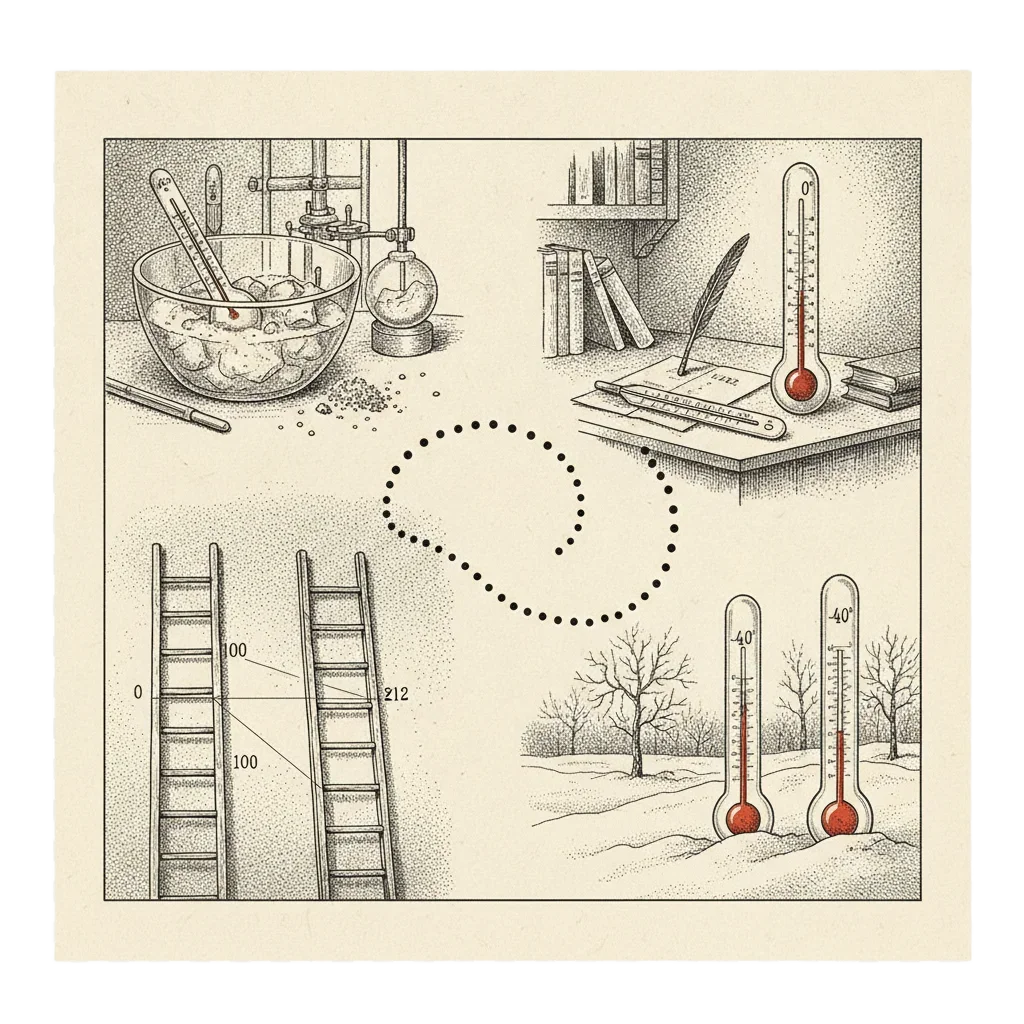
A composite illustration combining Fahrenheit's workshop, Celsius's upside-down thermometer, the two ladders on a wall, and the two thermometers in Siberian snow, all connected by a dotted curving path

The whole story, in one cabinet drawer.

Two men, two scales, two centuries of converting.

−40 is the one temperature nobody needs to convert.

Continue exploring

More numbers from the museum

Powered by DollarPageClub