Museum of Numbers
All Exhibits › Mathematical Curiosities
Exhibit No. 196

196

The number that refuses to become a palindrome

Take a number. Flip it back to front. Add the two together.

Keep doing it, and almost every number soon turns into a palindrome - a number that reads the same forwards and backwards, like 4884 or 11011.

Almost every number.

196 has been flipped and added billions of times, by computers running for years on end. It has grown to more than a billion digits long.

It has never once become a palindrome.

Nobody knows if it ever will.

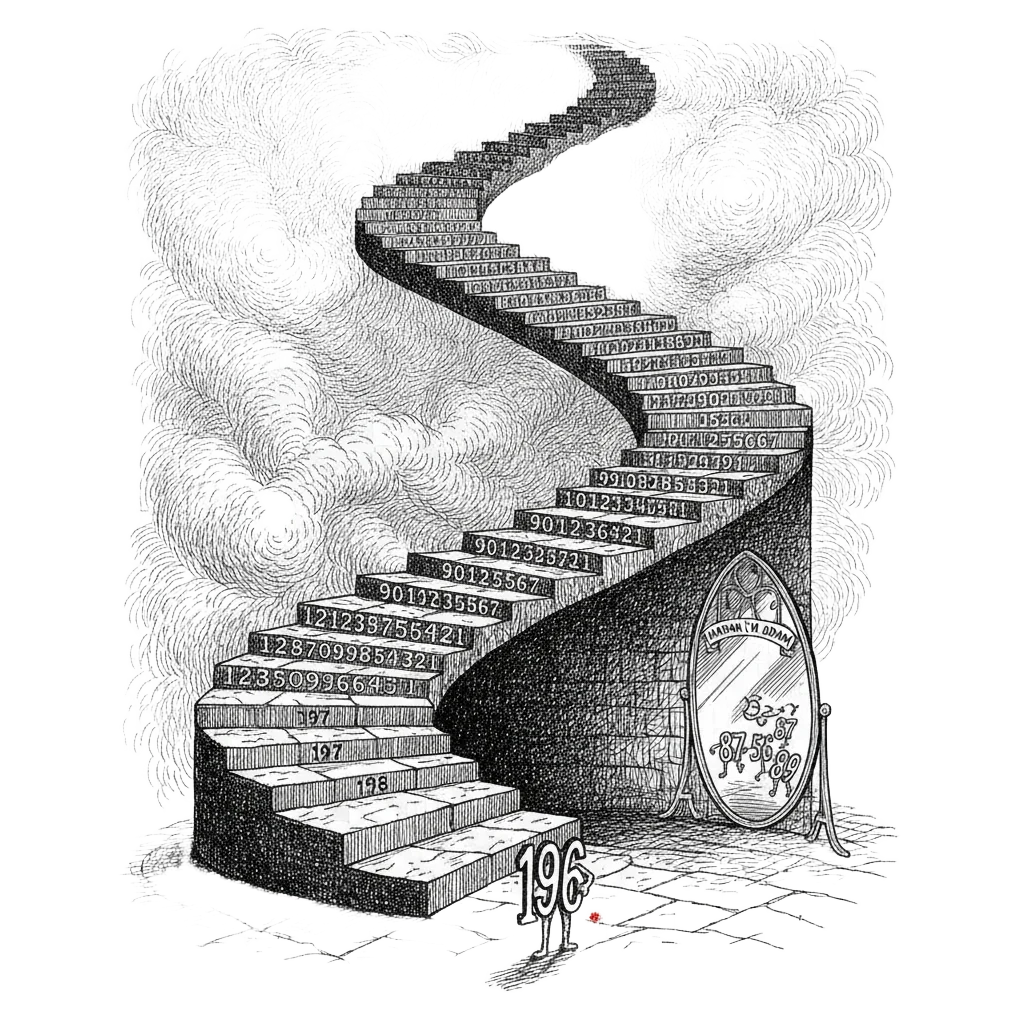
196 at the bottom of a spiral staircase winding into the clouds, each step a longer number, while other numbers skip happily through a palindrome doorway
Section 1

Flip it and add it

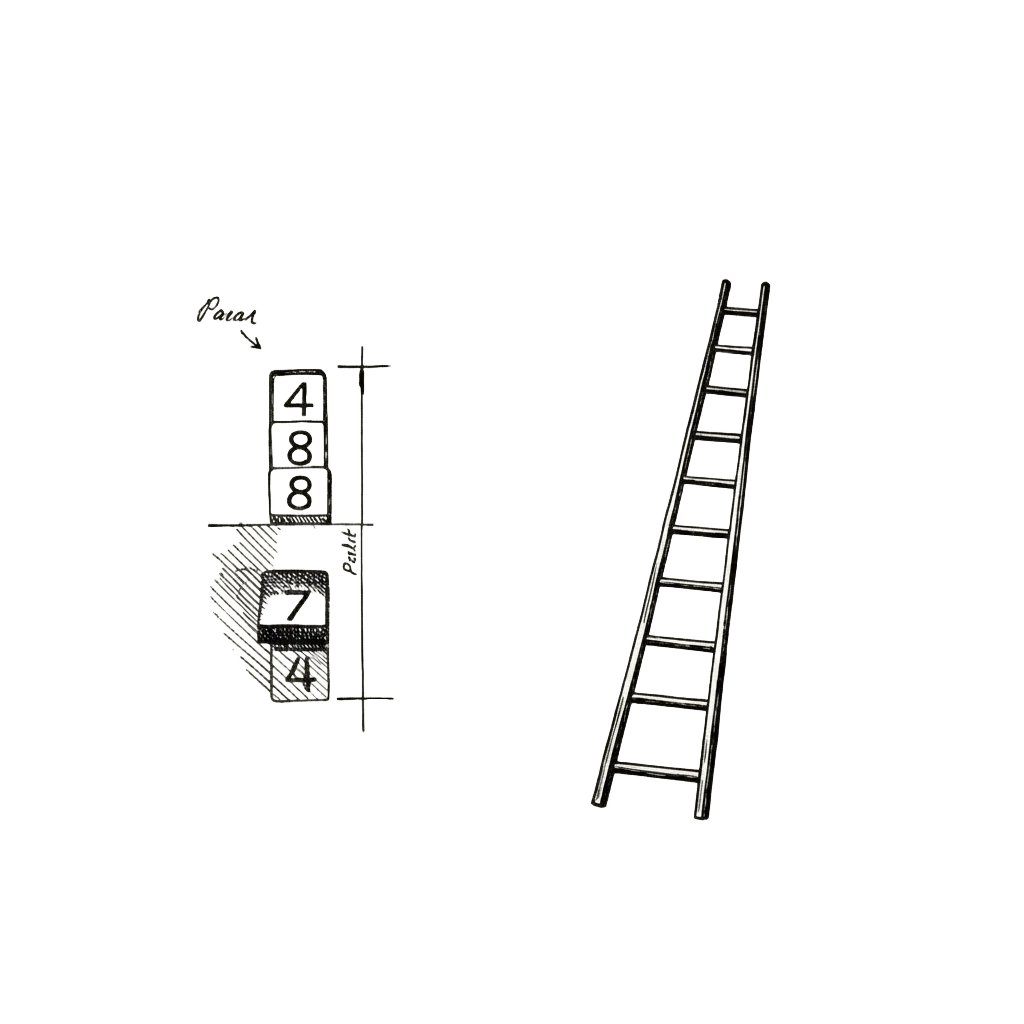
Let's play the game with 87.

· 87 + 78 = 165
· 165 + 561 = 726
· 726 + 627 = 1353
· 1353 + 3531 = 4884

4884 reads the same both ways. A palindrome, in four steps.

Most numbers are even quicker. 56 + 65 = 121 - done in one.

Some take their time. 89 needs 24 steps, climbing all the way up to 8,813,200,023,188 before it finally settles into a palindrome.

Now try 196:

196 + 691 = 887
887 + 788 = 1675
1675 + 5761 = 7436
7436 + 6347 = 13783
13783 + 38731 = 52514
52514 + 41525 = 94039
… 187088 → 1067869 → 10755470 → 18211171 → 35322452 → 60744805 …

It just keeps going. And going.

Digit cards showing 87 flipping and adding step by step to reach palindrome 4884, beside a ladder of 196's ever-growing numbers climbing off the page

Some familiar faces.

The other numbers in this museum play the game too:

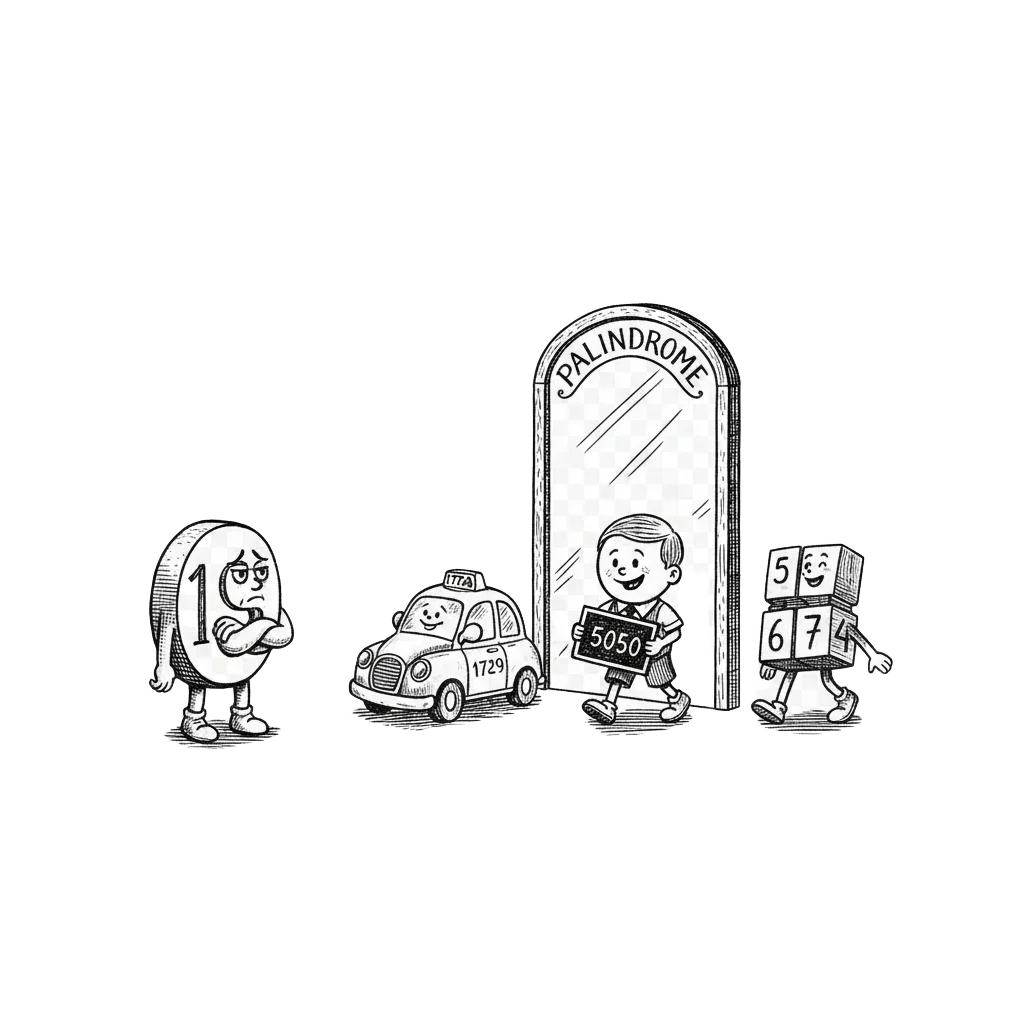
  • 5050 + 0505 = 5555 - a palindrome in one step.
  • 1729 + 9271 = 11000, and 11000 + 00011 = 11011 - two steps.
  • 6174 takes four: 10890 → 20691 → 40293 → 79497.

Only 196 refuses to join them.

The 1729 taxicab, Gauss's 5050 slate, and 6174 digit tiles each passing through a palindrome mirror door, while 196 stands outside arms folded
Section 2

Three years on a workstation

In the 1980s, as home computers arrived, the 196 puzzle became a favourite challenge for hobbyists. Computer magazines printed programs to chase it. In 1985, one program by James Killman ran for more than 28 days, made 12,954 flips and additions, and reached a number 5,366 digits long. Still no palindrome.

Then, on 12 August 1987, a programmer named John Walker decided to go much further.

Walker was no ordinary hobbyist. He was a founder of Autodesk, the company behind AutoCAD, the software used to design buildings and machines around the world.

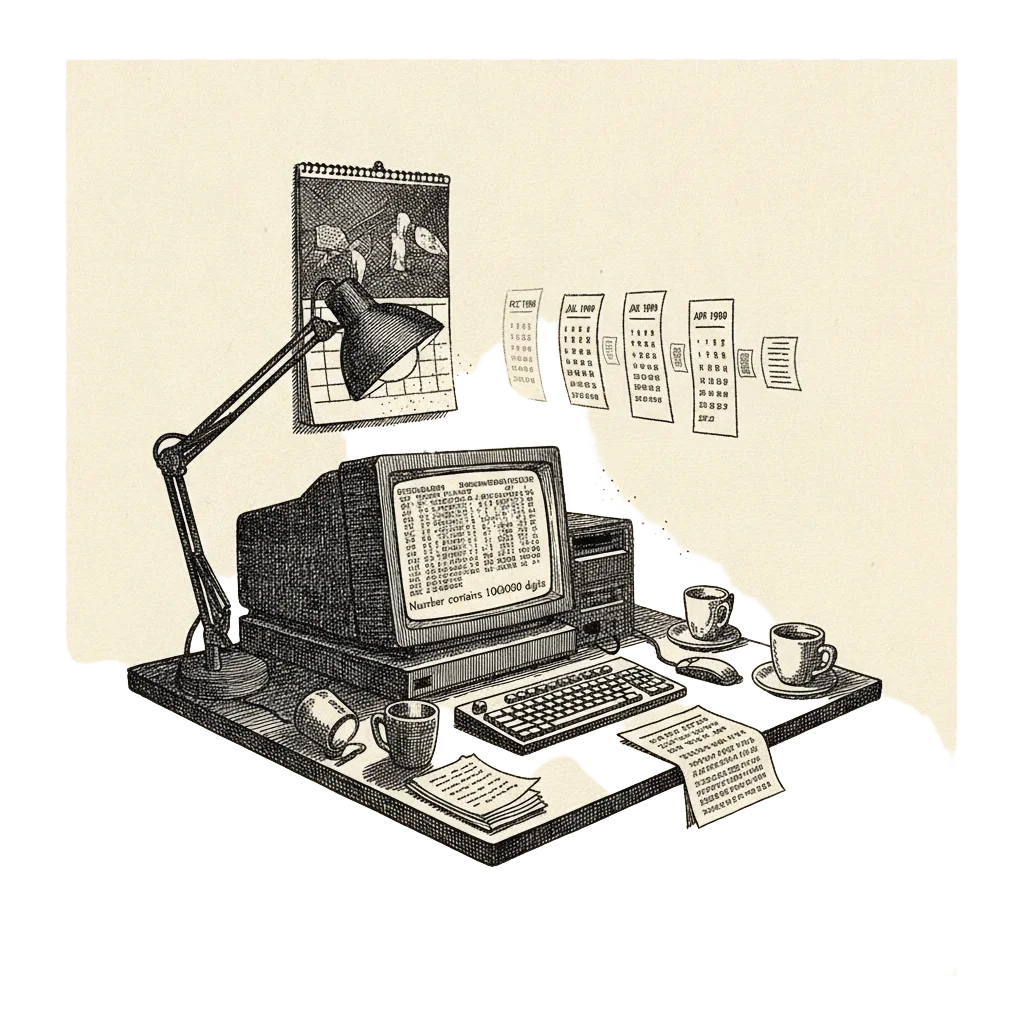
He wrote a program, set it running quietly in the background on his Sun 3/260 workstation, and let it work whenever the computer had nothing better to do. Every two hours it saved its progress, so that if the machine was switched off, it could pick up exactly where it had left off.

It ran for almost three years.

Just before midnight on 24 May 1990, the program stopped at the finish line Walker had given it, and printed one line:

"Stop point reached on pass 2415836. Number contains 1000000 digits."

After 2,415,836 flips and additions, 196 had grown into a number one million digits long - and not once had it become a palindrome.

Walker published the result online, along with the enormous number his computer had reached, and invited anyone who wanted to carry on.
Late 1980s office at night: a boxy Sun workstation glowing under a desk lamp, a wall calendar with months flying off, the screen showing the final message about one million digits
Section 3

Passing the baton

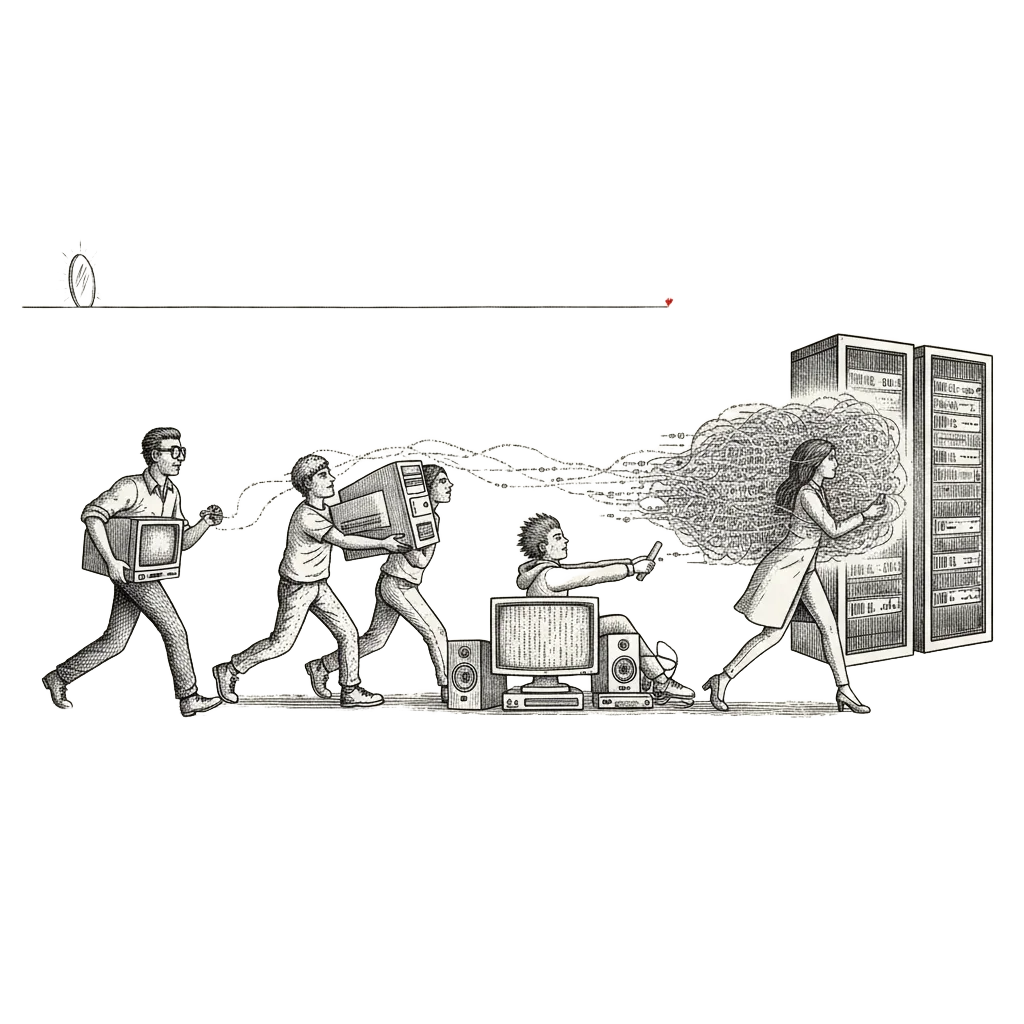
Walker's invitation was taken up. The chase became a relay race across the decades.

1995

Tim Irvin and Larry Simkins used a multiprocessor computer and reached 2 million digits in just three months.

2000

In May 2000, Jason Doucette reached 12.5 million digits. From June 2000, Wade VanLandingham took up the flag, using programs written by fellow enthusiasts. By 1 May 2006, he had reached 300 million digits, adding about a million digits every five to seven days.

2011

Romain Dolbeau harnessed clusters of linked computers. In October 2011, he completed one billion flips and additions, reaching a number with 413,930,770 digits.

2015

In February 2015, the calculation reached a billion digits.

Printed at 5,000 digits a page, that number would fill 200,000 pages - about 400 thick books.

And still: no palindrome.

A relay race across decades: runners from different eras passing a baton of digits, each handover heavier than the last, a mirror finish line still far on the horizon
The letters C-H-E-R-Y-L tumbling and rearranging themselves into L-Y-C-H-R-E-L with a tiny heart

A number named after a girlfriend.

Wade VanLandingham gave these stubborn numbers a name: Lychrel numbers.

The word is a rough anagram of Cheryl, his girlfriend's first name.

Enjoying this story?

Get the next one delivered to your inbox.

NumberMuseum tells the stories behind remarkable numbers - the people, the accidents, and the surprises hiding inside them. One new story a week, at most.

At most one email a week.

Section 4

Why can't the computers just finish?

Here is the strange thing: no computer, however fast, can ever settle the question in 196's favour.

If 196 does become a palindrome one day, a computer could find it. That would be the end of the story.

But if 196 never becomes a palindrome, no amount of flipping and adding can prove it. A billion steps without a palindrome tells you nothing for certain about the billion-and-first. To prove 196 never gets there, someone would need a clever argument - a reason that works for every step at once. Nobody has found one.

So 196 sits in an awkward place: the smallest number that has never been shown to reach a palindrome, and never been proved not to.

Mathematicians call it a Lychrel candidate: a suspect, not a convict.

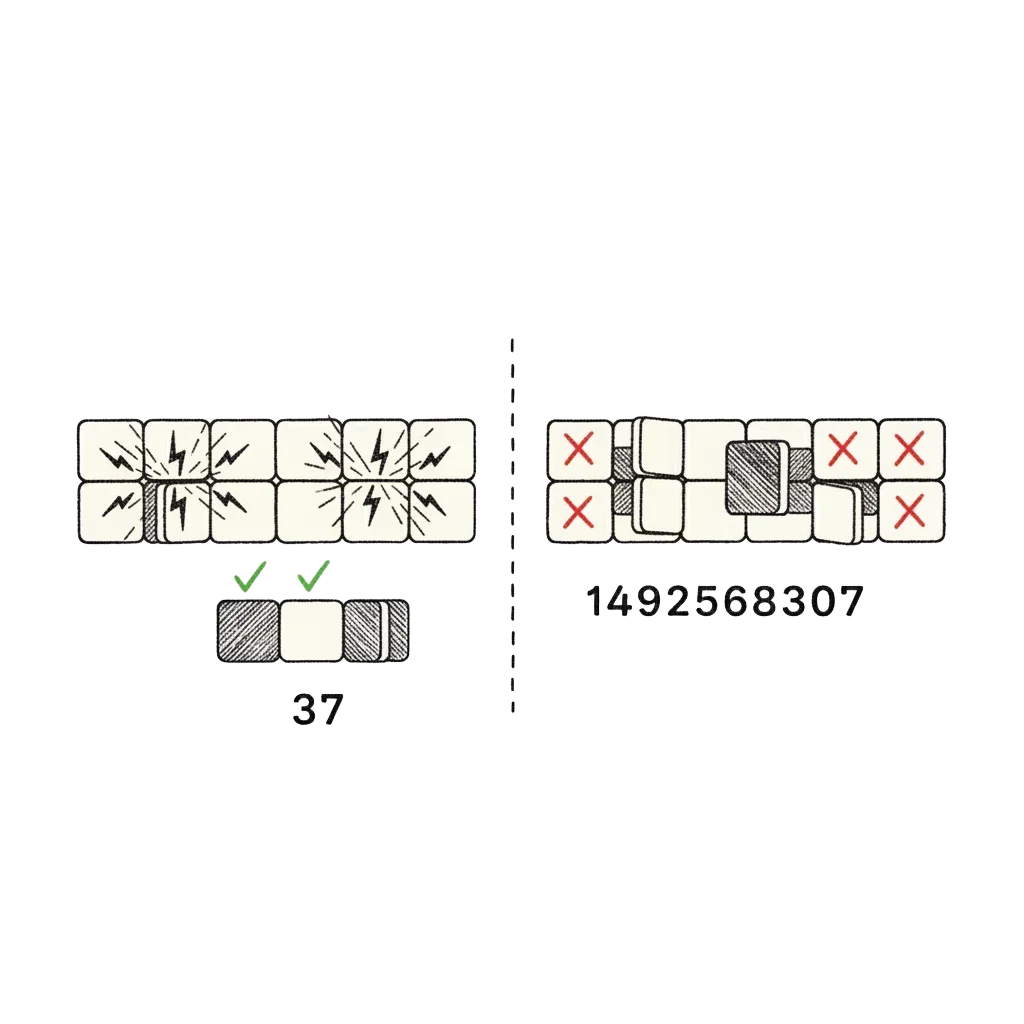
Why is it so stubborn? As the numbers grow, their digits get tangled. Adding a number to its own reflection creates carries - the "1s" you carry in column addition - and once carries start rippling through, the two halves of the number almost never manage to line up as mirror images again.

The longer 196 runs, the more digits there are that all have to match at once. The odds of a palindrome seem to get worse at every step.

A row of digit tiles with a mirror down the middle; sparks of carries rippling through and knocking pairs out of alignment

196 is not alone.

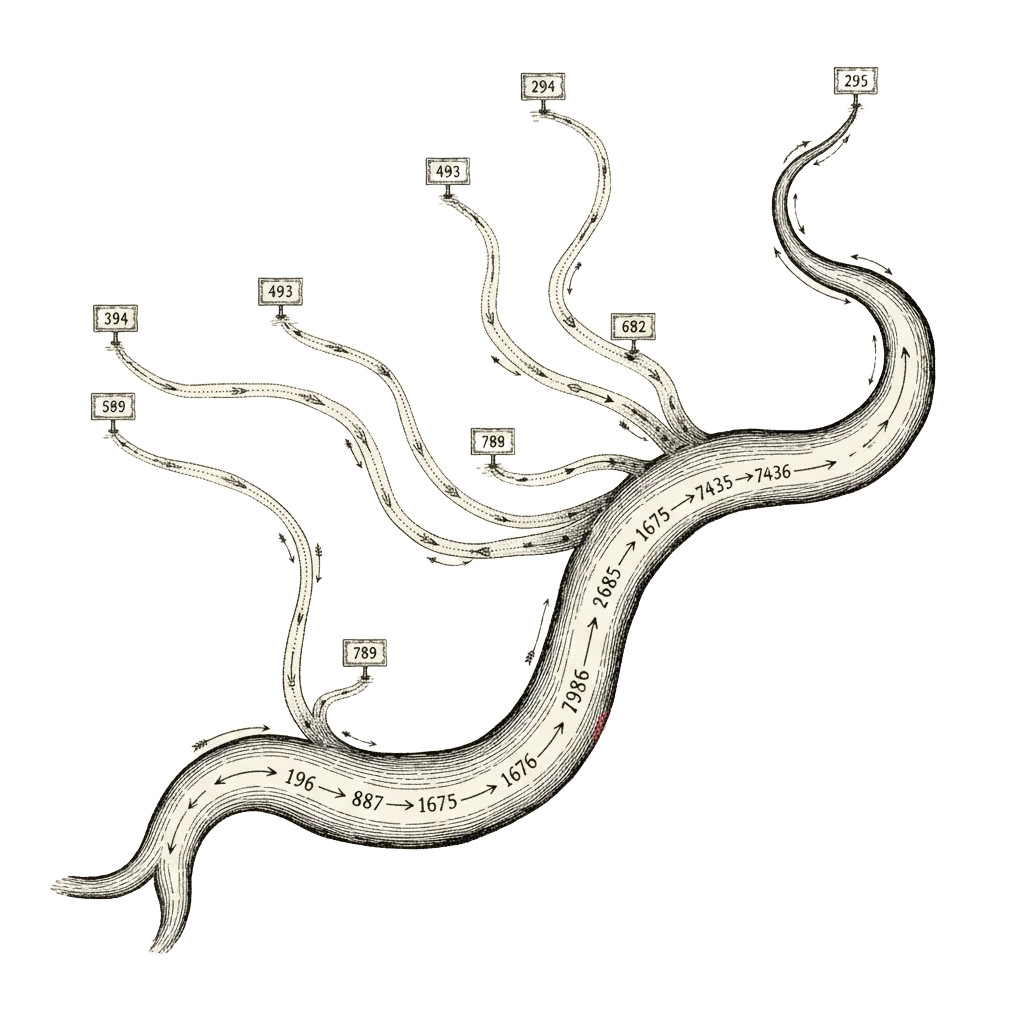
Below 1,000, there are 13 numbers that have never been shown to reach a palindrome: 196, 295, 394, 493, 592, 689, 691, 788, 790, 879, 887, 978, and 986.

But most of them are not really separate mysteries. Eleven of the thirteen join 196's own chain within two steps. 295 + 592 = 887, and 689 + 986 = 1675 - numbers that appear in 196's path.

They are all passengers on the same endless train. 196 is simply the smallest one aboard.

Several streams labeled with numbers like 295, 394, 689 all flowing into one wide river labeled 196 to 887 to 1675
Section 5

Proved, but only in another language

Is there any number that provably never becomes a palindrome?

In our everyday base-ten numbers, nobody has ever proved one exists.

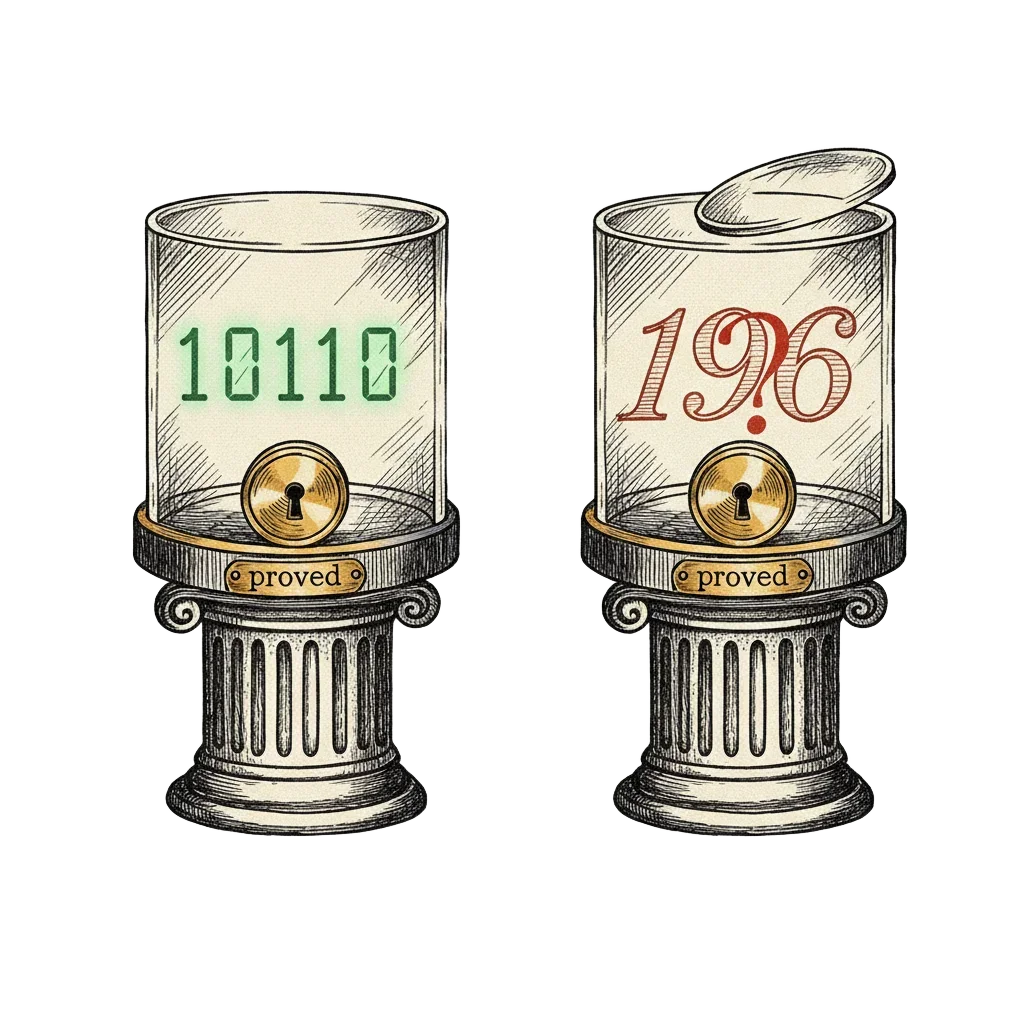
But in binary - the language of 0s and 1s that computers use - mathematicians have done it. The binary number 10110 (which is 22 in ordinary numbers) has been proved never to reach a palindrome, however many times you flip and add.

So we know that true Lychrel numbers can exist in principle.

We just can't prove that 196 is one.

Binary number 10110 in a sealed glass museum case labeled proved; 196 in a matching case with a question mark on the lock
Section 6

The simplest questions are the hardest

196 is a perfect example of something that happens again and again in mathematics.

A rule a child can follow. A question a child can ask. And an answer that the finest minds and the fastest computers on Earth still cannot reach.

Flip it. Add it. Does it ever become a palindrome?
Nobody knows.

There is something wonderful in that. The game uses nothing but addition - the very first operation we learn at school - and yet it leads straight to the edge of what anyone knows.

Every few years someone new picks up the baton, sets a machine running, and pushes 196 a little further up its endless staircase. Maybe one day someone will find a palindrome. Maybe someone will prove there isn't one.

Until then, 196 keeps climbing.

The spiral staircase seen from far away, rising into stars; tiny figures from different eras standing on landings looking upward; a faint glow at the very top
196 in a nutshell

Here is why 196 matters:

  • 1

    The game: reverse a number's digits and add. Repeat until you get a palindrome.

  • 2

    Almost every number gets there quickly: 87 takes four steps, 89 takes twenty-four.

  • 3

    196 is the smallest number that has never been shown to reach a palindrome.

  • 4

    John Walker's computer chased it for almost three years (1987–1990), to one million digits.

  • 5

    Others carried on: 2 million digits in 1995, 300 million by 2006, and a billion digits in 2015.

  • 6

    Numbers like this are called Lychrel numbers, after an anagram of Cheryl.

  • 7

    Computers can only disprove it, never prove it. The puzzle is still unsolved.

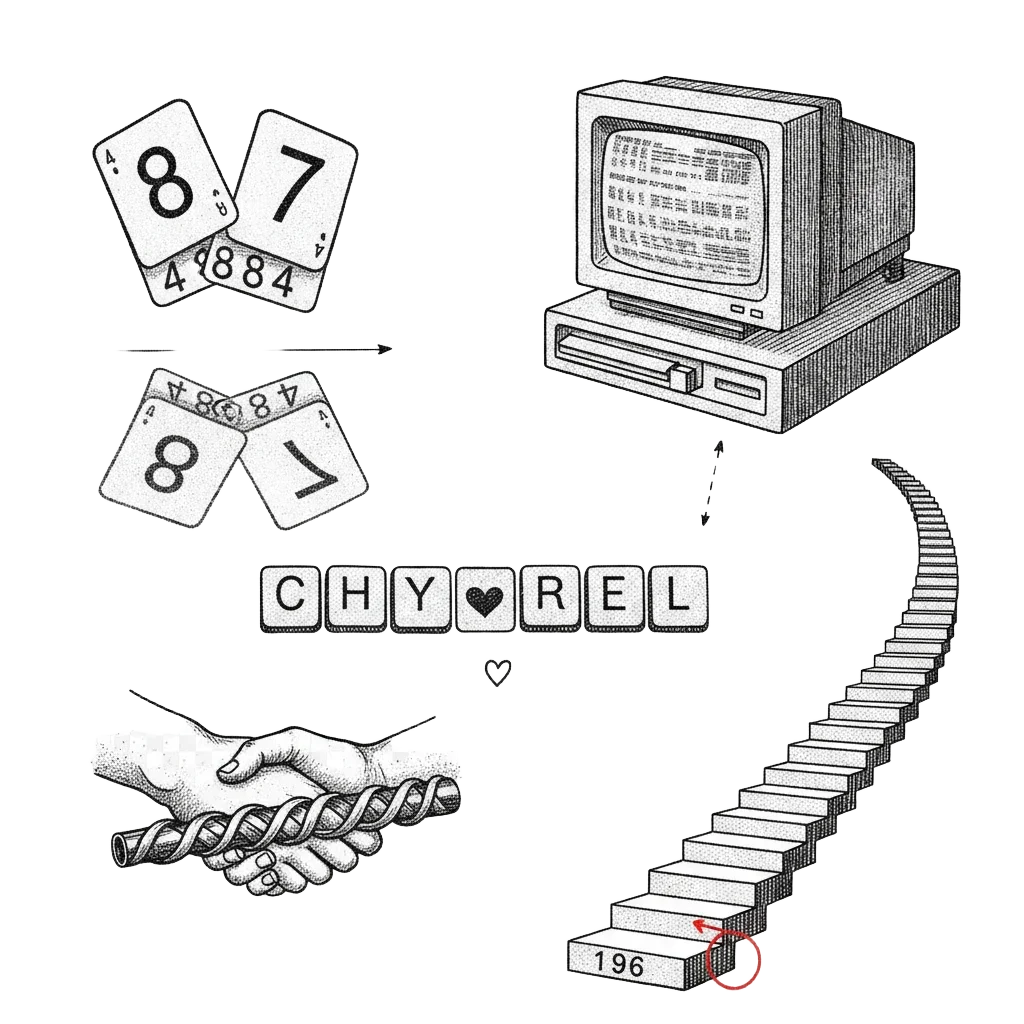
A final illustrated panel combining: digit cards flipping to 4884, Walker's workstation, a relay baton of digits, the Cheryl to Lychrel anagram, and 196 climbing its staircase

A billion digits, and still not a mirror.

196 is the child's game that the world's computers still cannot finish.

Powered by DollarPageClub