Mathematical Curiosity
1729Two cubes, two ways - and the most famous taxicab ride in the history of mathematics.
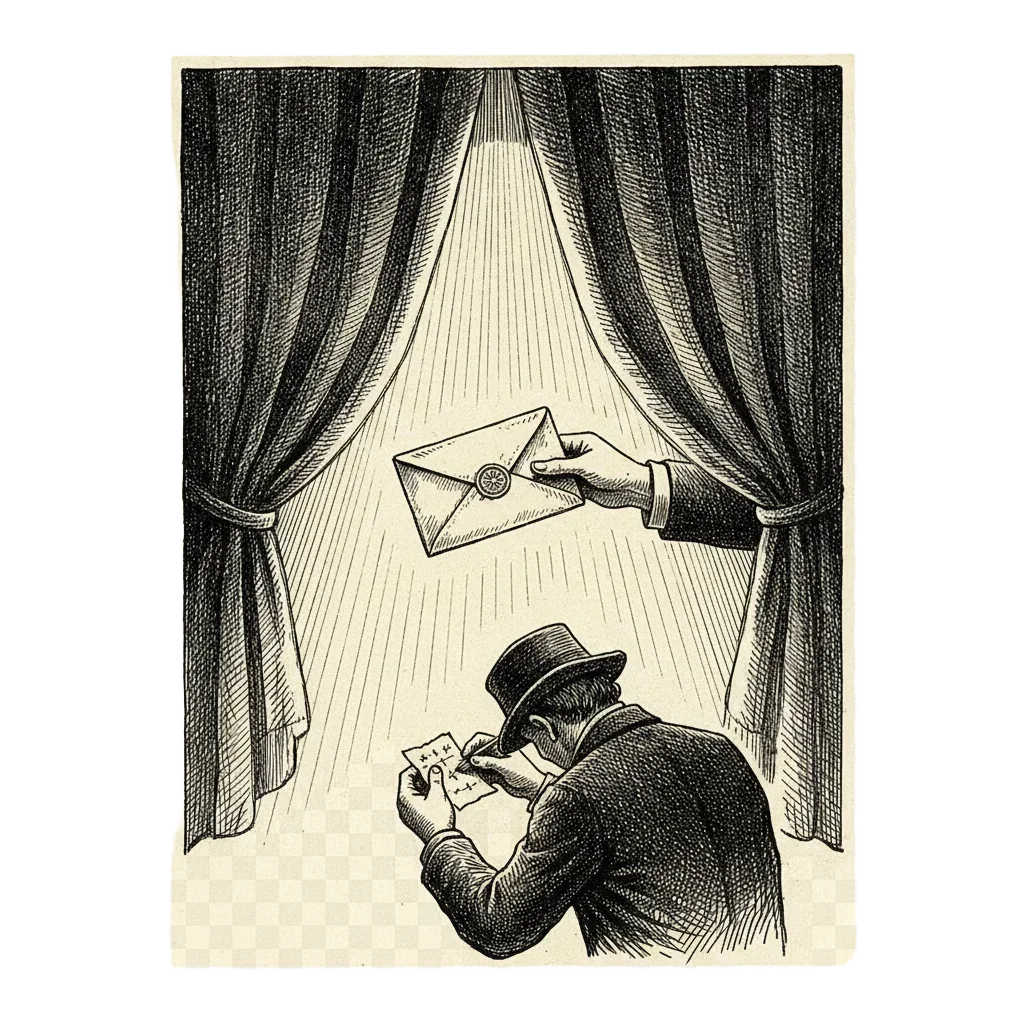
Read the storyA magician hands you a sealed envelope and a pencil.
"Think of any three-digit number," she says. "Don't tell me what it is."
You do a little arithmetic, in secret, on a scrap of paper.
Then you open the envelope.
Inside, written in ink before you ever chose your number, is your answer:
1089.
Here is the trick. You only need a pencil.
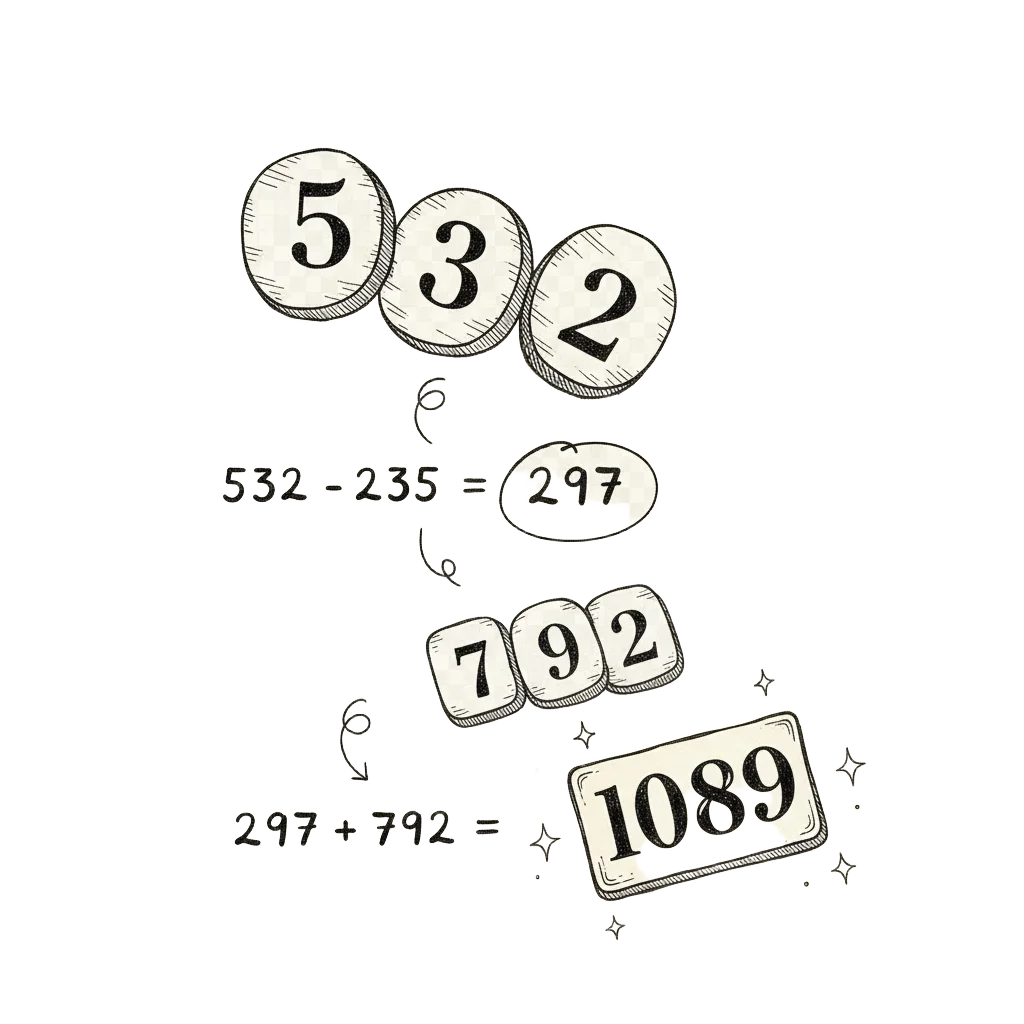
Pick a three-digit number whose first and last digits are different - say 532.
Write it backwards: 235.
Subtract the smaller from the larger: 532 − 235 = 297.
Write that answer backwards: 792.
Add them together: 297 + 792 = 1089.
Try another. Start with 731:
731 − 137 = 594, and 594 + 495 = 1089.
Try your own. Try your house number, or the last three digits of your phone number.
You will get 1089 every time.
One small rule
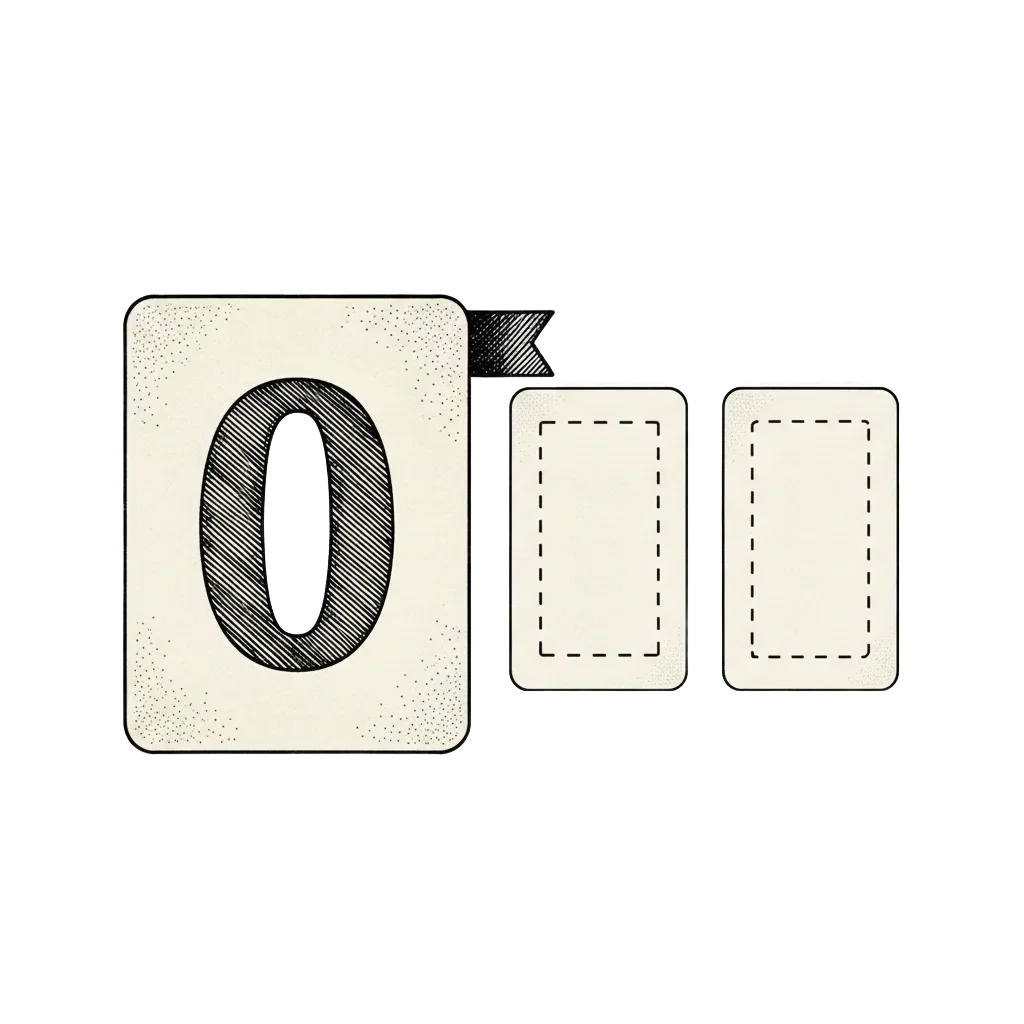
If your subtraction gives a two-digit answer, keep a zero at the front so it still has three digits. For example, start with 211:
211 − 112 = 099 - reversed, that is 990 - and 099 + 990 = 1089.
(If you forget the zero and reverse 99 as 99, the trick breaks - which is why many magicians ask for a number whose first and last digits differ by at least 2, so the problem never comes up.)
And if the first and last digits are the same - like 525 - the subtraction gives zero, and there is no trick at all.
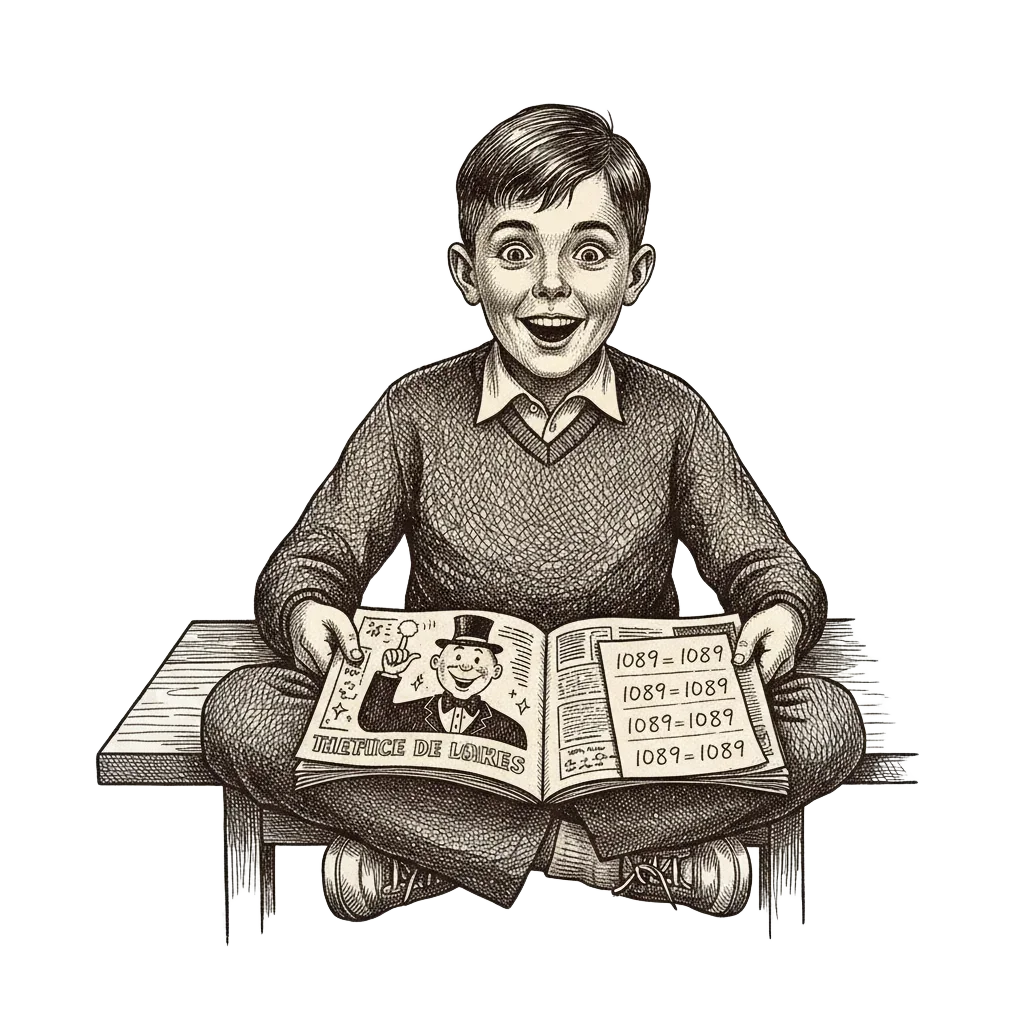
In 1956, a ten-year-old English boy called David Acheson was mad about magic tricks.
One day he came across an article with a wonderful title: "Abracadabra! Uncle Jack turns you into a Conjuror!"
Inside was a trick with numbers - this one.
He tried it. It worked. He tried it again. It worked again. No matter which number he chose, the answer was always 1089.
He later called it his first mathematical surprise.
The boy never forgot it. He grew up to become a mathematician at Jesus College, Oxford, and in 2002 he wrote a book about the joys of mathematics.
He named it after the trick that had started it all: 1089 and All That.
- A lifelong curiosity, born at a kitchen table.
It feels like mind-reading. It is actually a squeeze.
Here is the first secret: when you subtract a three-digit number from its own reverse, the middle digits cancel out completely. Only the first and last digits matter.
And the answer is always a multiple of 99:
99 × (first digit − last digit)
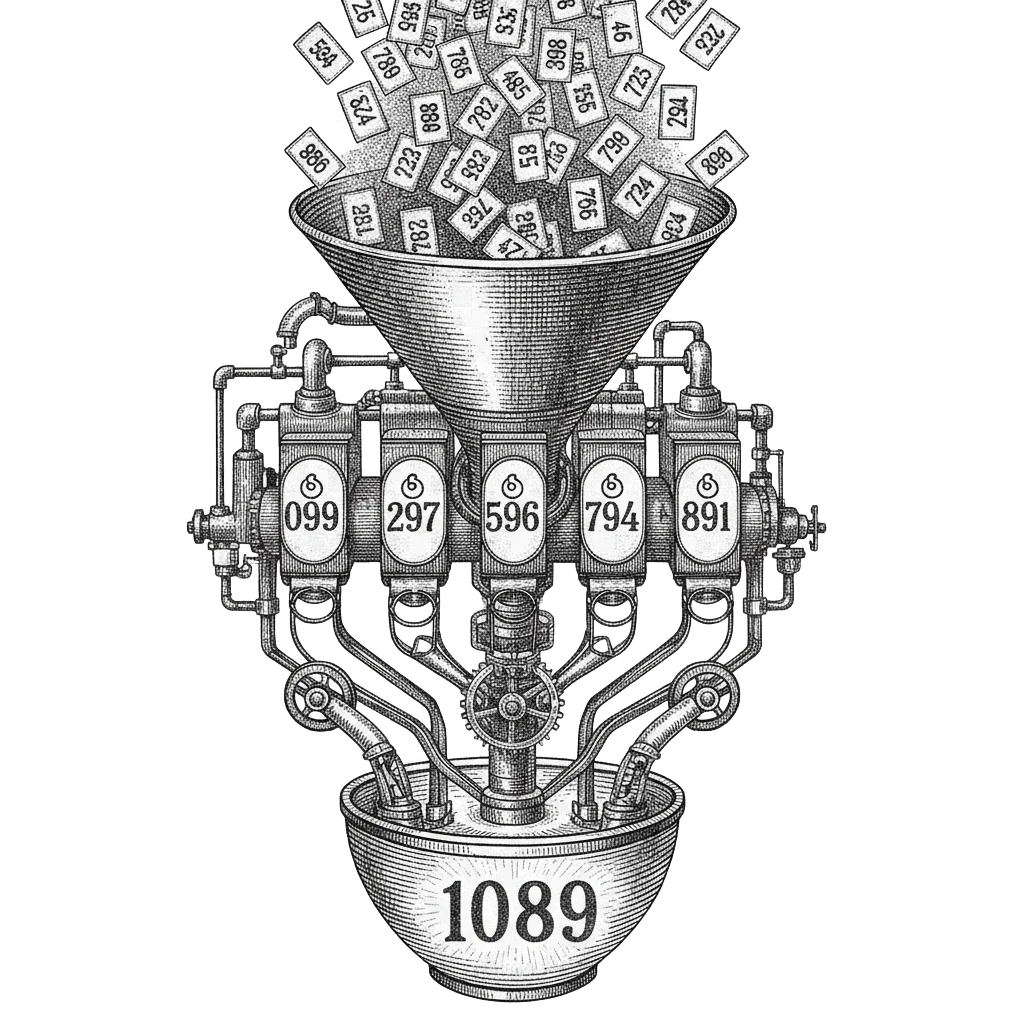
So whatever number you start with, step 3 can only ever give you one of a tiny handful of answers:
Look at them closely. In every one, the middle digit is 9, and the first and last digits add up to 9.
Now watch what happens when you add each one to its reverse:
099 + 990 = 1089
198 + 891 = 1089
297 + 792 = 1089
396 + 693 = 1089
495 + 594 = 1089
… and the rest do the same.
The ones column always adds to 9. The tens column always adds to 18. The hundreds column always adds to 9, plus the 1 carried over.
Every road leads to the same four digits.
Hundreds of possible starting numbers get squeezed into just nine possibilities - and those nine all collapse into one.
A familiar face
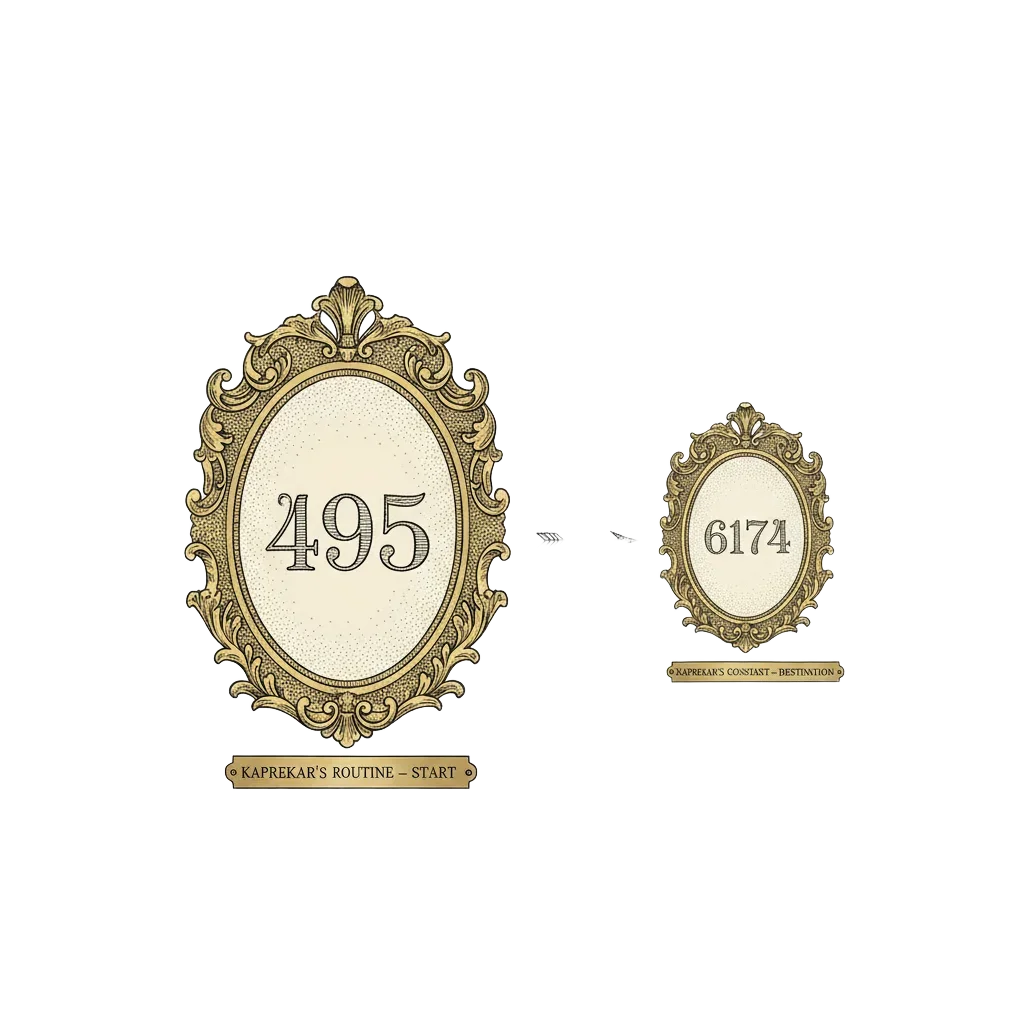
In the step-3 list sits 495 - and 495 appears on the /6174 page too. It is where Kaprekar's "biggest-minus-smallest" rule traps every three-digit number. The two tricks are close cousins: both work by subtracting a number from a rearrangement of its own digits.
The trick is not the only secret 1089 keeps.
Multiply it by 9:
1089 × 9 = 9801
The answer is 1089 written backwards.
Now watch its whole times table:
1089 × 1 = 1089
1089 × 2 = 2178
1089 × 3 = 3267
1089 × 4 = 4356
1089 × 5 = 5445
1089 × 6 = 6534
1089 × 7 = 7623
1089 × 8 = 8712
1089 × 9 = 9801
Read it from the top and from the bottom at the same time. Each answer is the mirror image of its partner: 1089 and 9801, 2178 and 8712, 3267 and 7623, 4356 and 6534. And 5445, right in the middle, is its own reflection.
There is even a hidden bonus: 2178 × 4 = 8712 - another number that, when multiplied, turns itself backwards.
And one more: 1089 is 33 × 33, while its mirror, 9801, is 99 × 99.
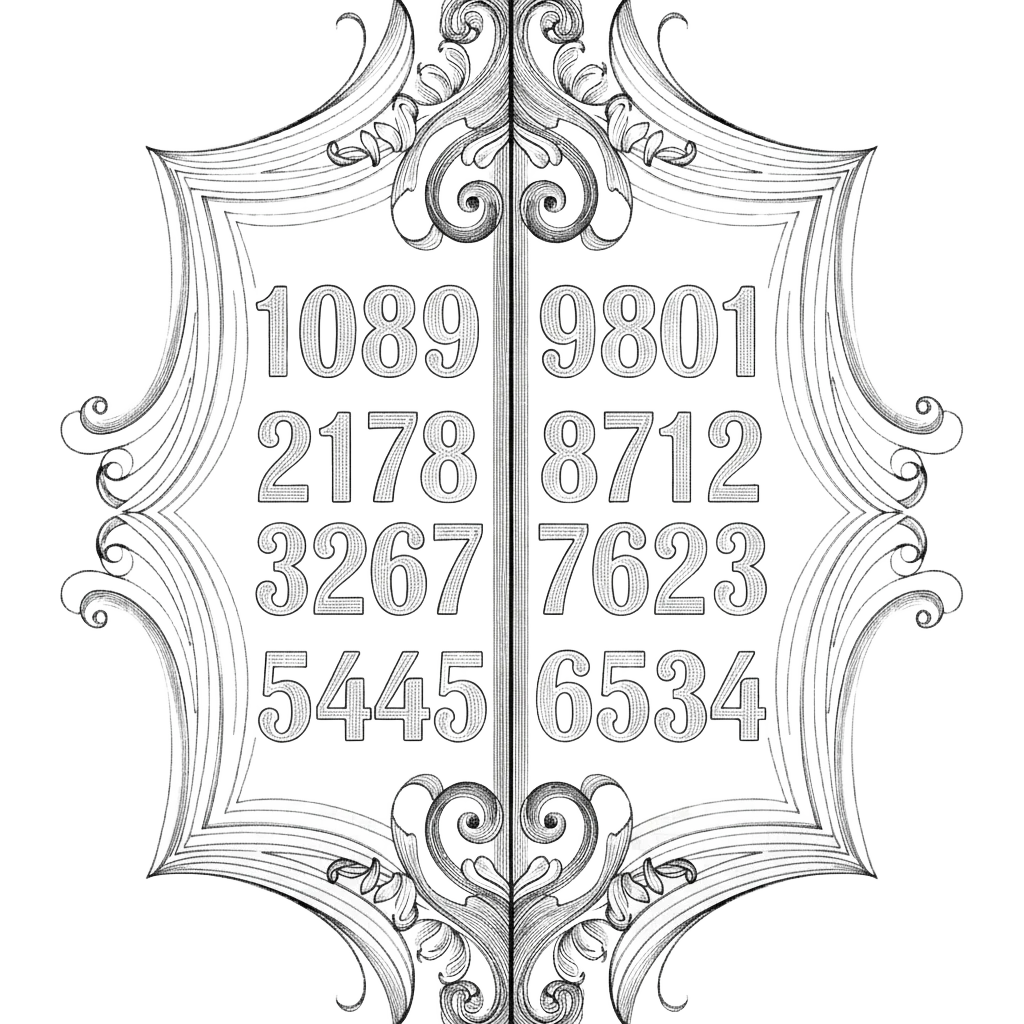
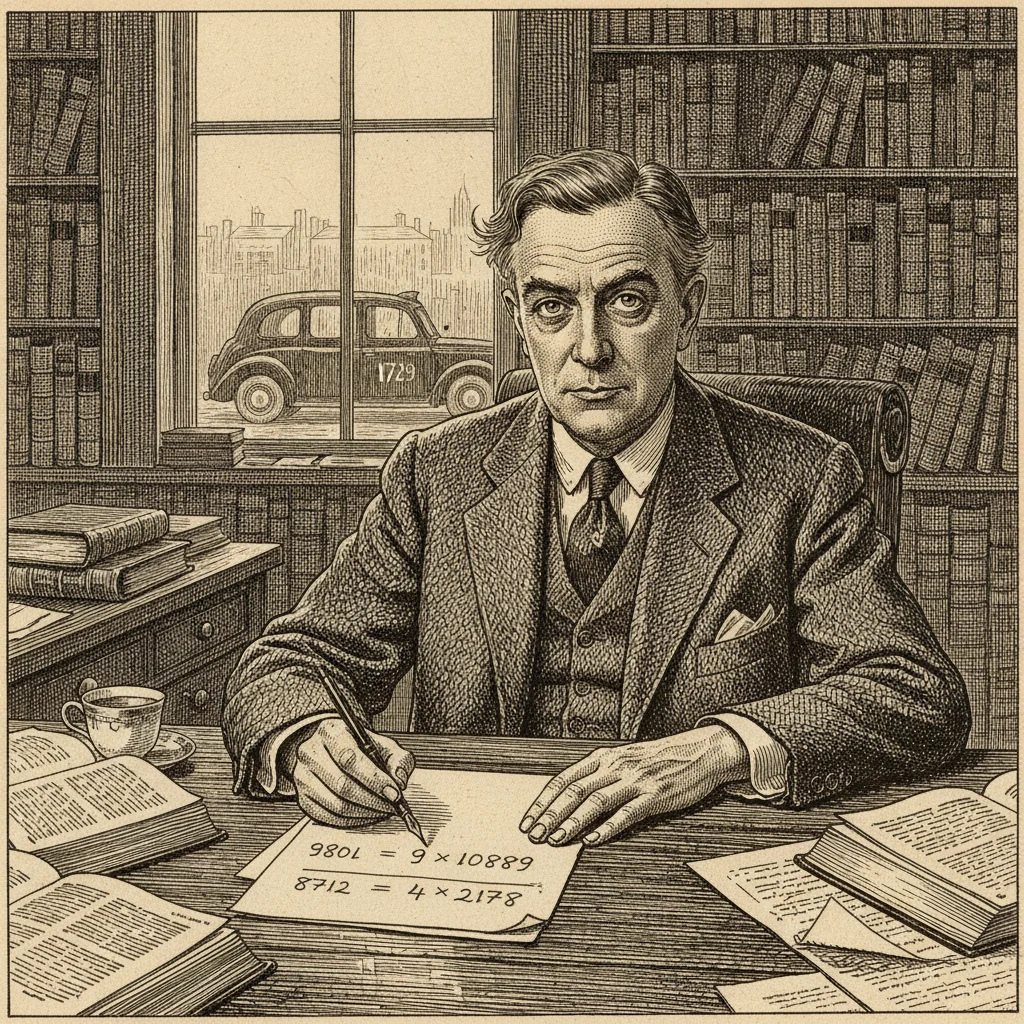
The mirror trick caught the eye of one of the most famous mathematicians of the 20th century: G. H. Hardy - the same man who, in the story told on the /1729 page, arrived at Ramanujan's hospital bedside in a taxi numbered 1729.
In 1940, Hardy wrote a short book called A Mathematician's Apology, about what makes mathematics beautiful.
In it, he pointed out that 8712 and 9801 are the only four-figure numbers that are exact multiples of their own reversals:
8712 = 4 × 2178 9801 = 9 × 1089
Then he dismissed them. He called such things "odd facts, very suitable for puzzle columns and likely to amuse amateurs," with nothing in them that appeals much to a mathematician.
Hardy was a very great mathematician. But here, perhaps, he was a little unfair: since then, mathematicians have written more than a dozen research papers exploring exactly these reversal puzzles.
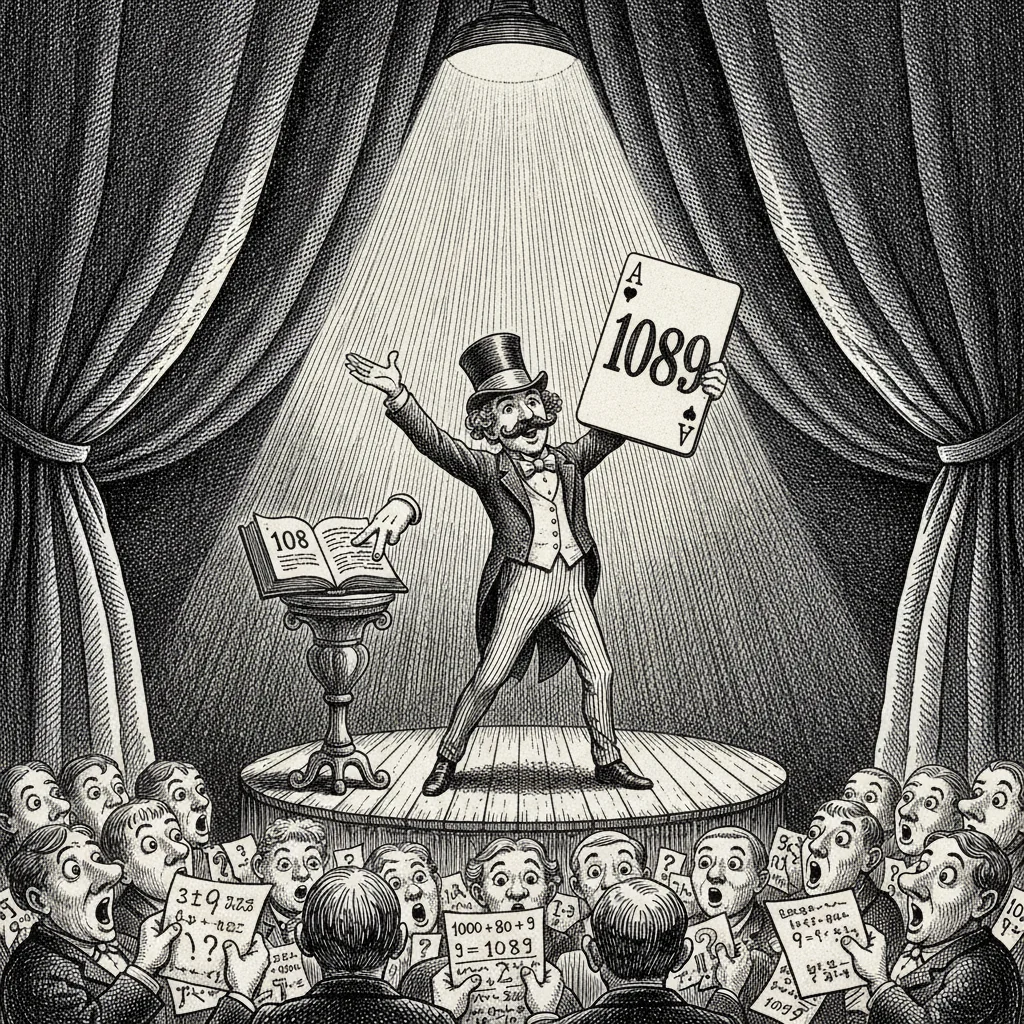
Because the answer never changes, 1089 is a gift to magicians.
They can write it inside a sealed envelope. Hide it on a playing card. Or ask you to open a book at page 108, count down to line 9 - and read out a word they "predicted" hours ago.
The audience thinks the magician has read their mind.
What really happened is simpler, and in a way more wonderful: the audience's own arithmetic did the magic. However freely you chose your number, the rules quietly steered you to the same place.
The 1089 trick is a tiny lesson about something big.
It feels as if you had complete freedom. You could have chosen your birthday, your house number, anything at all.
But hidden inside the rules was a structure that did not care what you chose. Every path was already bending toward the same answer.
Mathematicians love tricks like this because they turn a feeling of magic into a feeling of understanding. Once you see the 99s and the 9s, the mystery does not disappear - it moves. It stops being "how did she know?" and becomes "how wonderful that numbers work like this at all."
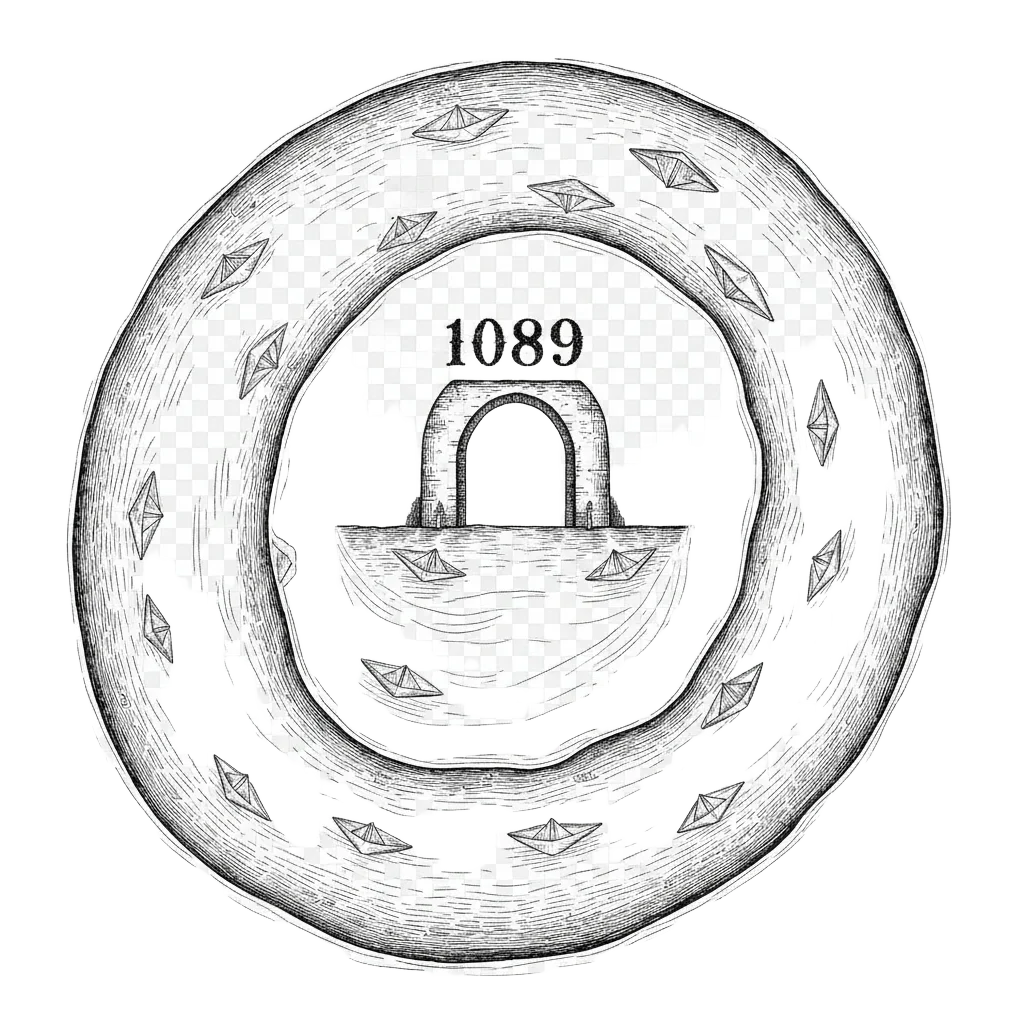
Take a three-digit number whose first and last digits are different. Reverse it and subtract the smaller from the larger. Reverse the answer and add. You always get 1089 - as long as you keep a leading zero, as in 099.
The subtraction always gives a multiple of 99, with a 9 in the middle, and every one of those adds to its reverse to make 1089.
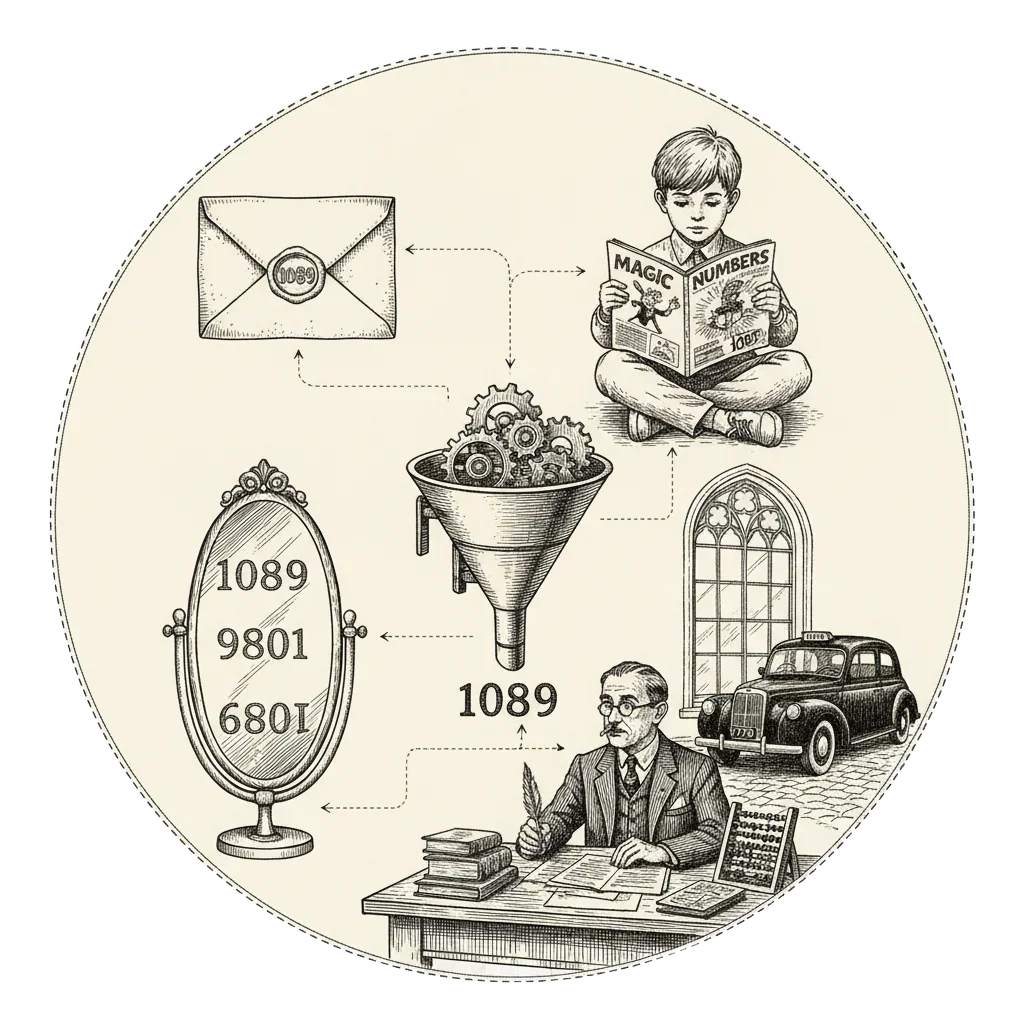
A ten-year-old David Acheson met the trick in 1956 and later named a book after it: 1089 and All That.
1089 × 9 = 9801, its own reflection.
G. H. Hardy - of taxi-cab 1729 fame - called this kind of thing an "odd fact."
Magicians have loved it ever since.
OddlySpecificNumbers.com
No syllabus. No signup. Just exhibits. Pull open a drawer, follow whichever footnote looks most suspicious, and let the collection take you somewhere you did not plan to go.
Powered by DollarPageClub