Computing Limits
2,147,483,647
The ceiling of a signed 32-bit integer - and the number that broke high scores, spreadsheets and the occasional aeroplane.
BrowseComputing Limits · Exhibit #255
The number where Pac-Man's world falls apart
Pac-Man was never meant to end.
Eat the dots, dodge the ghosts, clear the maze - and a fresh maze appears. Again and again. But if you are good enough to clear 255 mazes in a row, something strange happens on the next one.
Half of the screen dissolves into garbage.
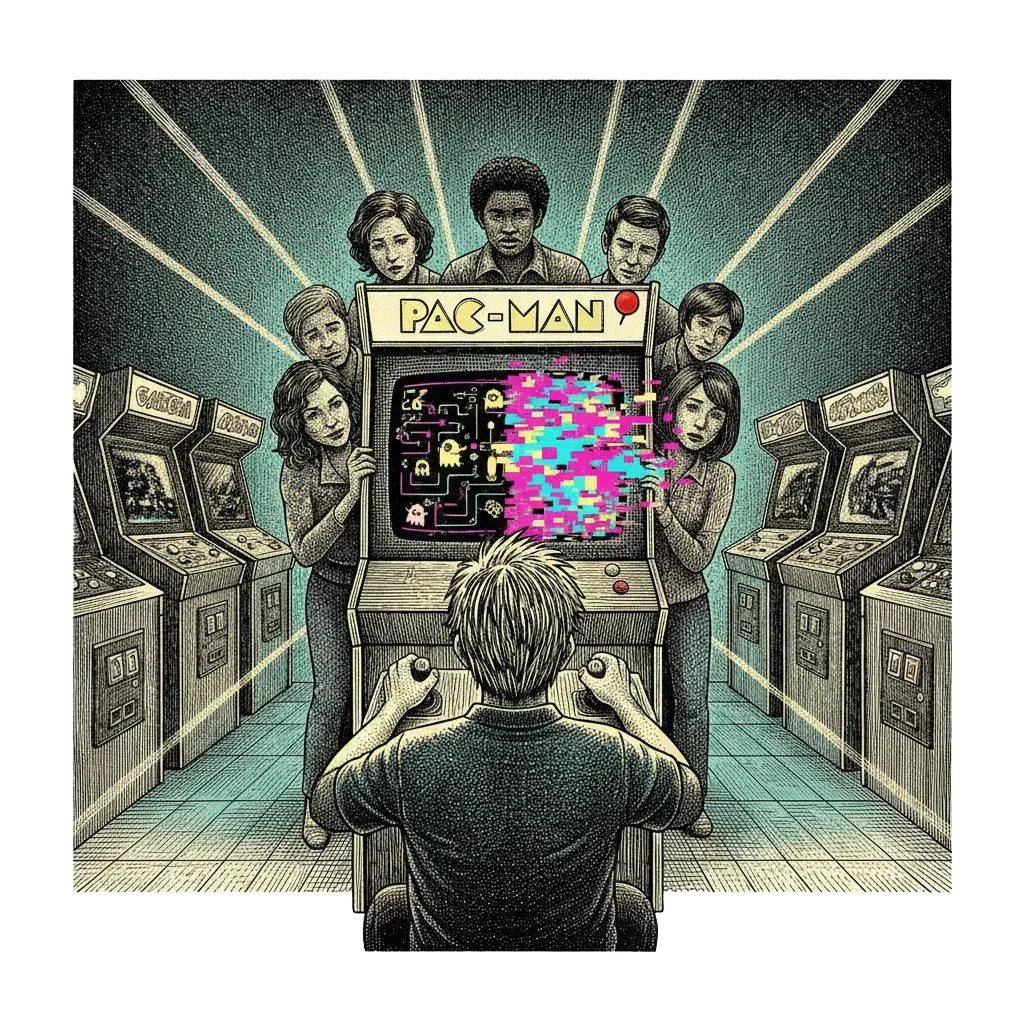
Pac-Man arrived in arcades in 1980, made by the Japanese company Namco. It became one of the most famous video games ever made: a yellow circle with a mouth, four ghosts, and a maze full of dots.
Like many arcade games of the time, it had no final boss and no credits. Clear one maze and the next begins, a little faster, a little harder.
For most people, the game ends after a few levels. Even very good players rarely get past the first few dozen.
But a small group of extraordinary players kept going. And going. And after more than two hundred and fifty mazes, they discovered that the game did have an ending after all.
It just was not one anybody had designed.
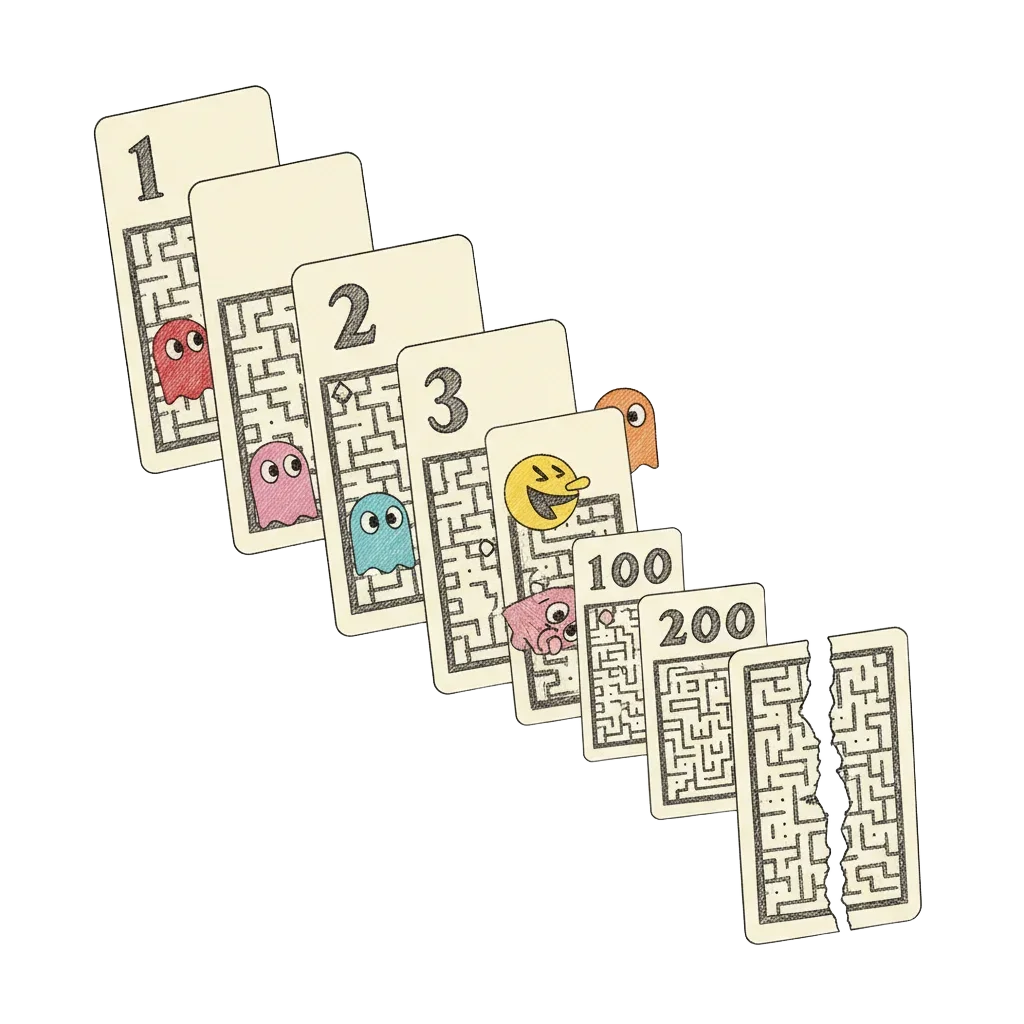
The stack that was never supposed to end - and then did.
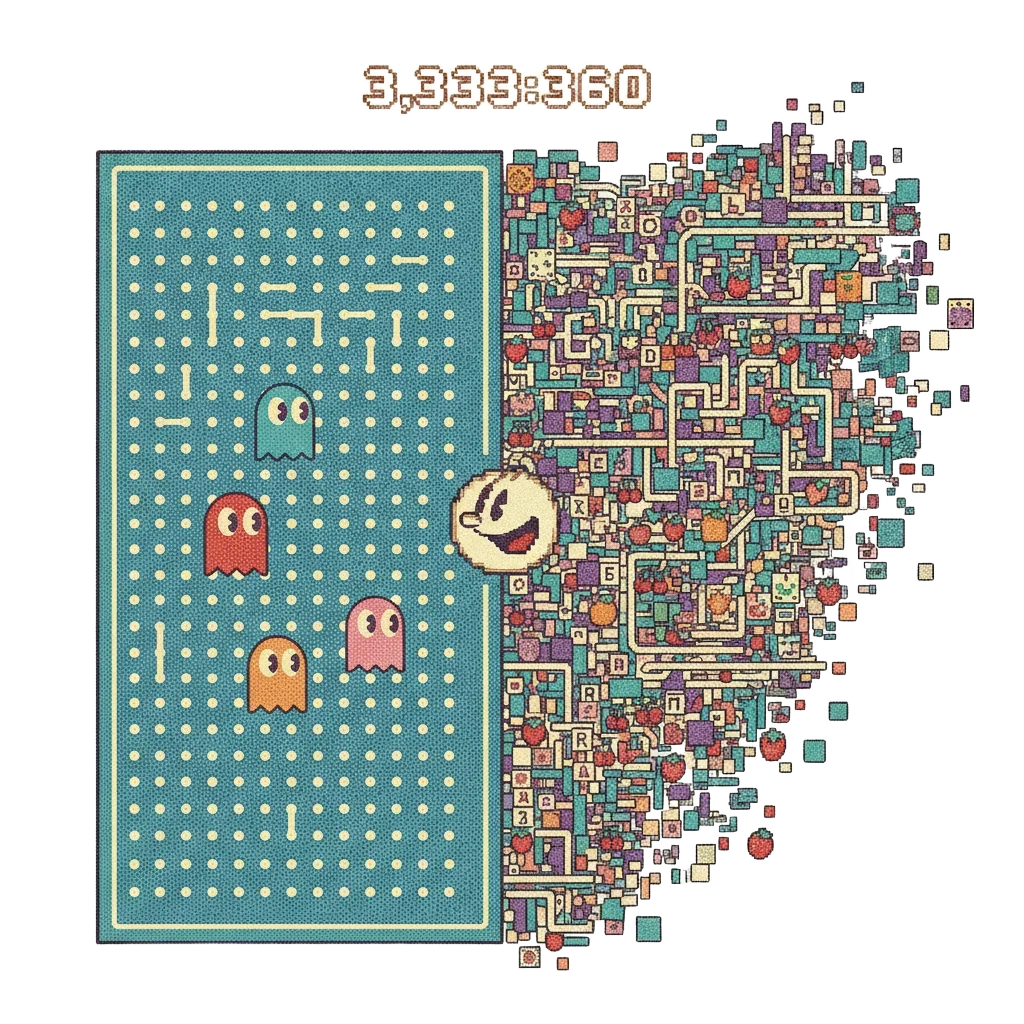
On the 256th maze, the left half of the screen looks normal. The right half is a mess: scrambled letters, numbers, fragments of fruit and coloured blocks, piled on top of the maze walls.
Pac-Man can wander into the chaos, but there are not enough dots left to eat. The level can never be cleared.
Players call it the "split screen" or the "kill screen". It is where the game, in practice, ends.
The very best players turned it into a challenge of its own: the perfect game. A perfect score means clearing the first 255 mazes without ever losing a life - eating every dot, every power pellet, every piece of fruit and every blue ghost along the way - and then squeezing every possible point out of the broken 256th screen.
That score is 3,333,360 points.
The first publicly verified perfect game is credited to Billy Mitchell, on 3 July 1999, after roughly six hours of play.
"Like the edge of a map where the world stops being drawn."
To understand why the game breaks at 256, you need to know what a byte is.
Imagine a row of eight light switches. Each can be off or on.
With eight switches, you can make 256 different patterns - from all off to all on. If you use those patterns to count, all off means 0, and all on means 255.
So a byte counts from 0 to 255. That is 256 numbers in total, but the biggest one is 255 - because counting starts at zero.
In the mathematician's shorthand: 2⁸ − 1 = 255.
What happens at 256?
What happens if you add one more to 255? There is no ninth switch. All eight flip back to off - like a car's mileage counter rolling from 99999 to 00000.
255 + 1 becomes 0.
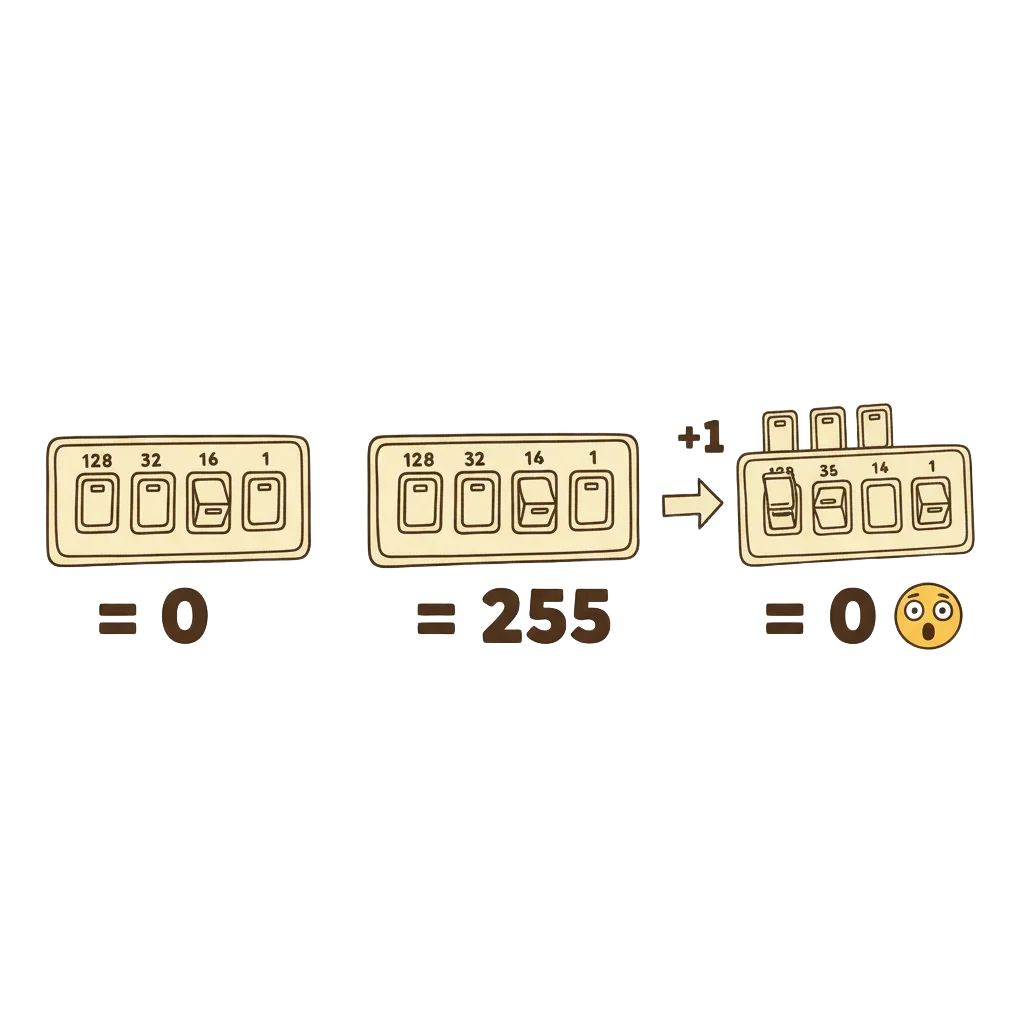
Eight switches. 256 patterns. The biggest is 255.
Pac-Man keeps track of which level you are on inside a single byte.
That was a perfectly sensible choice in 1980. Memory was expensive, and no one expected a human being to clear 255 mazes.
At the start of every level, the game draws a little row of fruit in the bottom corner of the screen, showing how far you have come. Normally it shows at most seven pieces.
On level 256, the level counter rolls over from 255 back to 0. The fruit-drawing routine was never written to handle that. Instead of seven fruit, it tries to draw 256 of them.
It keeps drawing long after it runs out of fruit pictures, reaching into other parts of the machine's memory and painting whatever it finds there - across the bottom of the screen and the entire right half of the maze.
The dots that should be there are buried under the garbage.
One byte ran out of room, and the whole world of the game fell apart.
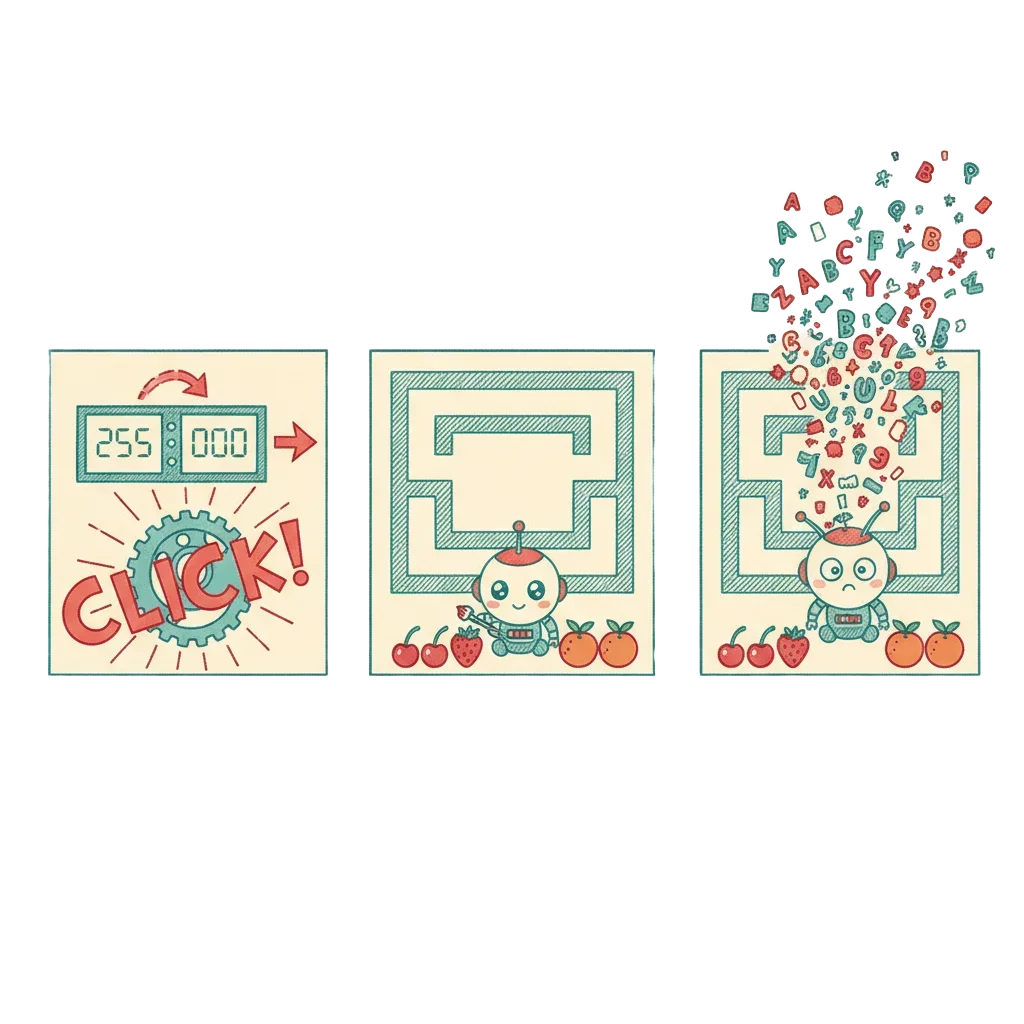
The fruit painter runs out of fruit - and just keeps going.
Fact
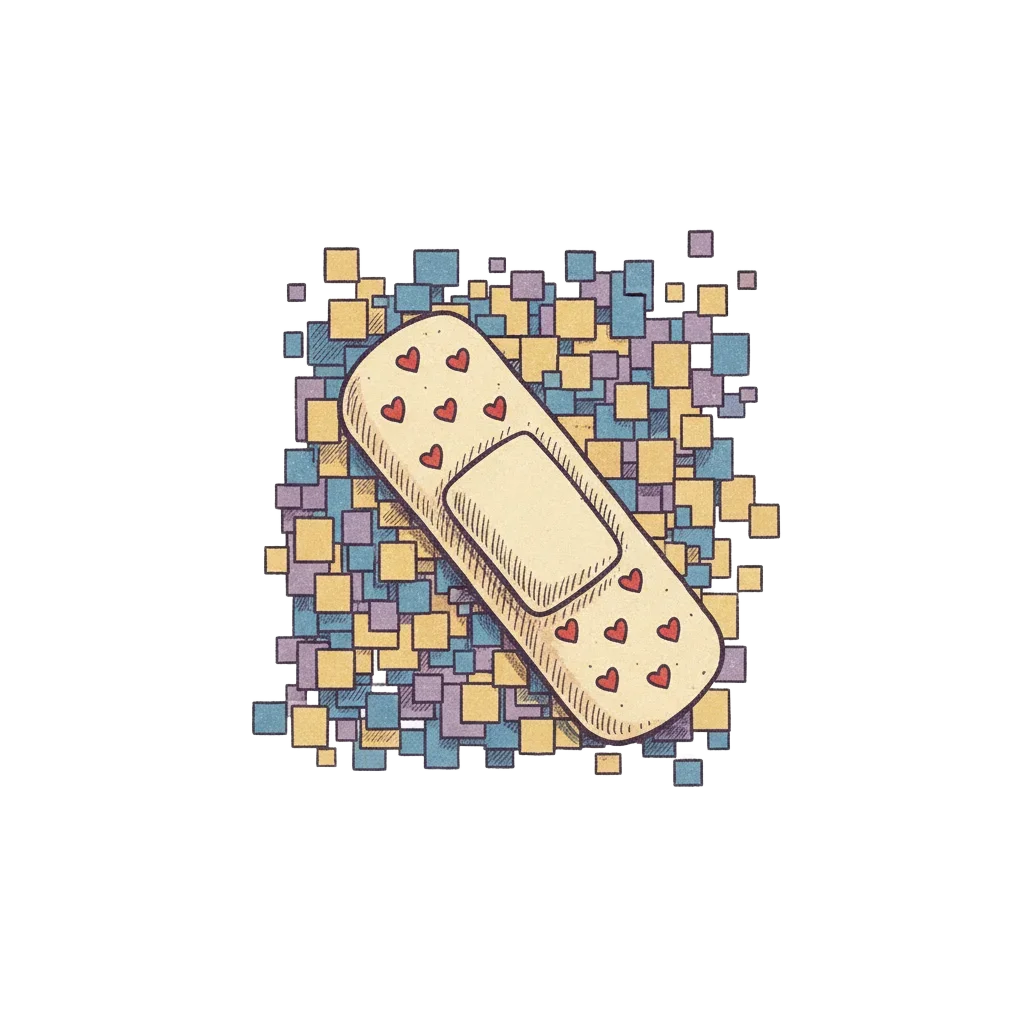
The bug can be fixed.
Programmer Don Hodges later traced the problem instruction by instruction and wrote a small patch showing that, with a few corrected lines, Pac-Man could carry on past level 256.
Once you know about bytes, you start seeing 255 all over the place.
Colours
Most screens mix every colour from red, green and blue light, each set from 0 to 255. That gives 256 × 256 × 256 = 16,777,216 possible colours. Pure white is 255, 255, 255.
Internet addresses
The classic internet address looks like 192.168.1.1 - four numbers, each from 0 to 255, because each one is a single byte. Multiply four bytes together and you get the museum's next door neighbour: 4,294,967,296 addresses.
Group chats
For years, a WhatsApp group could hold at most 256 people. In 2022, WhatsApp doubled the limit to 512, and later that year to 1,024.
Wherever computers count in bytes, 255 is waiting at the edge.
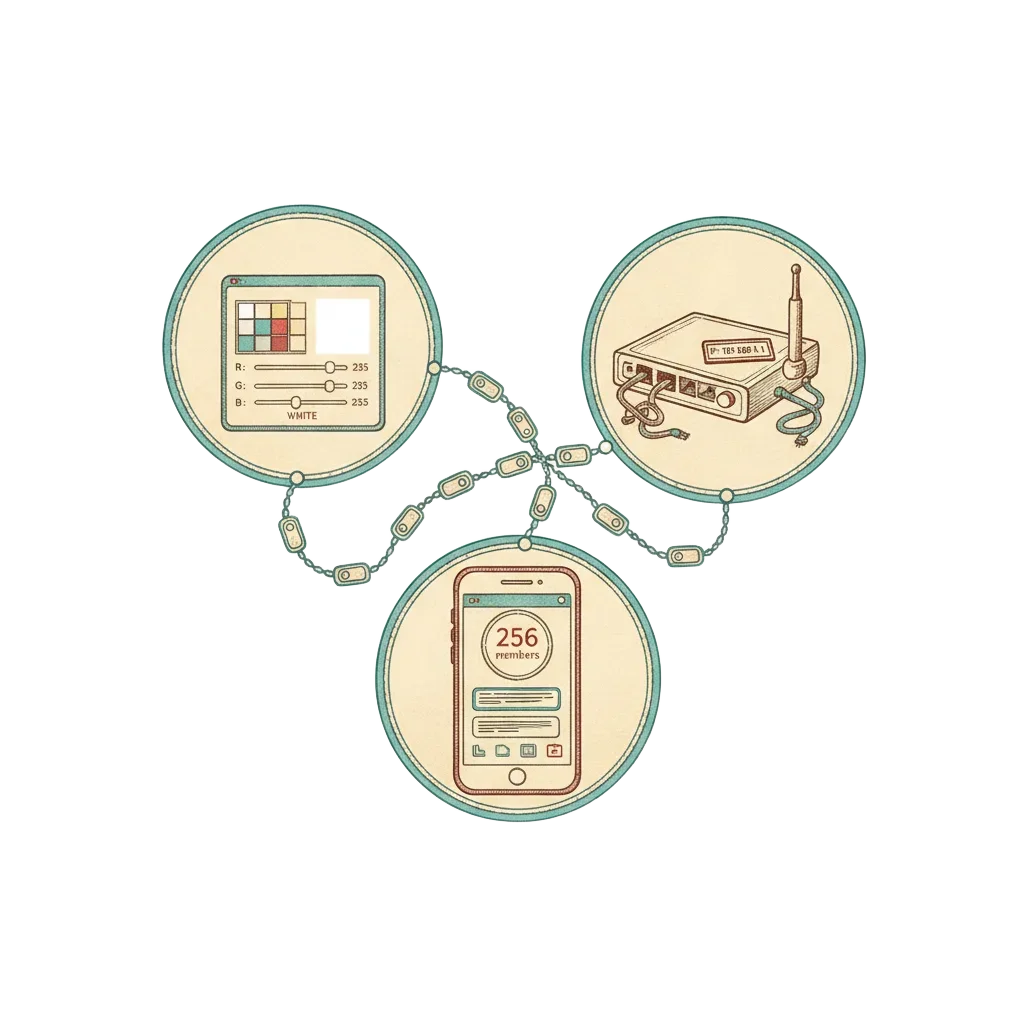
The same eight switches, three different rooms.

Myth
The famous story that is not true.
You may have heard that in the game Civilization, the peaceful leader Gandhi became a nuclear warmonger because his aggression score "wrapped round" from 1 to 255. It is one of the best-known gaming legends - and the game's creator, Sid Meier, has said it never happened. In his 2020 memoir, he explained there was no such bug. A good story, but a myth.
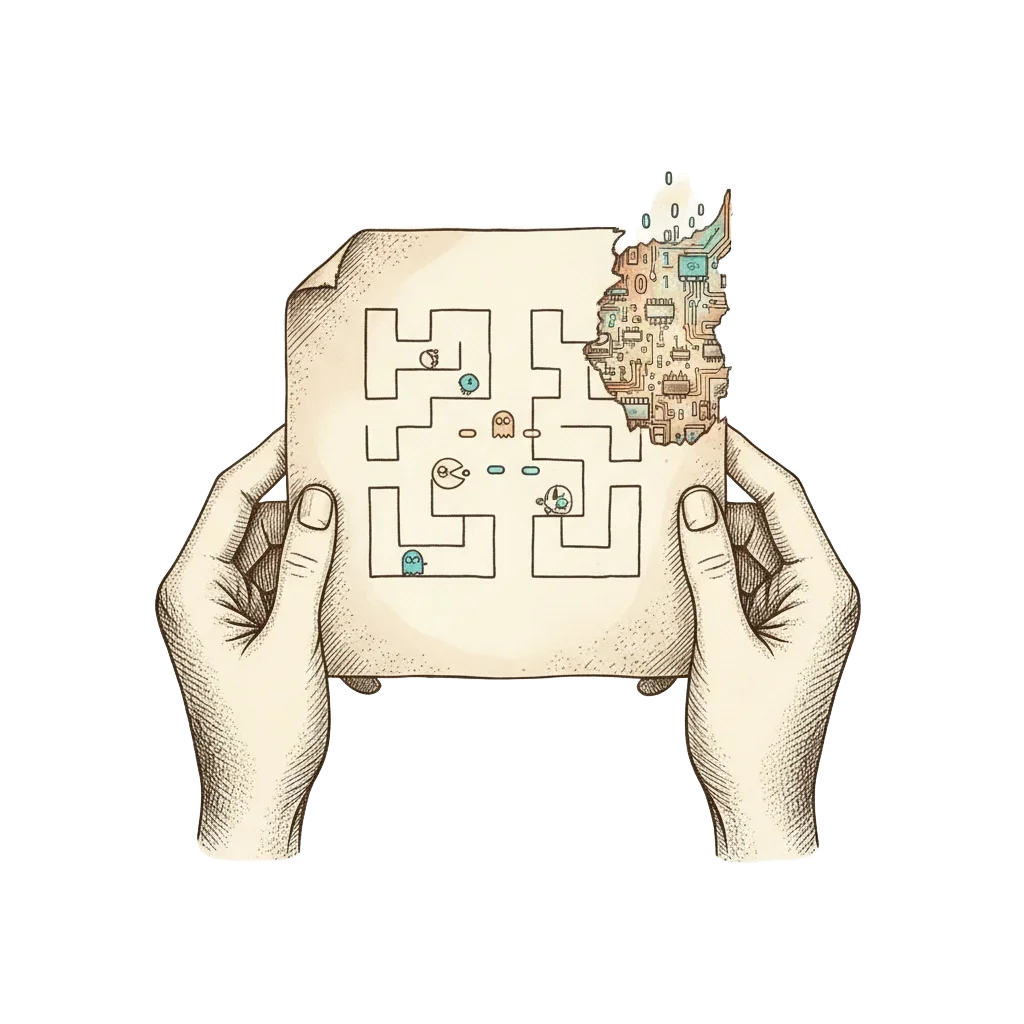
255 is a reminder that computers do not think in endless numbers. They think in boxes of a fixed size.
Most of the time, the box is big enough. Designers choose sizes that seem more than generous for the job.
But people are endlessly inventive. They play a game for six hours straight. They invite more friends to a chat. They connect billions of devices to a network built for a research lab.
And sooner or later, somebody reaches the edge of the box.
That is what the players on level 256 found: not a secret ending, but the outline of the machine itself, showing through the game.
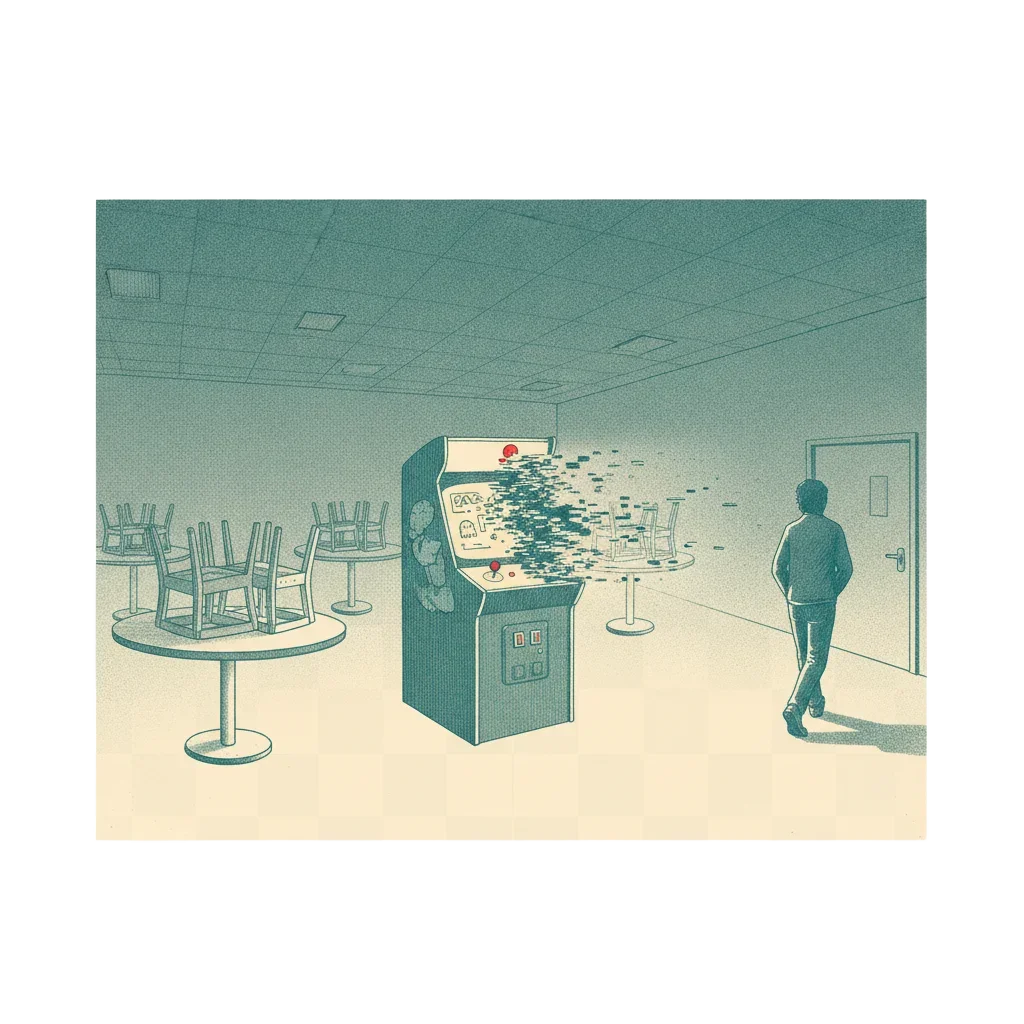
The Pac-Man kill screen has become one of the most famous glitches in video game history.
Partly because it is so visible: the whole world of the game visibly breaks.
Partly because of the players who reached it, spending hours in perfect concentration, one maze at a time.
And partly because it shows, in one picture, something that is usually hidden: every digital world is built from numbers, and every number has a limit.
Here is why 255 matters:
A byte is eight on-off switches. It can count from 0 to 255.
2⁸ − 1 = 255. Add one more, and the byte rolls back to 0.
Pac-Man (Namco, 1980) stores the level number in a single byte.
On level 256, the counter rolls over and the fruit-drawing routine tries to draw 256 fruit, scrambling the right half of the screen.
The level cannot be completed. The perfect score is 3,333,360.
255 also sets the range of screen colours and of each part of a classic internet address.
The "Nuclear Gandhi" bug is a myth.
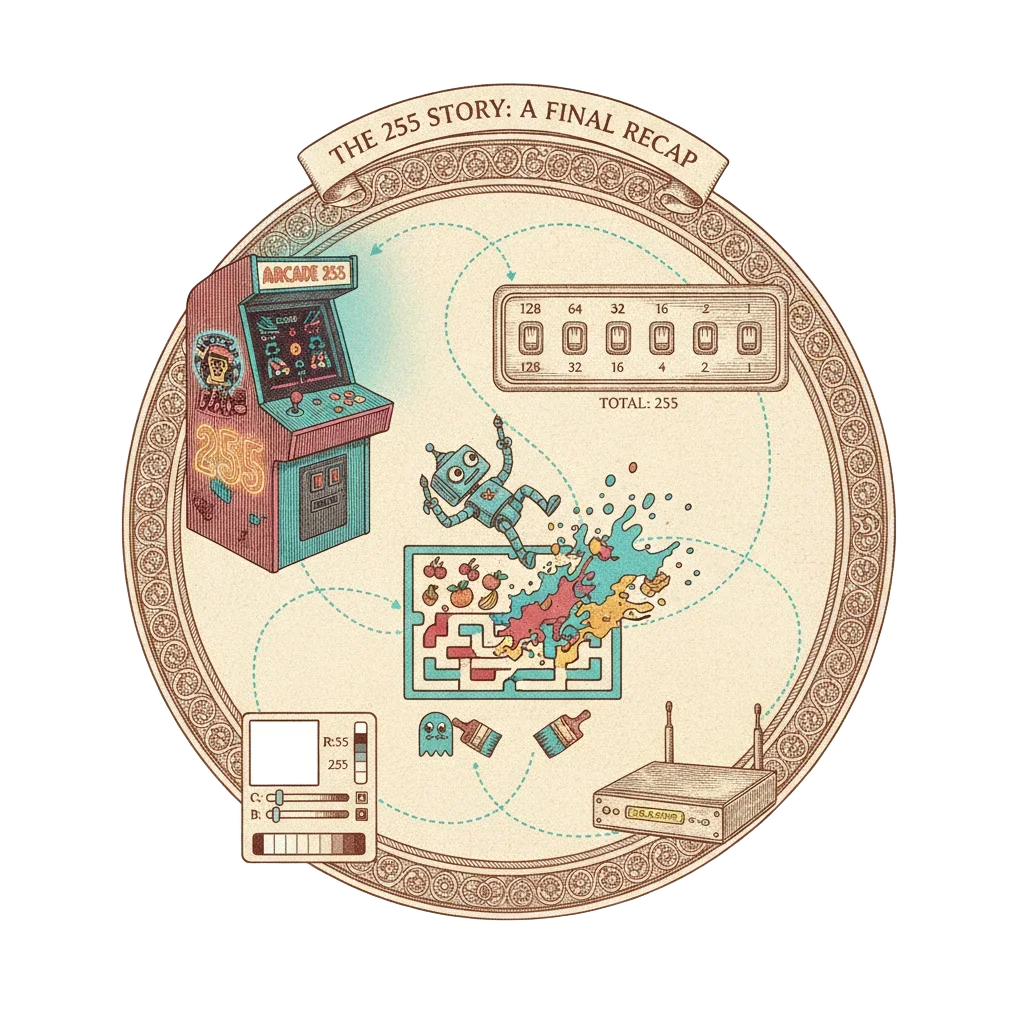
The whole story, in one cabinet.
Clear enough mazes and you find the edge of the world.
255 is as far as eight little switches can count.
No syllabus. No signup. Just exhibits.
Pull open a drawer, read a label, follow whichever footnote looks most suspicious, and let the collection take you somewhere you did not plan to go.
Powered by DollarPageClub