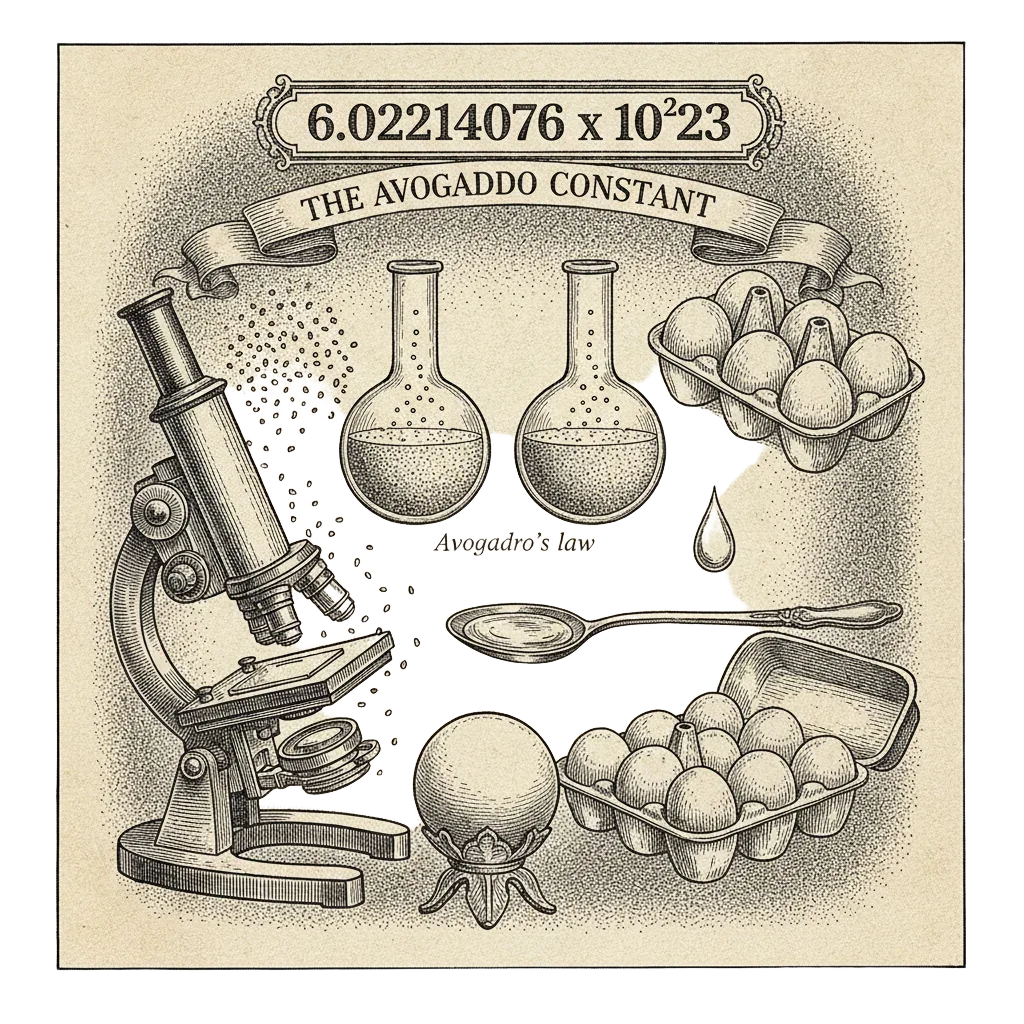
The number that counts the invisible
Pour yourself a glass of water, and look closely.
A single 250 ml glass holds around eight million billion billion tiny water molecules - far too many to ever count one by one. So how do scientists count things they cannot see? With one very large, very exact number:
602,214,076,000,000,000,000,000.
Inside every sip, a hidden universe.
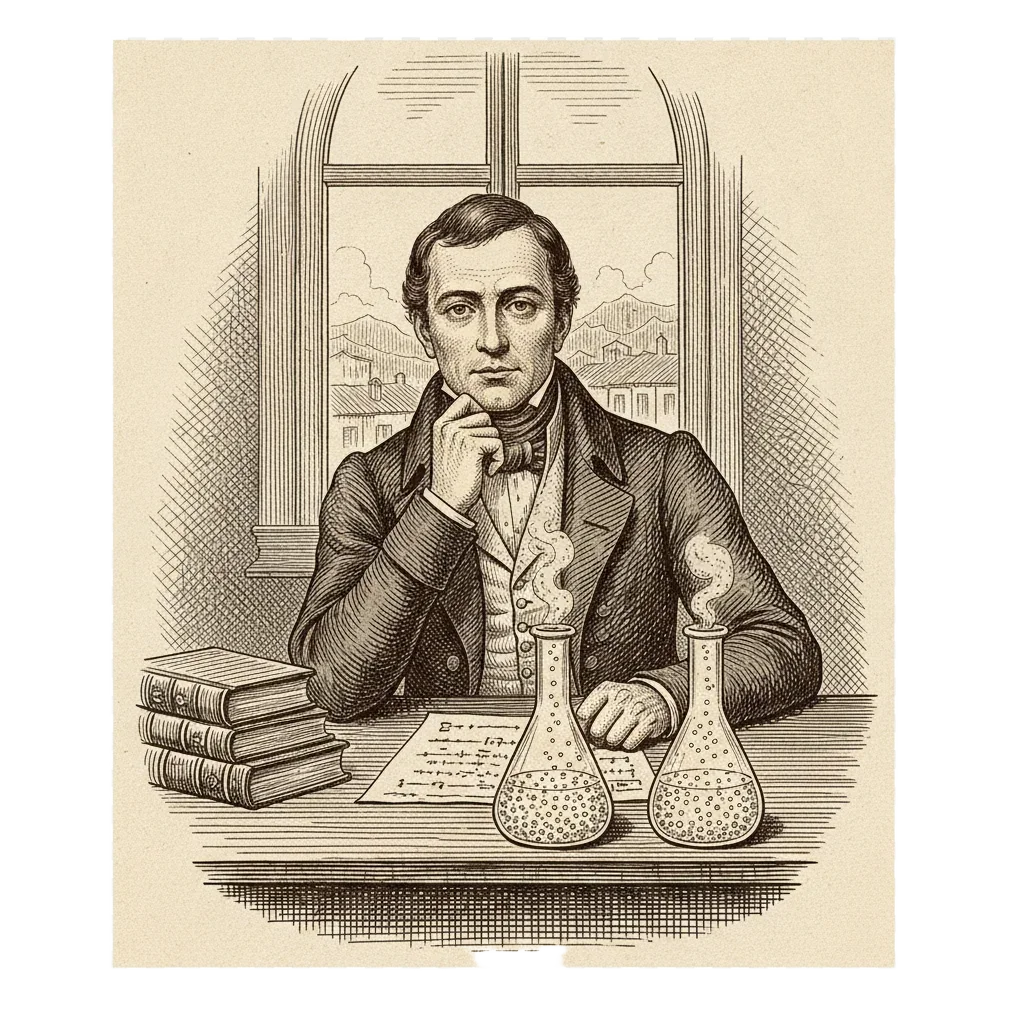
In 1811, in the Italian city of Turin, a man who had first trained in law published a short scientific paper. His name was Amedeo Avogadro.
At the time, chemists were arguing about what gases were made of. Avogadro suggested something simple and bold: Equal volumes of any gas, at the same temperature and pressure, contain the same number of particles.
A balloon of hydrogen and a balloon of oxygen, the same size, in the same room - same number of molecules inside, even though one is much heavier than the other.
It was a brilliant idea. And almost nobody paid attention.
Avogadro became a professor of physics at the University of Turin and kept working quietly. He died in 1856. Four years later, in 1860, the chemists of Europe gathered at a great congress in Karlsruhe, Germany. There, a younger Italian chemist, Stanislao Cannizzaro, stood up and showed that Avogadro's idea solved the problems everyone had been struggling with.
The idea was finally accepted - half a century late, and too late for Avogadro to see it.
And here is the curious part: Avogadro never knew the number that now carries his name.
Turin, 1811. A quiet idea, ahead of its time.
The number without a name.
For decades, scientists knew there had to be some enormous number of molecules in a given amount of gas - but nobody knew what it was. The first real estimate came in 1865 from the Austrian scientist Josef Loschmidt. The name "Avogadro's number" would not appear for another 44 years.
As late as the early 1900s, some serious scientists still doubted that atoms and molecules really existed.
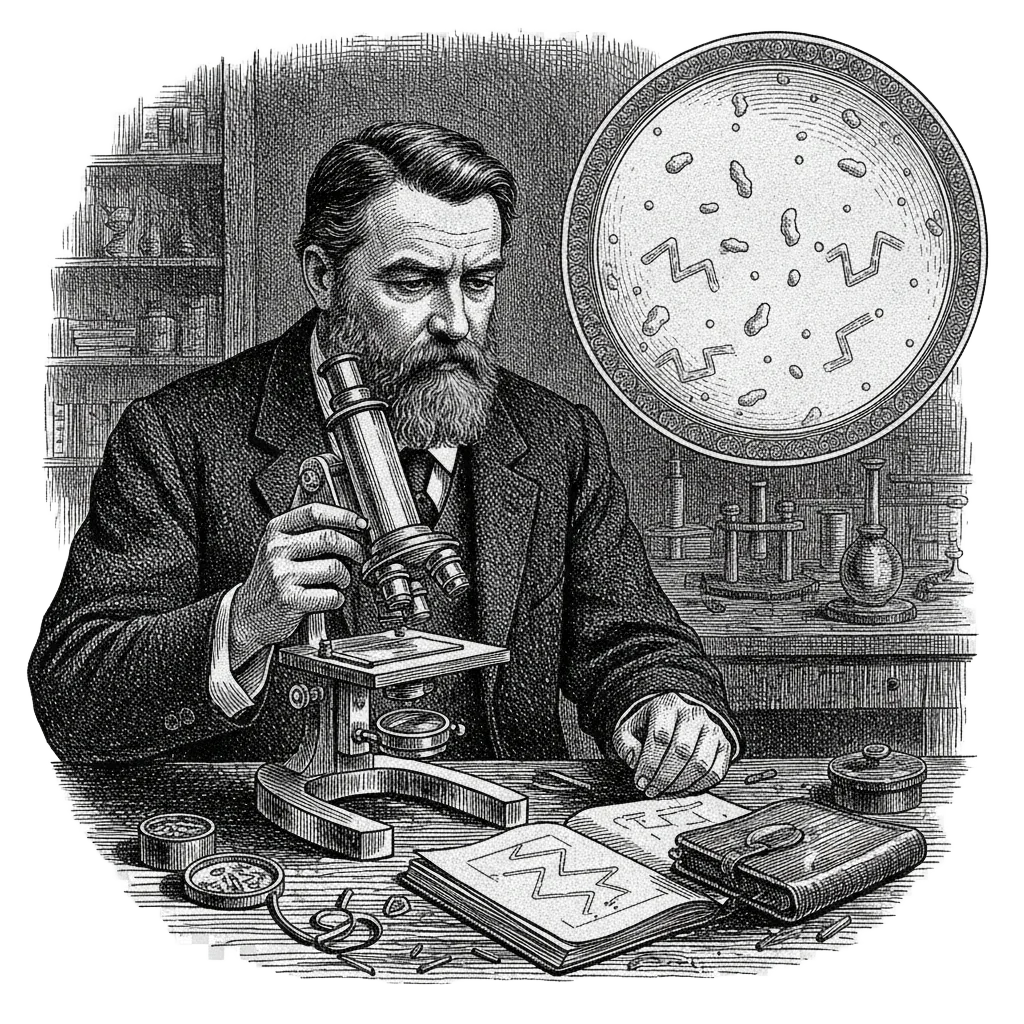
Enter Jean Perrin, a French physicist with a microscope.
Perrin watched tiny grains suspended in water, jiggling and dancing about. This restless dance - called Brownian motion - had puzzled people for decades. In 1905, Albert Einstein had suggested it was caused by invisible water molecules bumping into the grains.
Perrin tested Einstein's idea with painstaking experiments, tracking the grains and measuring how they settled. From his results he could work out how many molecules must be doing the bumping.
In 1909, he gave that number a name, in honour of the man who had first imagined it: Avogadro's number.
Perrin's work helped convince the doubters that atoms were real. In 1926, he won the Nobel Prize in Physics for his work on the "discontinuous structure of matter."
Paris, early 1900s. Seeing the invisible for the first time.
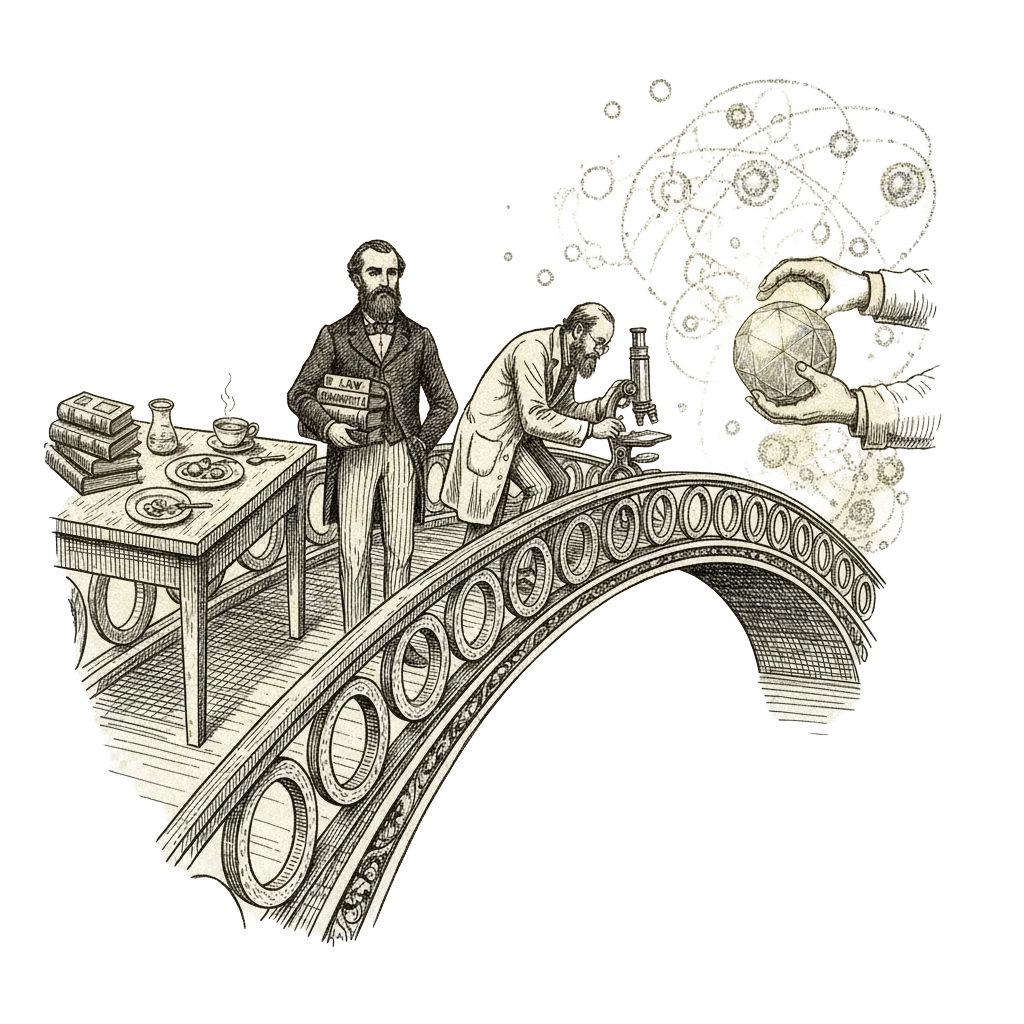
Atoms and molecules are far too small to count. But they are easy to weigh in bulk. Avogadro's number is a bridge between the two.
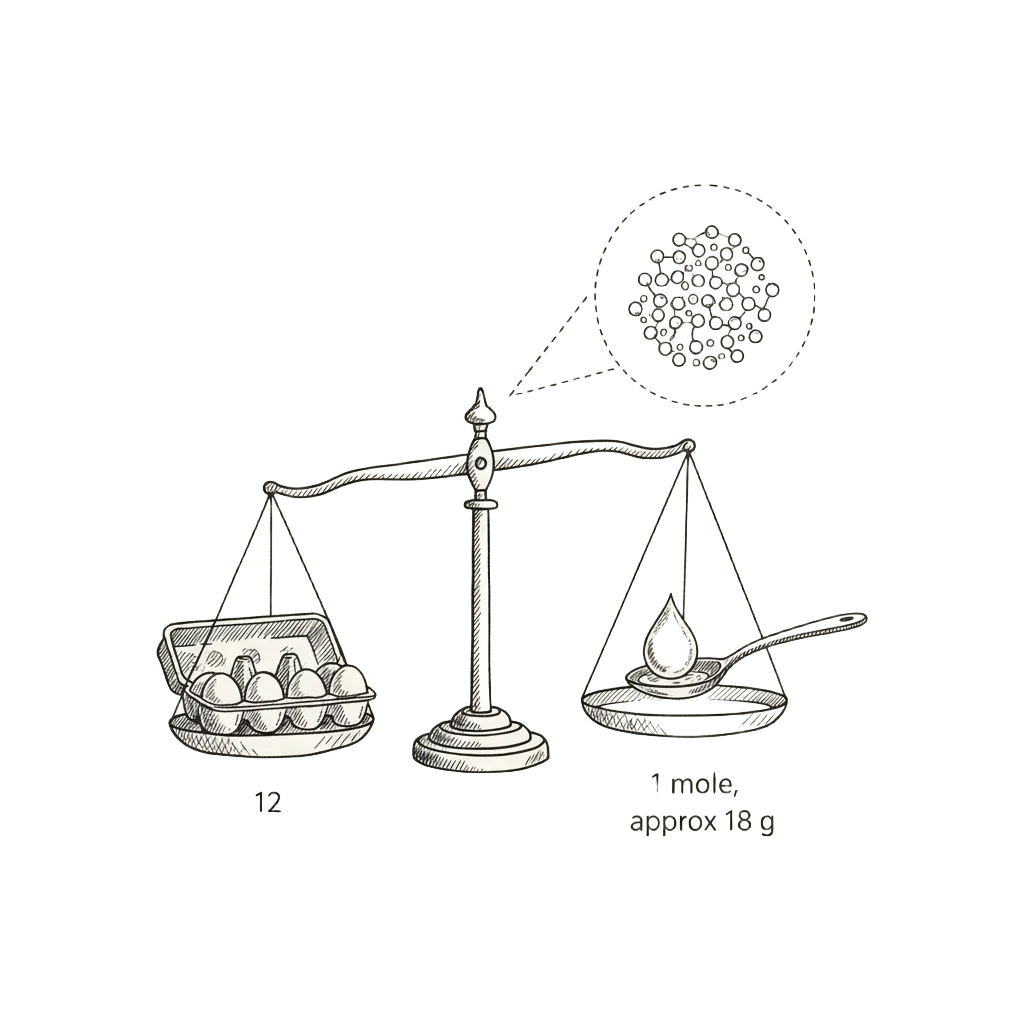
Chemists call this many things a mole - the way bakers call twelve things a dozen.
A dozen eggs is 12 eggs. A mole of anything is 602,214,076,000,000,000,000,000 of them.
Why such a strange number? Because it was chosen so that the tiny world and the everyday world line up neatly:
one mole of water molecules weighs about 18 grams - roughly a single generous sip
one mole of carbon atoms weighs about 12 grams
So a chemist who wants a precise number of molecules does not count. They weigh.
A dozen eggs is 12. A mole is 602,214,076,000,000,000,000,000.
Big numbers are easy to write and hard to feel. Let's try.
Count it
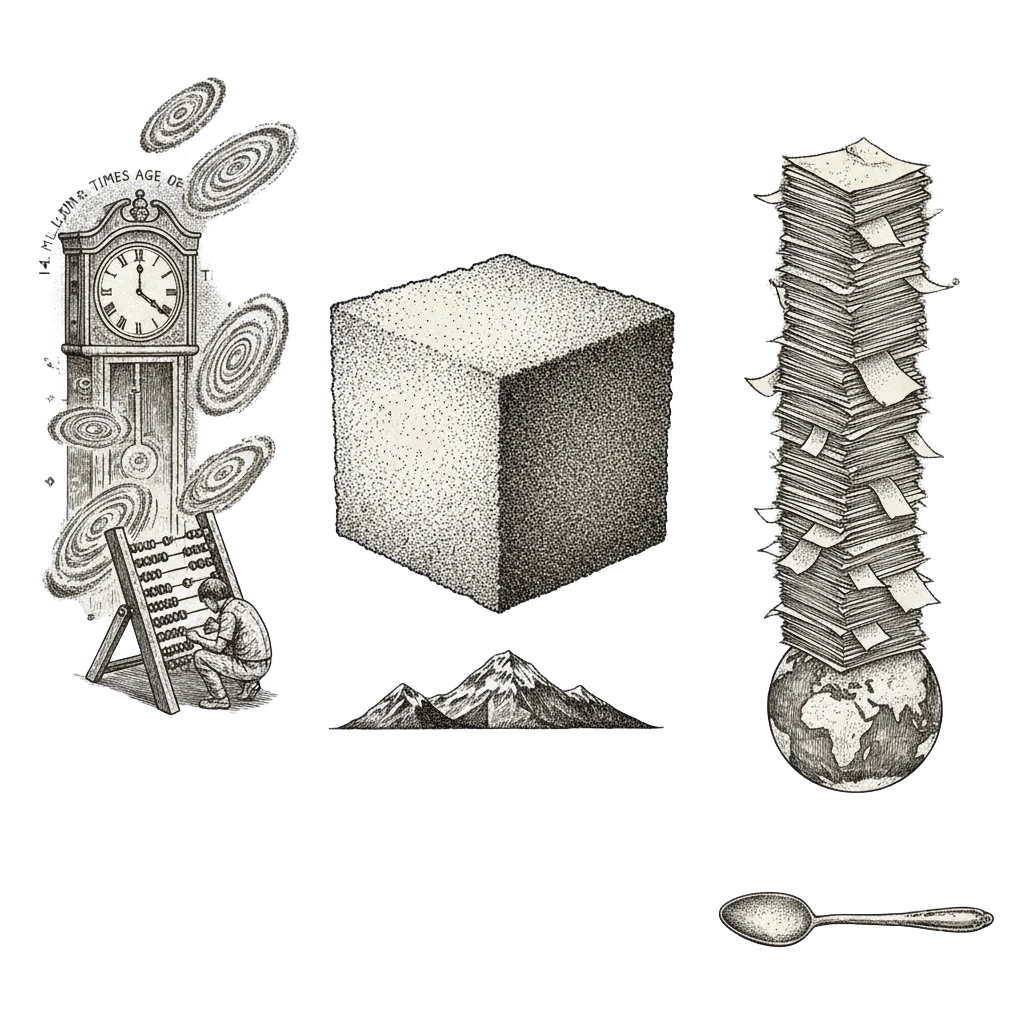
If you counted one number every second, without sleeping, it would take you about 19 million billion years to reach Avogadro's number. That is about 1.4 million times the age of the universe.
Pile it
A mole of grains of sand, each one a tiny cube one millimetre across, would make a single giant cube about 84 kilometres on each side - around nine and a half times taller than Mount Everest.
Stack it
A mole of sheets of paper, each a tenth of a millimetre thick, would make a stack reaching about 6,400 light-years into space.
And yet a mole of water fits on a spoon.
That is the real surprise: atoms are so small that an unimaginably large number of them makes a sip.
All of that. And yet: a spoonful.
For most of the 20th century, the exact value of Avogadro's number came from measurements - and each measurement was a little uncertain.
So in the early 2000s, scientists from several countries joined forces in the International Avogadro Project. Their plan was wonderfully direct: make a lump of pure atoms, and count them.
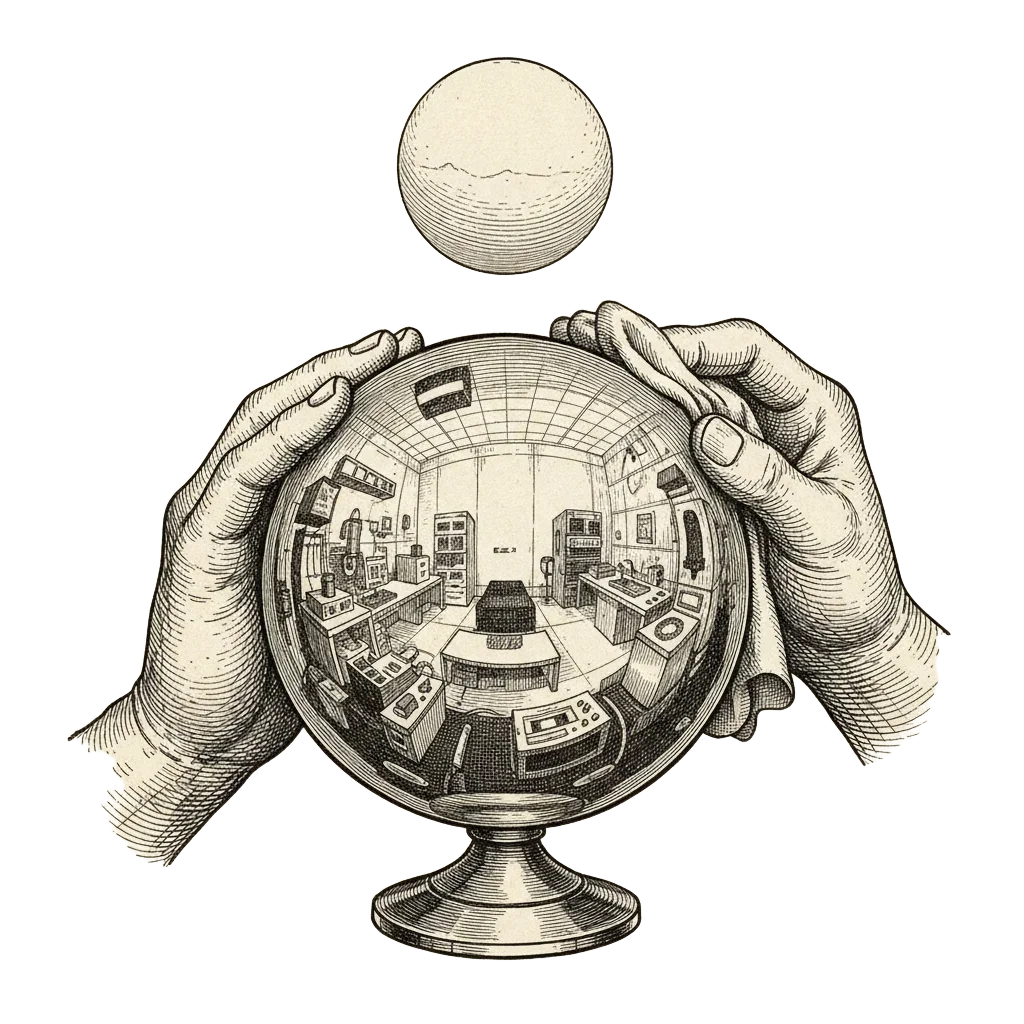
They made a sphere of silicon, weighing about 1 kilogram, from almost perfectly pure silicon-28 - the purest form of silicon anyone could make.
Then they made it round. Very, very round.
The shaping was done by hand by a master optician, Achim Leistner, working at CSIRO in Australia, who could feel imperfections through his fingertips that machines struggled to measure.
The result is often called the roundest object ever made. According to the US National Institute of Standards and Technology, if one of these spheres were blown up to the size of the Earth, the difference between its highest mountain and deepest ocean would be just 3 to 5 metres.
Each sphere cost about $3.2 million.
By measuring the sphere's size and the spacing of its atoms with X-rays and lasers, scientists could work out how many atoms were inside - about 21 million billion billion.
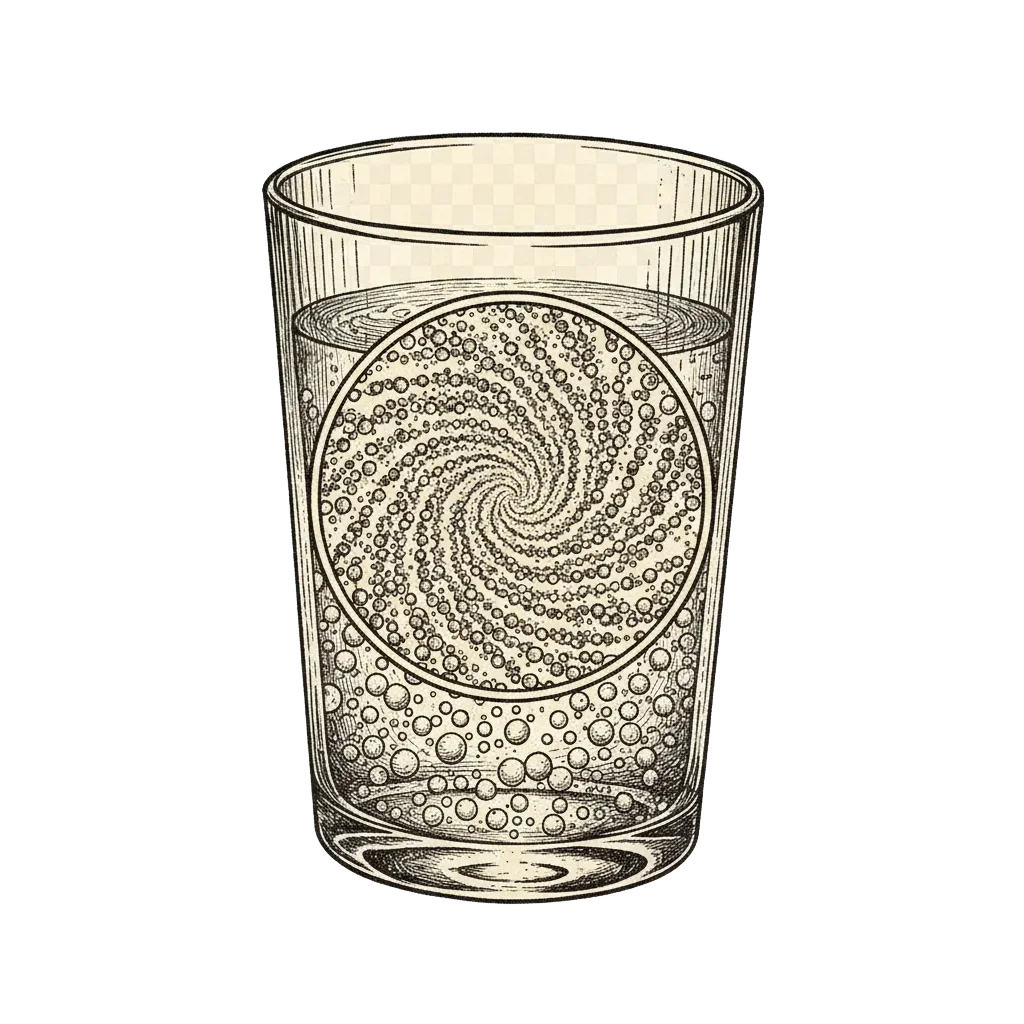
The most perfect sphere a human hand has ever made.
All that careful counting paid off.
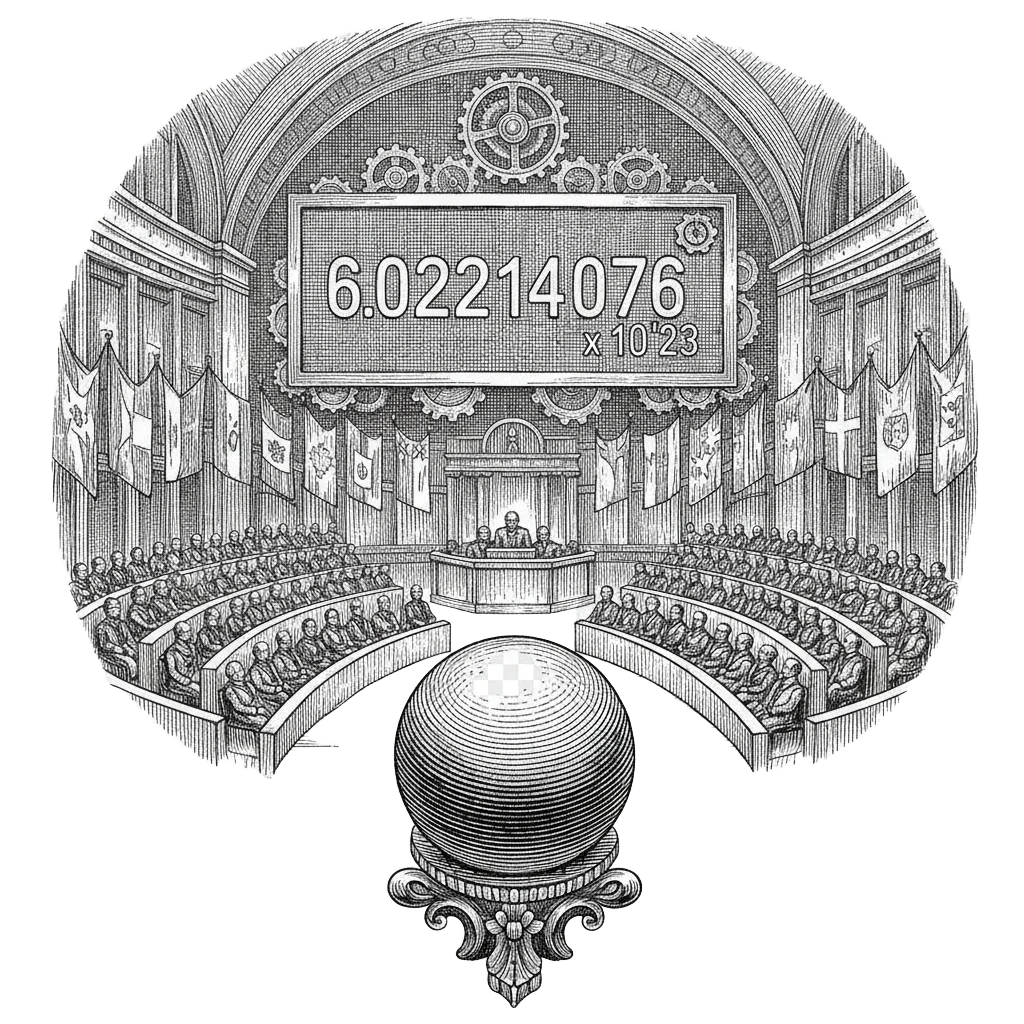
On 20 May 2019, the world's system of measurement changed. Instead of measuring Avogadro's number over and over, scientists fixed it forever at exactly:
6.02214076 × 10²³
From that day on, a mole is simply exactly that many things - no more measuring, no more uncertainty.
Avogadro's number joined a small club of constants - including the speed of light - that now hold up the whole system of units the world uses.
The number that nobody could count in 1811 became a number nobody needs to measure again.
20 May 2019. The number, fixed forever.
There is a bigger idea hiding here.
We will never see a single water molecule with our own eyes. We will never count to a mole.
And yet we know, to nine significant digits, how many are in a spoonful.
Avogadro's number is how humans built a bridge between the world we can touch and the world we can only imagine.
It began as a lawyer's quiet guess, was ignored for fifty years, was proved by a man watching grains dance in water, and ended up fixed forever - with a little help from the roundest ball on Earth.
From a lawyer's desk in Turin to the fabric of modern measurement.
Here is why 6.02214076 × 10²³ matters:
It is the number of things in a mole - the chemist's "dozen."
In 1811, Amedeo Avogadro proposed that equal volumes of gas contain equal numbers of particles.
His idea was ignored until 1860, four years after his death.
Jean Perrin named the number in 1909 and won the 1926 Nobel Prize for helping prove atoms are real.
The Avogadro Project built near-perfect spheres of silicon-28 to count atoms precisely.
Since 20 May 2019, the number has been fixed as exactly 6.02214076 × 10²³.
Counting to it at one per second would take about 1.4 million times the age of the universe.
You will never see one molecule. You will never count them all.
Avogadro's number is how we count what we will never see.
Other entries in the cabinet
Powered by DollarPageClub