Museum of Numbers
Exhibits › Physics & Constants
343 m/s

Mach 1, and the
wall that wasn't there

Physics & Constants

On a Tuesday morning in October 1947, a young test pilot squeezed into a bright orange rocket plane shaped like a bullet.

He was in pain. Two of his ribs were broken, and he had told almost nobody.

His job that day was to fly faster than sound - something no human had ever done in level flight, and something many people believed would tear an aeroplane to pieces. Near the ground on a mild day, that speed is about 343 metres per second.

Pilots call it Mach 1.
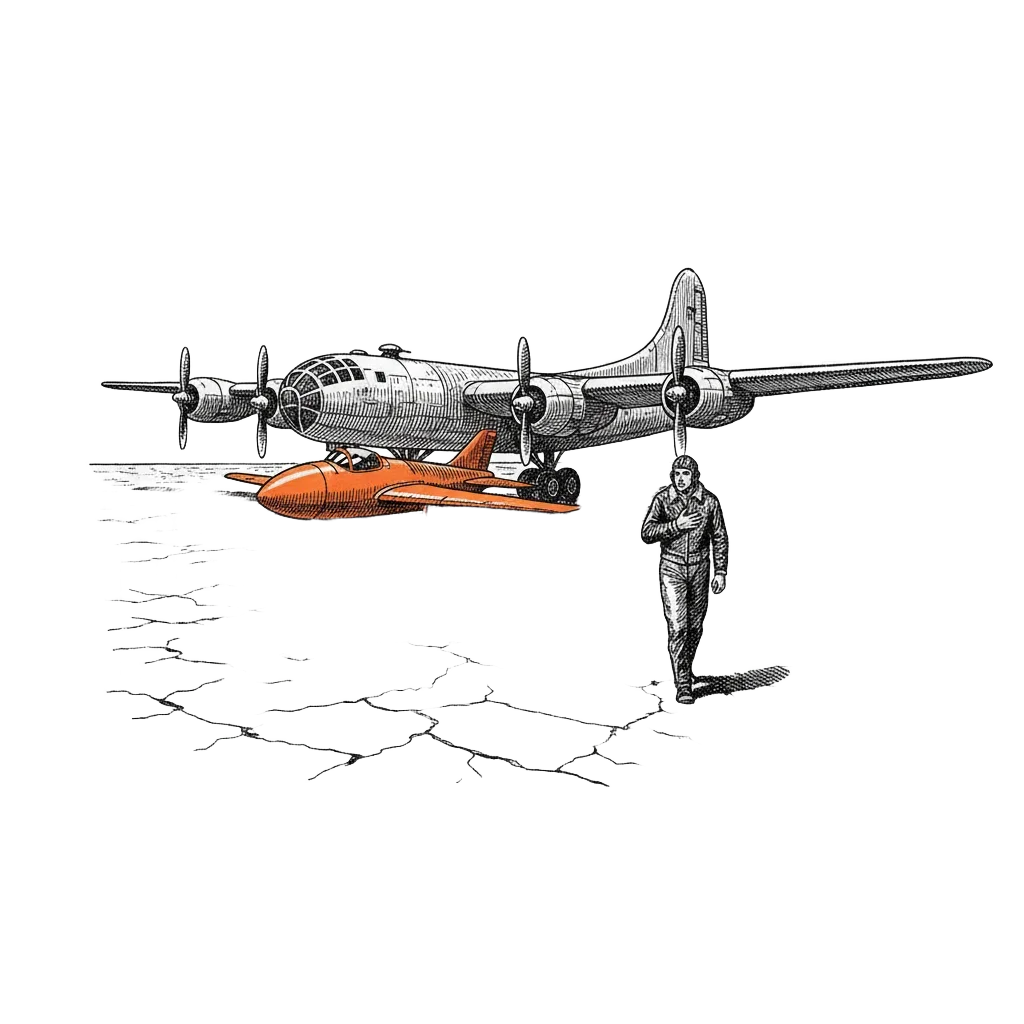
The Mojave Desert at dawn in 1947 - a B-29 bomber on a vast pale dry lake bed with the small orange X-1 rocket plane tucked beneath it, and a lone pilot walking toward it

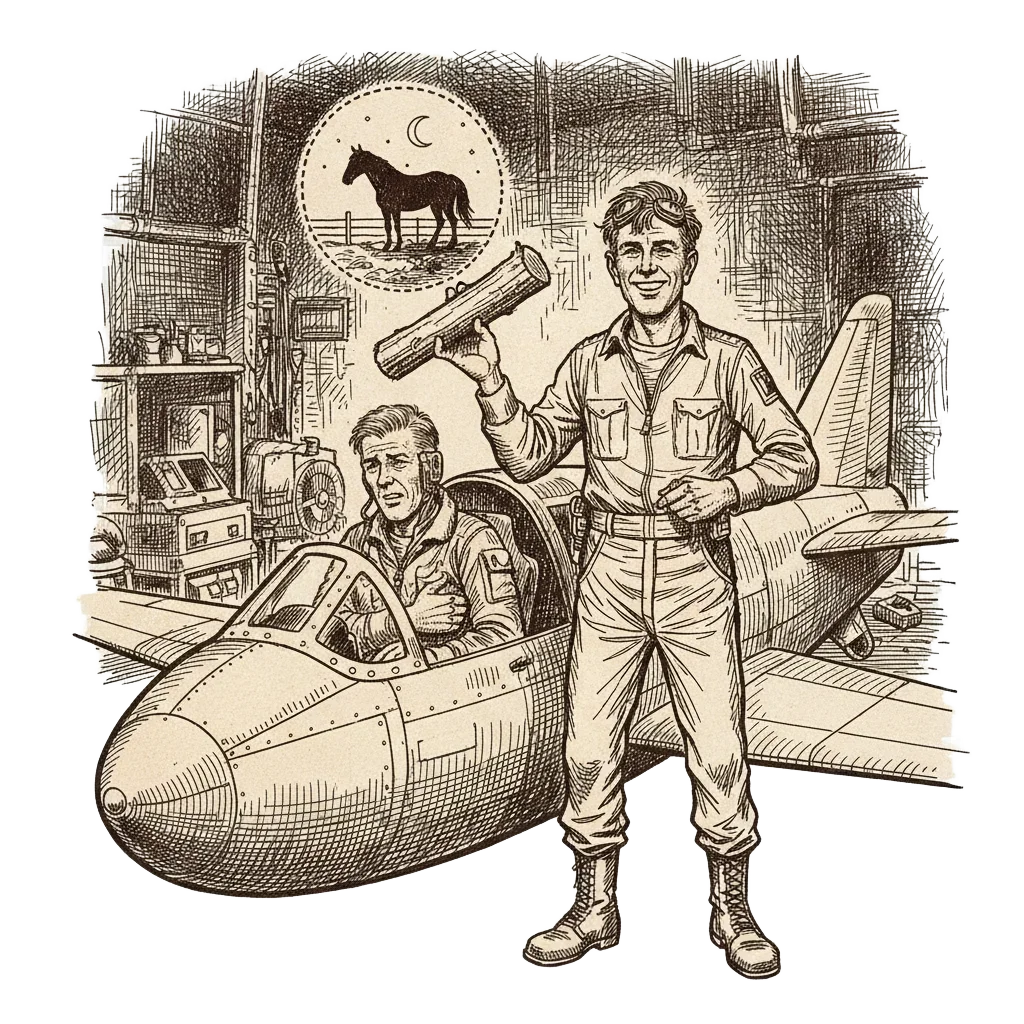
Two broken ribs and a broom handle

The pilot was Captain Chuck Yeager of the US Air Force, 24 years old, a small-town boy from West Virginia who had become a fighter ace in the Second World War.

That weekend, just two days before the flight, he and his wife Glennis went riding in the desert near the airfield. Yeager's horse threw him. He broke two ribs on his right side.

If the doctors on the base found out, he would be grounded, and someone else might get the flight. So he kept quiet. According to NASA's history of the programme, he told no one at the base except his close friend and fellow engineer-pilot, Captain Jack Ridley.

There was one problem the two friends could not ignore. To seal himself into the rocket plane, Yeager had to reach across and slam a locking handle on the door - with his right arm. The pain made it impossible.

Ridley's fix was wonderfully low-tech. As Yeager told the story afterwards, Ridley cut off a short length of broom handle. Yeager could use it as a lever to push the handle home.

So on 14 October 1947, the first person to fly faster than sound climbed into the plane taped up, in pain, carrying a piece of a broom.

Jack Ridley holding a sawn-off broom handle stub in a hangar while Yeager sits wincing in a cockpit, ribs broken

↳ this is how history is actually made

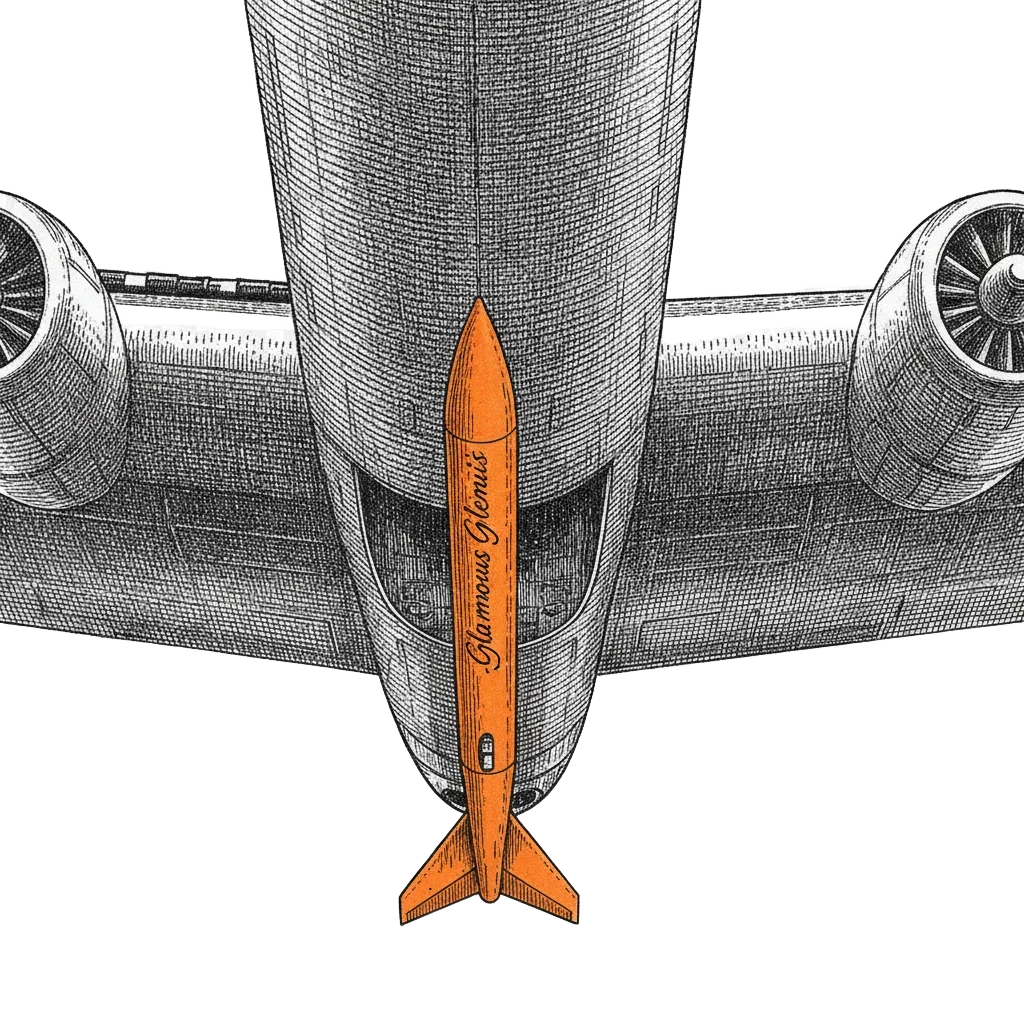
The orange X-1 Glamorous Glennis falling away from the B-29 bomb bay

Exhibit note

Glamorous Glennis.

Yeager named the orange plane - the Bell X-1 - Glamorous Glennis, after his wife. It had no runway take-off. A B-29 bomber carried it up and dropped it from its belly, like a bomb, before Yeager lit the rockets. The plane now hangs in the Smithsonian's National Air and Space Museum in Washington, D.C.

A wall in the sky

Why were people so afraid?

In the 1940s, fighter planes diving at high speed ran into terrifying trouble. As they got close to the speed of sound, they shook violently. Controls stopped working. Some planes broke apart.

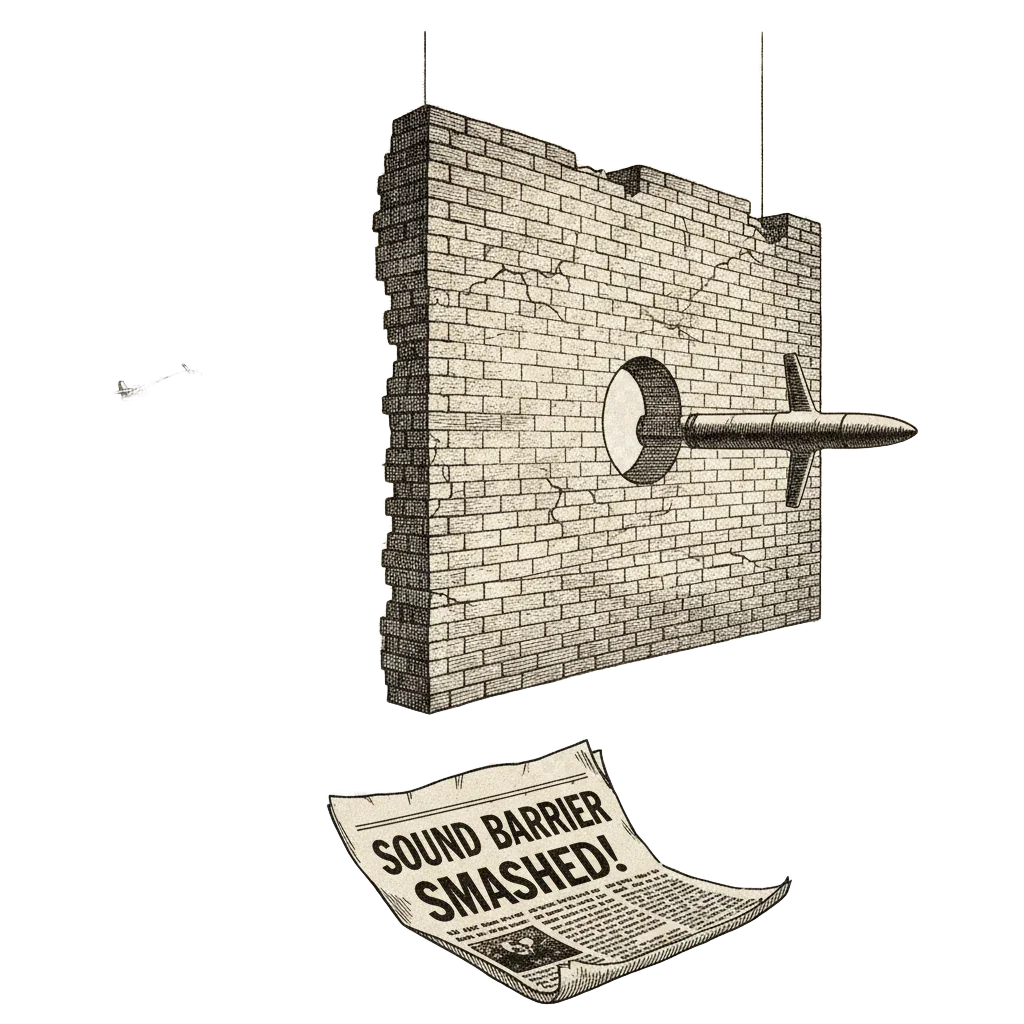
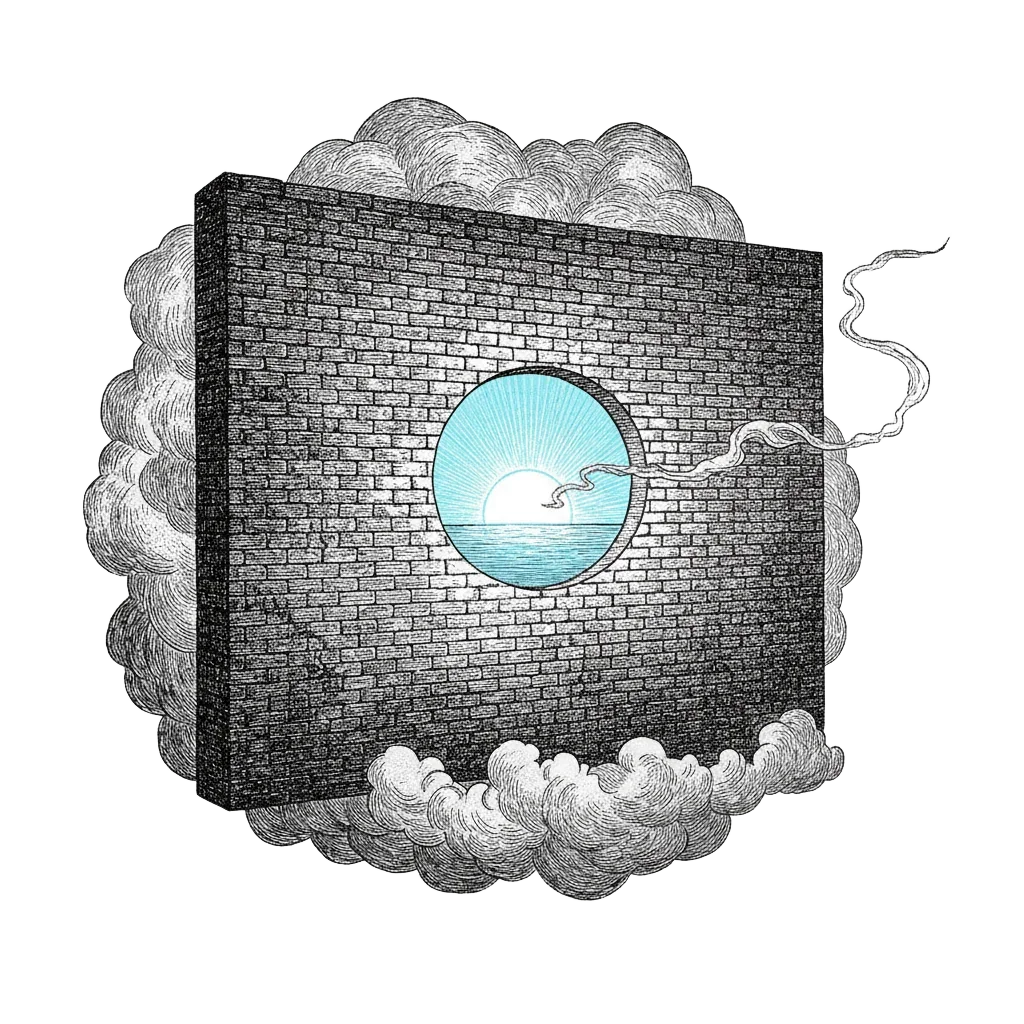
Newspapers began to talk about a "sound barrier" - as if there were an invisible wall in the sky that no aeroplane could get through.

NASA's historians trace the phrase back to 1935, when a British scientist, W. F. Hilton, explained to a reporter how the drag on a wing shoots up near the speed of sound. The reporter heard it as a barrier. The idea stuck, and spread far beyond the laboratory.

The X-1 was built to find out. It was shaped like a .50-calibre machine-gun bullet - because engineers already knew bullets could fly faster than sound without falling apart.

1940s propeller fighters approaching an enormous semi-transparent brick wall in the clouds, while a bullet silhouette passes straight through it

↳ a legend set up to be knocked down

The needle jumped

At about 10:26 that morning, over the Mojave Desert, the bomber let go.

Yeager fired the rocket engine and climbed. Higher, faster. The plane shook as it neared the speed of sound, just as everyone feared.

Then, high above the desert at about 43,000 feet, the shaking stopped.

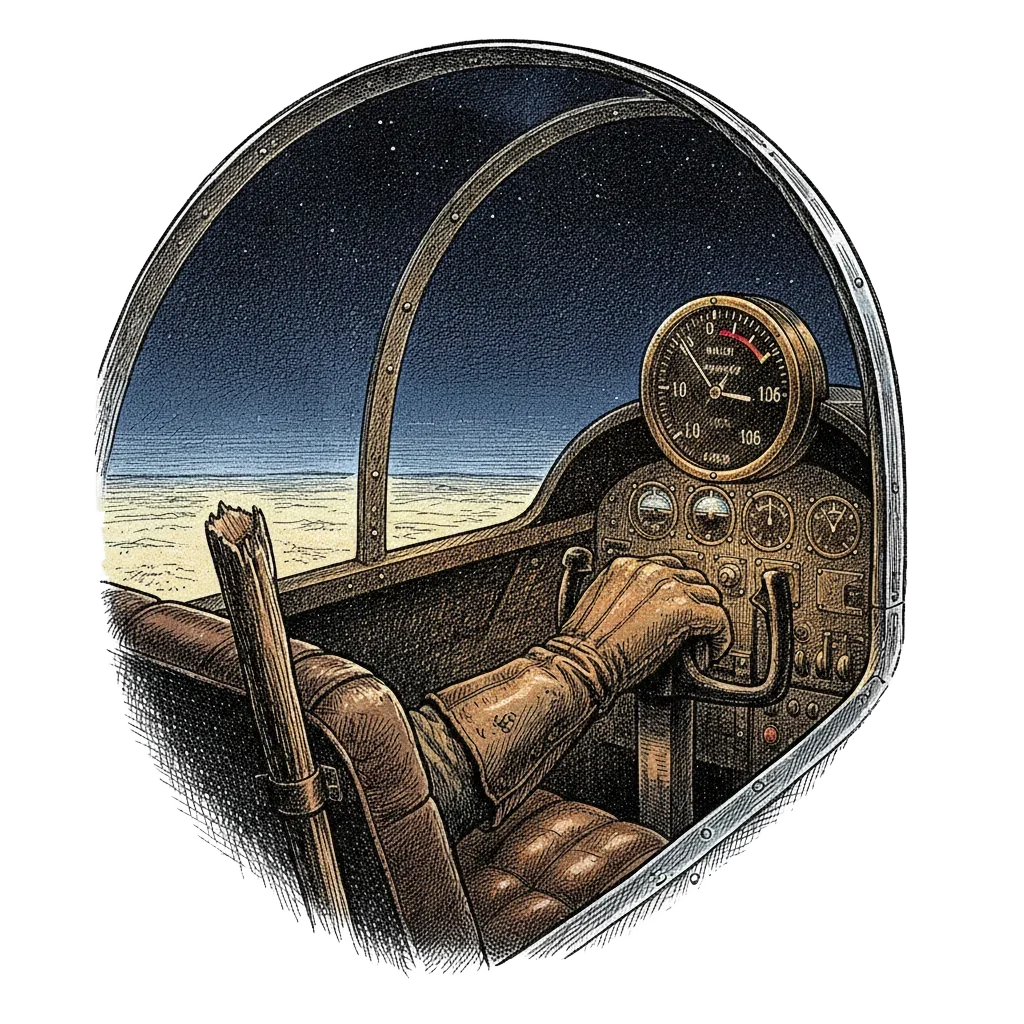
In his flight report, Yeager wrote that the needle on his Machmeter - the dial measuring speed compared with the speed of sound - hesitated, and then jumped past 1, to 1.06.

He was flying at around 700 miles per hour. He stayed supersonic for only about 18 seconds.

"There was no buffet, no jolt, no shock. Above all, no brick wall to smash into."

- Chuck Yeager, writing about the flight later

The wall had never been there.

Close-up of the X-1 cockpit: Yeager's gloved hand on controls with a broom handle stub, the Machmeter needle swinging past 1.06, deep blue-black sky through the canopy

↳ the needle moves past 1 - and nothing terrible happens

Enjoying this story?

Get the next one delivered to your inbox.

NumberMuseum tells the stories behind remarkable numbers - the people, the accidents, and the surprises hiding inside them. One new story a week, at most.

At most one email a week.

Why the air pushes back

Sound is not a thing that flies through the air. It is the air itself, passing on a push.

When you clap, you shove the air molecules next to your hands. They bump into their neighbours, which bump into theirs, and the push ripples outwards like a crowd passing along a nudge. That ripple reaches your ear as sound.

The speed of that ripple is the speed of sound. Near the ground, on a mild day of about 20 °C, it is about 343 metres every second - roughly 1,235 km/h, or 767 mph. Fast, but not unimaginably fast: sound takes about 3 seconds to travel 1 kilometre, which is why you can count the seconds between lightning and thunder to tell how far away a storm is.

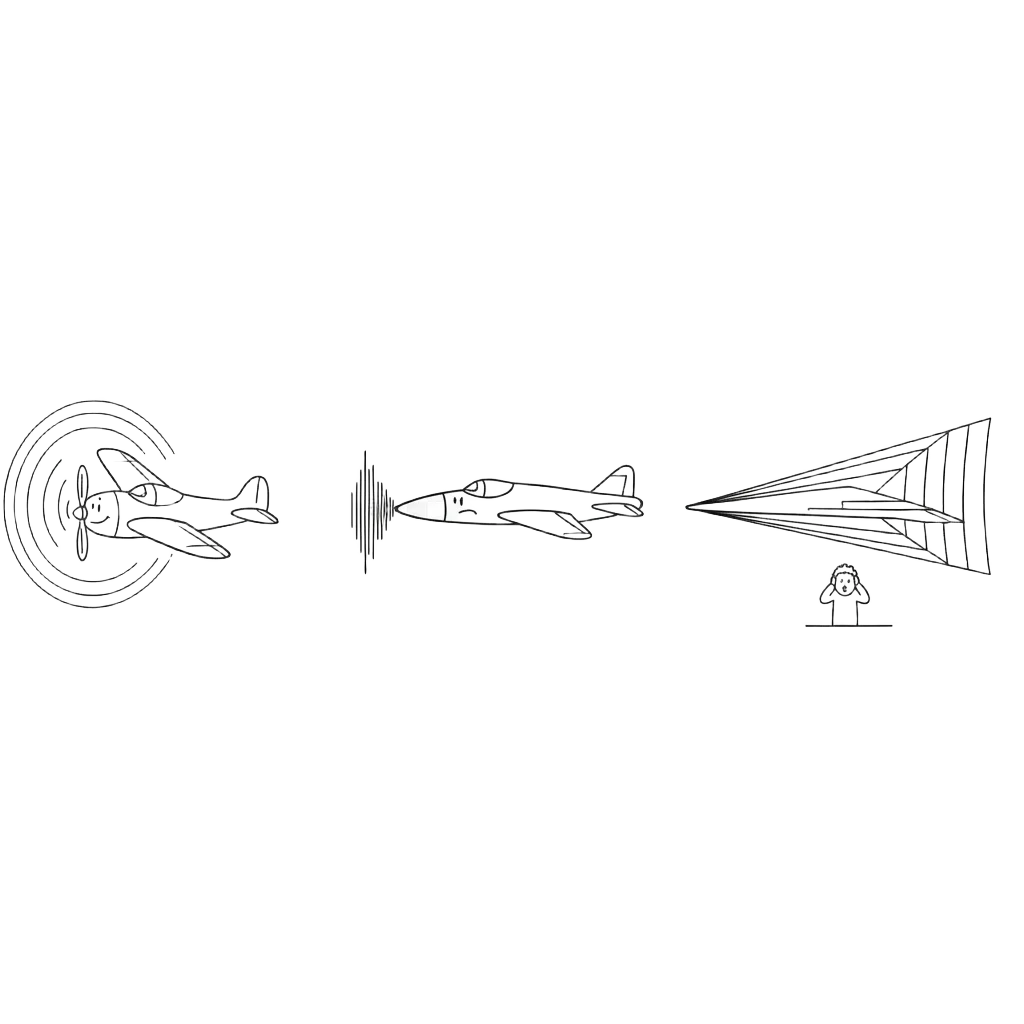
Now imagine an aeroplane flying slower than that. The air ahead of it gets a warning - the pressure ripples run ahead and the air moves aside smoothly.

But when the plane catches up with its own ripples, the air ahead gets no warning at all. The pushes pile up into a sudden wall of pressure: a shock wave. That pile-up is what shook the early fighters. And when a shock wave sweeps over the ground, people hear it as a sonic boom.

Mach 1 is simply the moment you start outrunning your own warning.

Three panels: a slow plane with neat circular sound ripples, a plane at Mach 1 with ripples bunched at its nose, and a supersonic plane with a V-shaped cone and a person hearing a boom

↳ ripples on a pond, not a physics diagram

A speed that changes with the weather

Here is the twist hiding inside the number.

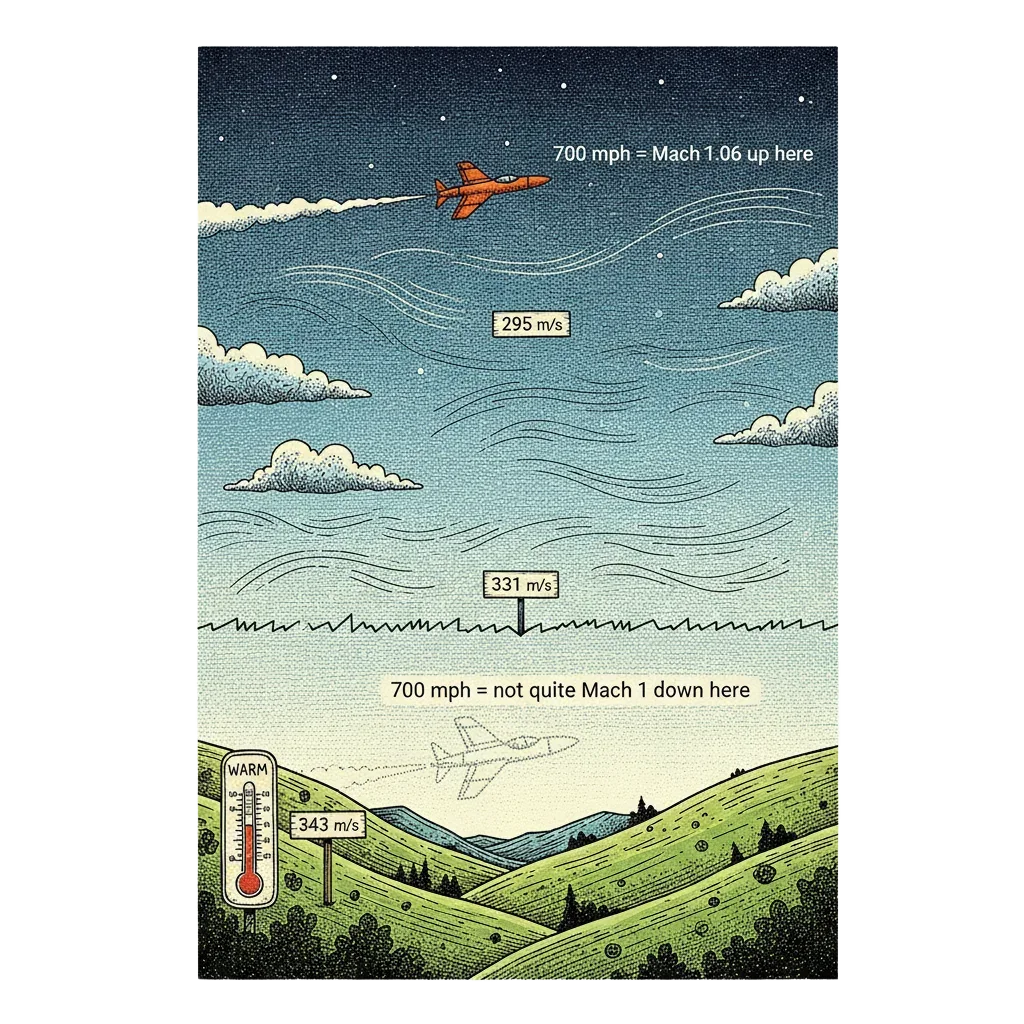
343 metres per second is not a fixed speed. It is the speed of sound in warm air near the ground. Sound travels faster through warmer air, and slower through cold air - because the molecules passing on the push are moving about faster when it is warm.

At 0 °C, sound travels at about 331 m/s. At −40 °C - the cold where Celsius and Fahrenheit agree (see /minus-40) - it slows to about 306 m/s.

High up where Yeager flew, the air was bitterly cold, far below freezing. Up there, Mach 1 was only about 295 m/s - roughly 660 mph.

So Yeager's 700 mph was faster than sound at his height, but it would not have been faster than sound down at ground level on a mild day, where Mach 1 is about 767 mph.

That is why pilots do not talk about miles per hour when they talk about sound. They use Mach numbers: your speed divided by the speed of sound wherever you are. Mach 1 is not a number on a speedometer. It is a ratio: the moment your speed and sound's speed are equal.

A tall vertical slice of sky from a warm green valley at bottom to icy dark blue at top, with speed-of-sound labels at each height and the tiny orange X-1 near the top

↳ 343 m/s is the speed of sound here, today, in this air

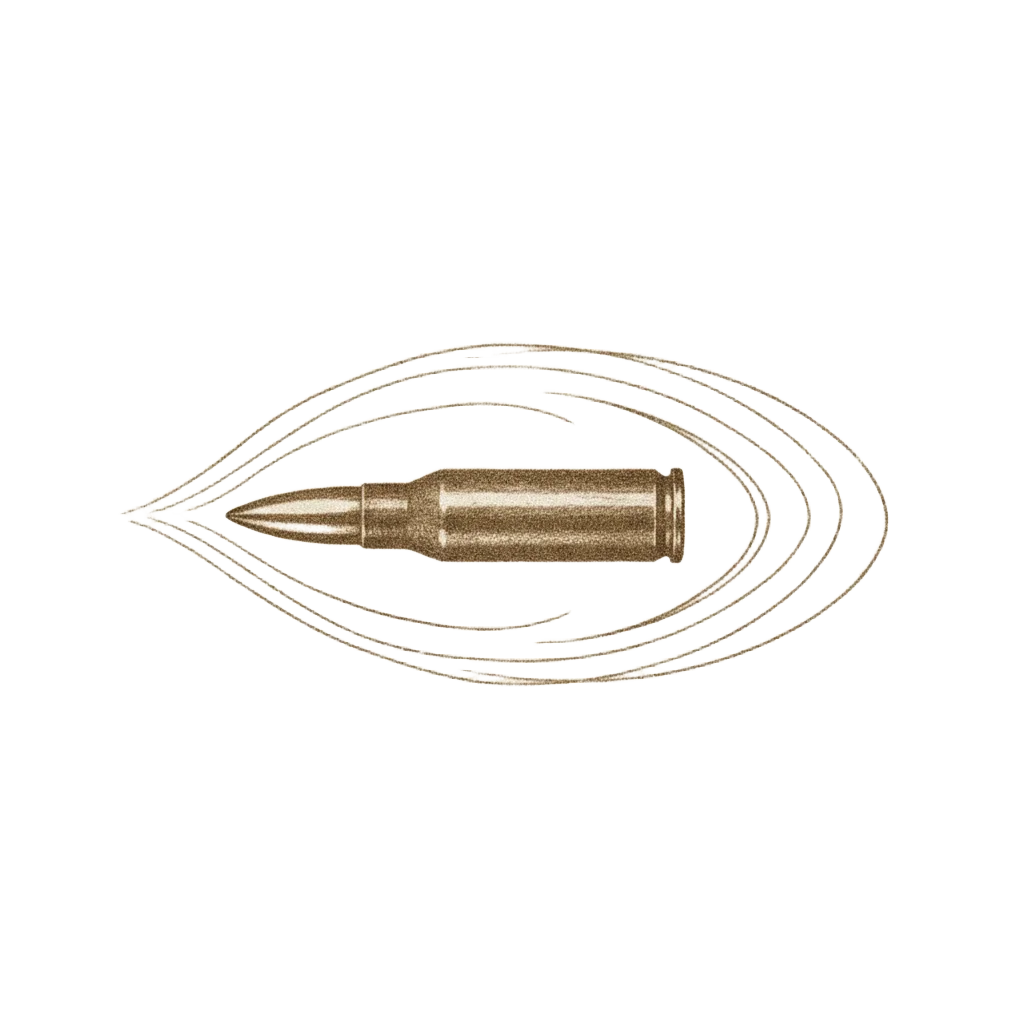
Grainy 1880s sepia-style photograph of a bullet in flight with shock wave lines

Exhibit note

Why "Mach"?

The number is named after the Austrian physicist Ernst Mach. In 1887, working with Peter Salcher, he managed to photograph a bullet flying faster than sound - and the photograph showed the shock waves around it for the first time. The name "Mach number" was suggested by the Swiss engineer Jakob Ackeret in 1929, more than a decade after Mach died. Mach never heard anyone say "Mach 1".

The secret that got out

You might expect the flight to have made headlines the next morning. It did not.

It was a military secret. For months, the record was not officially announced, although the story leaked to the press that December. It was only in June 1948 that the US Air Force confirmed that the sound barrier had been broken.

By then, Yeager had gone much faster. In March 1948, the same orange plane reached about Mach 1.45.

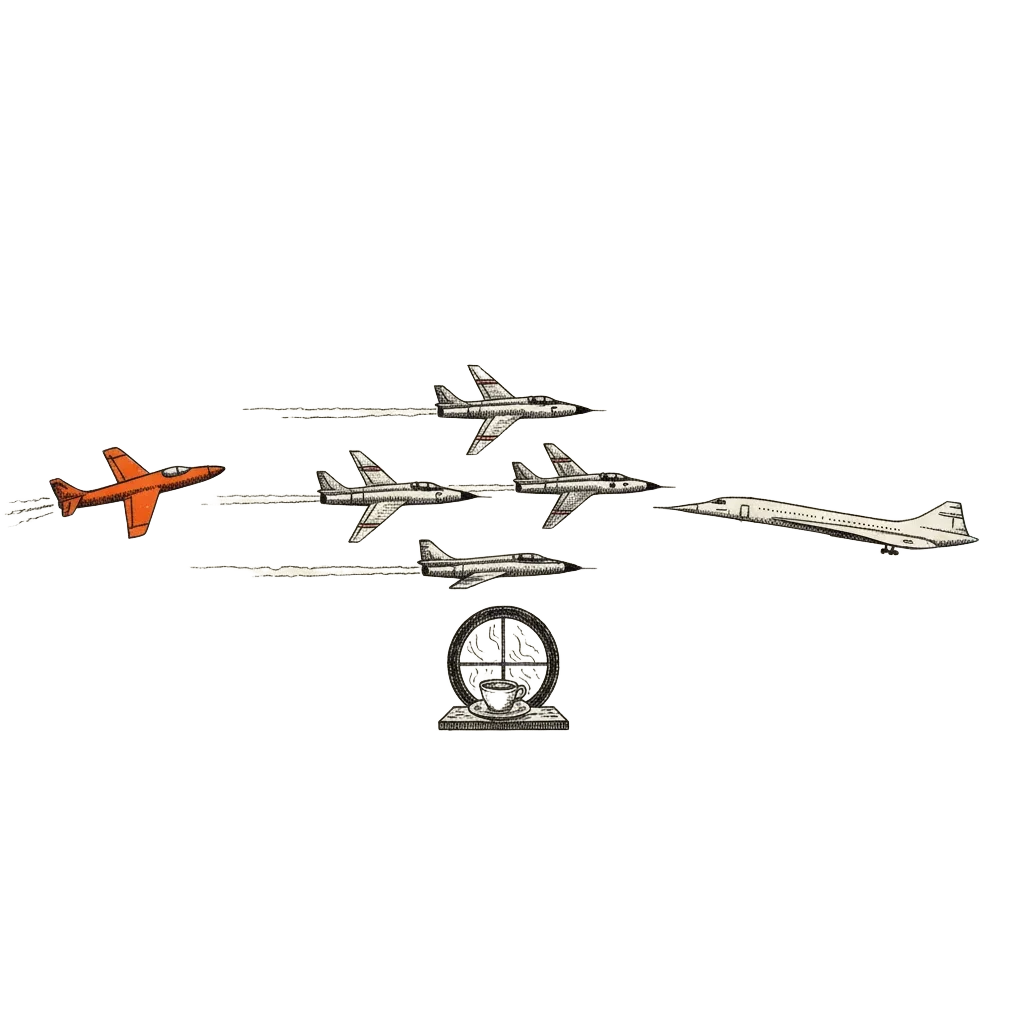
What followed changed the world's skies. Supersonic fighter jets. In 1976, the passenger jet Concorde, crossing the Atlantic at twice the speed of sound. Sonic booms rattling windows, and rules that still ban most supersonic flights over land.

And all of it began with a plane that had to be closed with a broom handle.

Timeline strip: the orange X-1 on the left, 1950s jet fighters in the middle, a white Concorde on the right with shock waves, and a teacup rattling on a windowsill at the bottom

↳ the orange plane, and everything that came after

Walls that turn out to be doors

The story of Mach 1 is really the story of a word.

"Barrier" made people imagine something solid, a line that could not be crossed. The physics was real - the shaking, the shock waves, the planes that broke up. But the wall was a picture in people's heads, and it gave way to careful engineering, a bullet-shaped plane, and one very stubborn pilot.

Many limits in science look like this at first: frightening, absolute - until someone understands what is really happening, and they turn out to be difficult rather than impossible.

And the number itself turned out to be less fixed than it sounded. 343 is not the speed of sound. It is the speed of sound here, today, in this air.

Compare it with the speed of light - exactly 299,792,458 metres per second (see /299792458), which never changes with the weather. Light is about 874,000 times faster than sound in mild air, which is why you see the lightning before you hear the thunder.

A vast brick wall in the clouds with a perfectly bullet-shaped hole punched through it, showing open blue sky and a vapour trail leading through and on into the horizon

↳ difficult, not impossible

Mach 1 in a nutshell

Here is why 343 m/s matters:

  • It is roughly the speed of sound in air near the ground on a mild (about 20 °C) day - about 1,235 km/h or 767 mph.

  • Mach 1 means flying at exactly the speed of sound in the air around you. Mach numbers are ratios, not fixed speeds.

  • In the 1940s, people feared an invisible "sound barrier".

  • On 14 October 1947, Chuck Yeager flew the Bell X-1 Glamorous Glennis to Mach 1.06 - about 700 mph at 43,000 feet - with two broken ribs and a broom handle to close the door.

  • Sound is slower in cold air: at Yeager's height, Mach 1 was only about 295 m/s.

  • The name honours Ernst Mach, who photographed a supersonic bullet's shock waves in 1887.

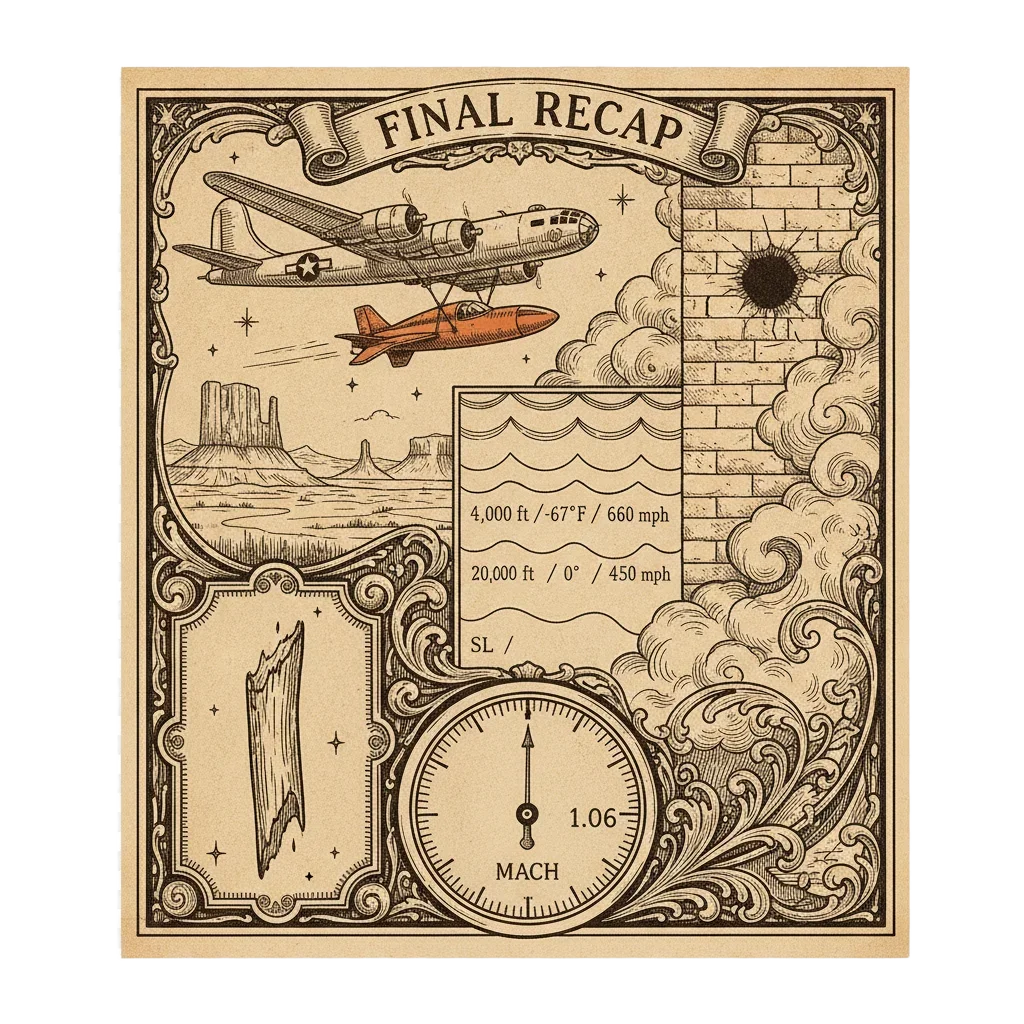
Final recap illustration combining the B-29 carrying the X-1, the broom handle, the Machmeter at 1.06, the atmospheric temperature slice, and the brick wall with a bullet-shaped hole

Everyone was afraid of the wall.

It turned out to be nothing but air.

343 m/s

More from the museum

Numbers that keep surprising people.

Curiosity swings

+8.1%

343 m/s

+5.0%

1729

+5.2%

299,792,458

+6.3%

2,147,483,647

+5.7%

0.999…

+6.5%

42

+5.2%

6174

+4.9%

5050

343 m/s · speed of sound near ground · most-read this month (+18%)
Mach 1.06 · first supersonic level flight · most-shared (+14%)
broom handle · most-unexpected detail · most-argued (+22%)

Suggestion Jar

Know a number with a story?

The museum grows by curiosity and suggestion. If a number has been sitting in the back of your mind looking neglected, send it our way.

Powered by DollarPageClub